
Every shipment creates a continuous exchange of information between teams, systems, customers, and partners.
Freight businesses use platforms like CargoWise to manage operations, but they also depend on transport systems, warehouses, carriers, finance applications, and customer portals.
When these systems operate independently, teams spend valuable time updating the same information in multiple places.
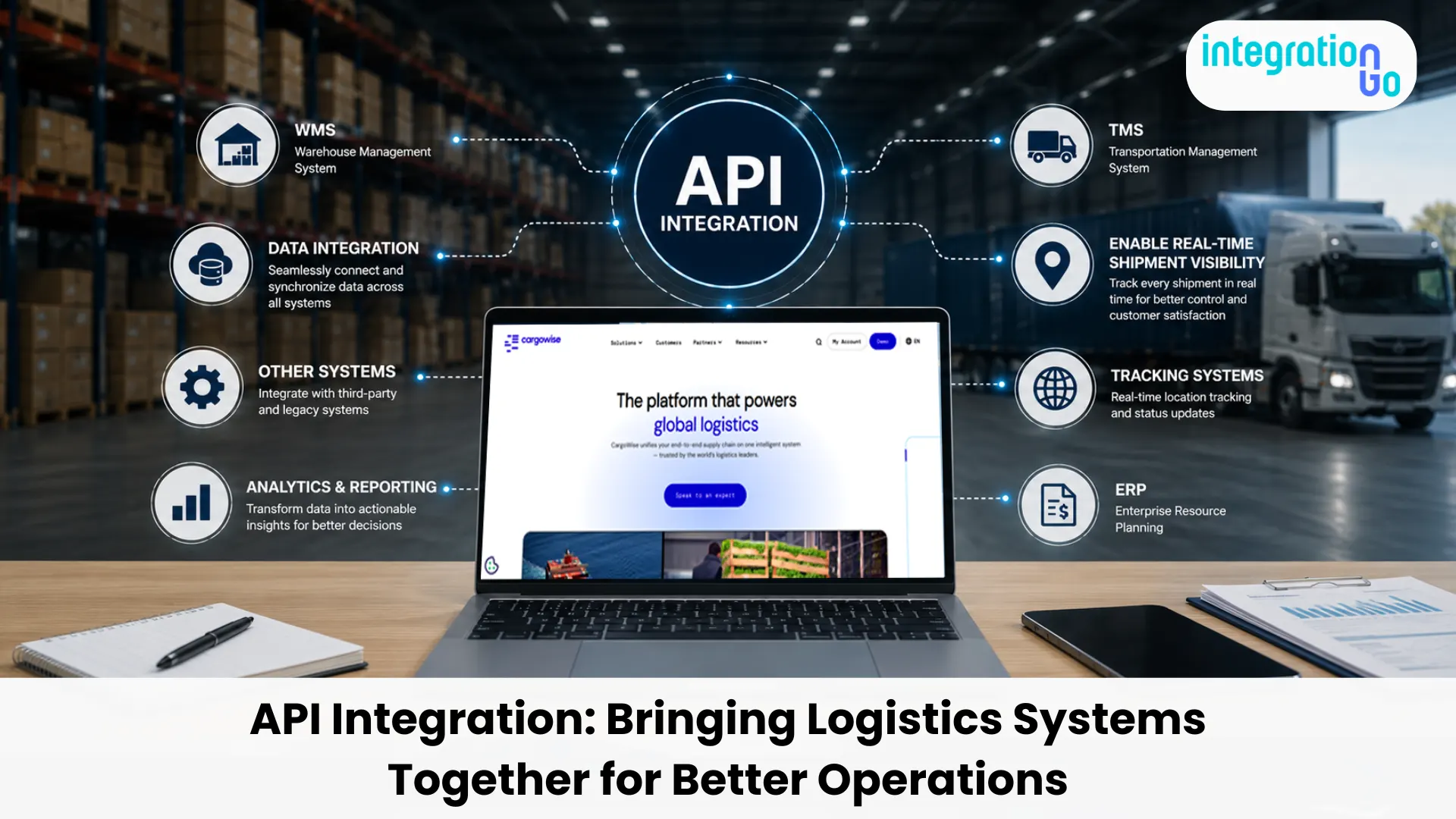
This is why API Integration has become an important part of modern logistics operations, helping businesses connect their systems and keep information moving without unnecessary manual effort.
🔍 What is API Integration in Logistics?
Modern logistics operations depend on many different applications working together. API Integration enables these applications to communicate and share information automatically, rather than requiring teams to manually transfer data between systems.
Think about a shipment leaving a warehouse. Without integration, someone may need to collect the tracking details, update CargoWise, notify the customer, and enter the same information into another platform.
With API integration, that shipment update can move automatically between connected systems, helping everyone work with the latest information.
It integrates important logistics platforms such as:
- CargoWise
- Transportation Management Systems (TMS)
- Warehouse Management Systems (WMS)
- Carrier platforms
- Customer portals
- Finance applications
The result is a more connected operation where information moves as smoothly as the shipment itself.
🌐 Why Logistics Teams Need Integrated Systems Today?
Freight operations involve many moving parts. A single shipment may pass through different teams, locations, and partners before reaching the final destination.
During this journey, businesses need to exchange booking details, shipment milestones, inventory updates, customs information, and financial data. When systems are disconnected, employees often become the bridge between platforms.
They spend time copying data, checking updates, correcting mistakes, and following up with different teams.
These small manual activities can create bigger challenges, such as:
- Slower operational processes
- Delayed customer updates
- Repeated data entry
- Lower visibility across shipments
- Increased chances of errors
API integration helps reduce these challenges by allowing systems to exchange information automatically.
⚙️ Making Everyday CargoWise Operations More Connected
The value of API integration is not only about connecting software. It is about improving how logistics teams work every day. When CargoWise communicates with other business systems, teams can manage information faster and focus more on moving freight.
For example, when a new booking is created, the information can flow between customer systems, CargoWise, and transport platforms without teams manually entering the same details again.
This creates smoother workflows across:
- Shipment processing
- Transport coordination
- Customer communication
- Operational updates
Connected systems help teams spend less time searching for information and more time managing important decisions.
🚛 Improving Communication Across Carriers and Supply Chain Partners
Logistics depends heavily on teamwork between different organizations. Carriers, suppliers, warehouses, and customers all need accurate information at the right time.
API integration helps these partners stay connected by automatically sharing important updates.
For example, when a carrier updates a delivery status, that information can move back into CargoWise and customer systems, allowing teams to provide faster updates without waiting for manual communication.
This improves:
- Carrier coordination
- Shipment tracking
- Partner collaboration
- Customer response times
Better communication helps create a more reliable logistics experience.
📍 Real-Time Visibility Throughout the Shipment Journey
Visibility is one of the biggest expectations in today's logistics, customers do not just want to know that their shipment will arrive, they want to know what is happening throughout the journey.
API integration connects information from multiple sources, helping teams access shipment updates, delivery progress, and operational changes faster.
When logistics teams have real-time information, they can identify issues earlier, respond quickly, and keep customers informed with accurate updates.
🔄 Two-Way Data Flow: Keeping Every System Updated
One of the biggest advantages of API integration is continuous data synchronization. Logistics information changes constantly throughout the day. A shipment status may change, an invoice may be updated, or a delivery confirmation may be received.
With API integration, these changes can automatically update across connected platforms.
This means CargoWise and other systems can stay aligned without teams repeatedly checking and correcting information.
Consistent data helps improve:
- Reporting accuracy
- Operational planning
- Team collaboration
- Customer service
🚀 Final Thoughts
Behind every successful logistics operation is a connected flow of information. When systems work together, teams can move faster, make better decisions, and provide customers with a smoother experience.
With CargoWise End-to-End Integration, logistics businesses can connect CargoWise with transport systems, warehouses, carriers, finance platforms, and customer applications to create a stronger digital ecosystem.