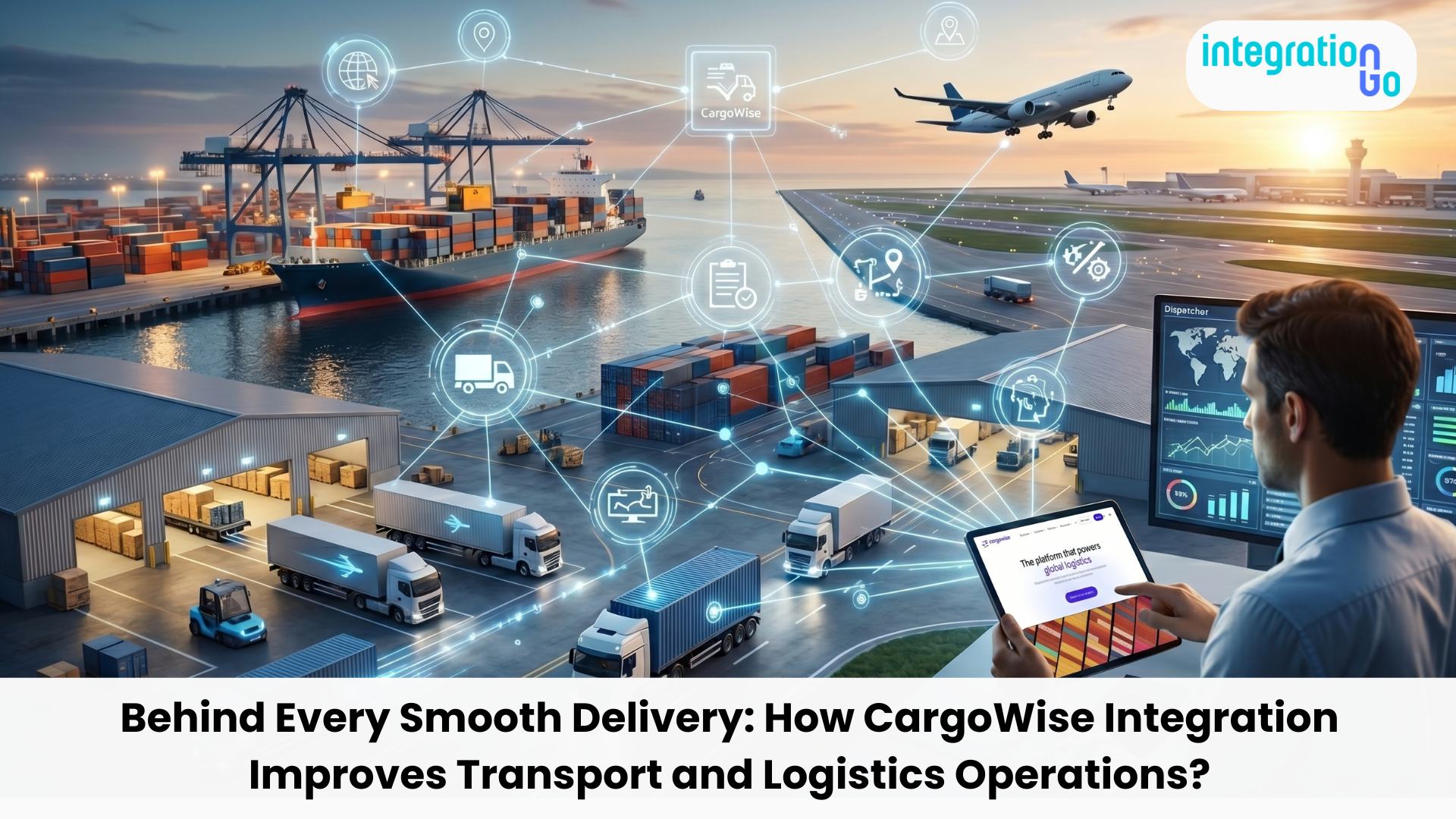

A smooth delivery is not only about moving freight. It is about making sure every update, system, and partner moves together.
Transport and logistics professionals coordinate shipments across carriers, suppliers, warehouses, customers, and multiple technology platforms every day.
When these systems are disconnected, teams spend more time searching for updates, entering the same information, and solving communication gaps.
With CargoWise Integration for Transport & Logistics, businesses can connect their TMS platforms, carriers, suppliers, customers, and logistics partners to improve visibility and keep operations moving smoothly.
🚚 Why Smooth Freight Movement Starts with Integrated Transport Operations?
Modern freight movement involves much more than pickup and delivery. Behind every shipment, there are multiple teams exchanging information about bookings, schedules, shipment status, documentation, and delivery confirmation.
A single transport workflow may include:
- Customer order requests
- Carrier assignment
- Pickup scheduling
- Shipment tracking
- Warehouse coordination
- Delivery confirmation
When these updates are handled manually through emails or separate systems, operations become slower and harder to manage.
Small communication delays can create bigger challenges across the supply chain, affecting delivery performance and customer experience.
That is why transport businesses are focusing on integrating systems where information moves automatically between teams and partners.
🔄 The Role of TMS and CargoWise Integration in Modern Logistics
A Transportation Management System helps logistics teams plan, execute, and monitor freight movement.
It manages important transport activities such as carrier selection, shipment planning, route coordination, tracking, and delivery updates.
However, many logistics businesses use multiple systems across their operations.
CargoWise may manage freight workflows, while external TMS platforms, carriers, warehouses, and customer systems handle different parts of the supply chain.
Without integration, teams often need to copy information between platforms manually.
CargoWise Integration for Transport & Logistics connects these systems and enables smoother data exchange for:
- Transport orders
- Booking confirmations
- Shipment milestones
- Carrier communication
- Tracking updates
- Delivery information
This creates a more connected operation where teams have access to accurate information when they need it.
⚙️ From Daily Transport Tasks to Integrated CargoWise Operations
Every delivery journey includes many small but important steps. CargoWise integration helps connect these everyday transport activities by allowing information to flow automatically between logistics systems and partners.
📦 Effortless Order Management
Transport operations begin when an order is received. Teams need accurate customer details, shipment instructions, pickup information, and delivery requirements before moving forward.
CargoWise integration helps receive, process, and confirm transport bookings automatically between connected systems.
Instead of manually checking emails and updating records, logistics teams can start shipment activities faster with reliable information already available.
🚛 Smart Shipment Processing
Every shipment requires accurate data to maintain visibility throughout its journey. From transport labels to shipment references and tracking information, every detail needs to stay consistent across platforms.
Integrated CargoWise workflows help synchronize shipment data automatically, reducing duplicate entry and improving operational accuracy. This helps teams manage shipments more efficiently from planning to delivery.
🤝 Stronger Carrier and Partner Coordination
Transport operations depend heavily on communication with carriers and external partners. Manual communication through emails and spreadsheets can slow down responses, especially when handling large shipment volumes.
CargoWise integration enables automatic exchange of:
- Pickup requests
- Shipment instructions
- Status updates
- Delivery milestones
This keeps carriers, operations teams, and customers aligned throughout the transport process.
📍 Better Shipment Visibility Across the Delivery Journey
Today, customers expect to know exactly what is happening with their shipments. Delayed updates create uncertainty and increase customer service requests.
With connected CargoWise workflows, shipment information moves between systems in real time, helping teams monitor:
- Pickup progress
- Shipment movement
- Delivery status
- Transport exceptions
- Proof of Delivery updates
Greater visibility helps logistics teams respond faster and provide a better customer experience.
🌐Integrating 3PL Networks and Logistics Partners
Many transport operations involve third-party logistics providers, warehouses, and fulfillment partners.
Managing these relationships manually becomes challenging as shipment volumes increase.
CargoWise integration connects 3PL systems and logistics partners to support smoother:
- Order fulfillment
- Warehouse updates
- Inventory movement
- Transport coordination
This helps businesses maintain better control across complex supply chain networks.
📄 Simplifying Proof of Delivery (POD) Workflows
Delivery completion is one of the most important stages in transport operations. Teams need accurate confirmation that goods reached the right destination. Integrated POD workflows allow delivery confirmations, signatures, and status updates to flow back into integrated systems. This helps improve customer communication, reduce follow-ups, and support faster operational closure.
🚀 Final Thoughts
Modern transport operations are no longer only measured by how quickly freight moves. They are measured by how efficiently information moves across the entire logistics network.
When CargoWise, TMS platforms, carriers, customers, and partners work together, businesses gain better visibility, stronger collaboration, and smoother operations.
With End-to-End Integration, transport and logistics teams can connect critical systems, automate data exchange, reduce manual processes, and deliver a more reliable freight experience from order management to final delivery.