
In 2026, most logistics and supply chain businesses are not short on systems, they’re short on connected systems.
Teams use different platforms for operations, finance, reporting, and planning. On paper, everything looks structured. But in reality, data moves slowly, numbers don’t always match, and reporting takes longer than it should.
That’s where integrating SAP S/4HANA with your ERP makes a real difference. It brings everything together into one continuous flow.
🚧 The Problem with Disconnected ERP and Logistics Systems
When systems don’t communicate properly, work doesn’t stop, it just becomes heavier.
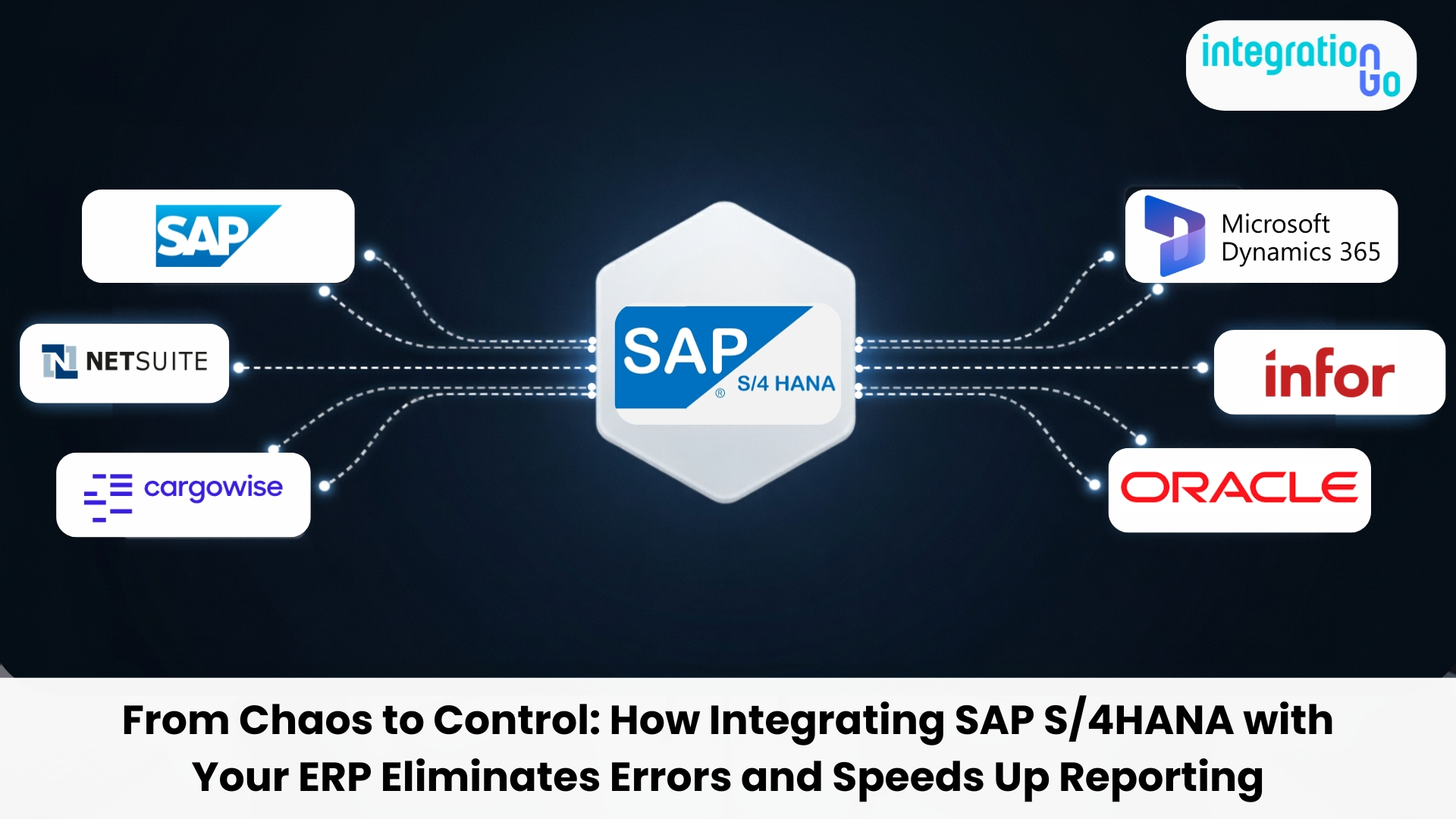
Operations teams manage shipments and costs in one system, while finance teams handle invoices and reporting in another. Many logistics businesses rely on ERP systems like SAP, NetSuite, Microsoft Dynamics 365, or Oracle, while platforms like CargoWise are used to manage shipment execution and operational workflows.
CargoWise helps teams handle bookings, documentation, and shipment tracking efficiently, but when it isn’t connected to ERP or financial systems, data stays siloed.
That’s where the flow breaks.
Data has to be moved manually between systems, which leads to:
- Data being entered multiple times
- Mismatches between operational and financial records
- Delays in reporting and reconciliation
Over time, teams spend more time validating numbers than actually using them
🔄 Why Reporting Takes So Long?
Reporting delays usually don’t come from complexity, they come from data gaps.
A shipment might be completed in one system, but finance doesn’t see it immediately. Costs may be updated in operations, but reports reflect them later.
So before any report is finalized, teams need to:
- Check multiple systems
- Verify accuracy
- Adjust mismatched data
This is why reporting feels slow, even when systems are fast.
🧠 What SAP S/4HANA Changes?
SAP S/4HANA works differently from traditional systems. It processes data in real time using an in-memory database, which means updates happen instantly across the system.
It also simplifies how data is structured, combining financial and operational information into one unified model.
In practical terms:
- Data is recorded once
- It updates everywhere automatically
- Everyone sees the same information
This removes the confusion caused by multiple versions of data.
⚙️ How Integration Improves Daily Work?
When SAP S/4HANA is integrated with your ERP, including your financial system within your ERP environment, daily operations move as one connected flow instead of separate tasks. For many logistics teams using platforms like CargoWise to manage shipments and documentation, this means operational updates no longer stay isolated, they flow directly into finance without delay.
Shipment updates flow directly into finance, costs are recorded automatically, and invoices are triggered based on real operational activity.
In simple terms, the flow looks like this:
- Shipment update → syncs with finance
- Costs → recorded automatically
- Milestones → trigger invoices
- Data → updates in real time
This reduces manual work, improves accuracy, and keeps teams aligned with the same up-to-date information.
⚡ Reducing Errors Early
Most errors don’t happen during reporting, they happen earlier, when data is entered or transferred.
Without integration, those errors go unnoticed until later stages, which makes them harder to fix.
With integration:
- Data is validated as it flows
- Missing or incorrect details are flagged instantly
- Corrections are made before they affect reports
This reduces the need for heavy reconciliation at month-end.
📊 Faster and Clearer Reporting
With connected systems, reporting becomes much simpler.
Instead of collecting data from different sources, reports are generated directly from a unified dataset. This means:
- Reports are available faster
- Numbers are more consistent
- Teams spend less time verifying results
Most importantly, decision-makers can rely on real-time data instead of waiting for finalized reports.
💸 Better Control Over Cash Flow
One important benefit of integration is improved cash flow visibility. When systems are disconnected, billing often depends on manual updates. That can delay invoicing and revenue recognition.
With SAP S/4HANA integration:
- Billing is triggered automatically
- Financial records are updated instantly
- Cash flow becomes easier to track
This helps businesses maintain better financial control.
🔁 Less Manual Work Across Teams
Manual work is one of the highest hidden costs in logistics operations.
Teams often:
- Re-enter data across systems
- Reconcile differences
- Follow up for missing information
Integration reduces this effort significantly.
Data flows automatically between systems, reducing duplication and allowing teams to focus on more important tasks.
⏳ Why Companies are Moving to Integrated ERP Systems in 2026?
Many businesses are already planning their transition because of upcoming system changes and increasing operational demands.
With legacy systems nearing end-of-support timelines, organizations are looking to modernize their technology stack.
Moving now allows companies to:
- Prepare their data properly
- Align systems without disruption
- Build a more scalable setup
Delaying the move can lead to higher costs and more complex transitions later.
🚀 Final thought
Systems alone don’t improve efficiency, how well they connect does. When SAP S/4HANA is integrated with your ERP, it creates a continuous flow where financial and operational data move together in real time. For teams using platforms like CargoWise, this means shipment activity, costs, and milestones don’t stay within operations, they automatically reflect in finance without extra steps.
The result is fewer delays, more accurate reporting, and clearer visibility across the business, helping teams act faster and stay in control.
👉 Ready to simplify your workflows and improve visibility? Explore end-to-end logistics integration and connect your ERP, finance, and operations into one seamless system.