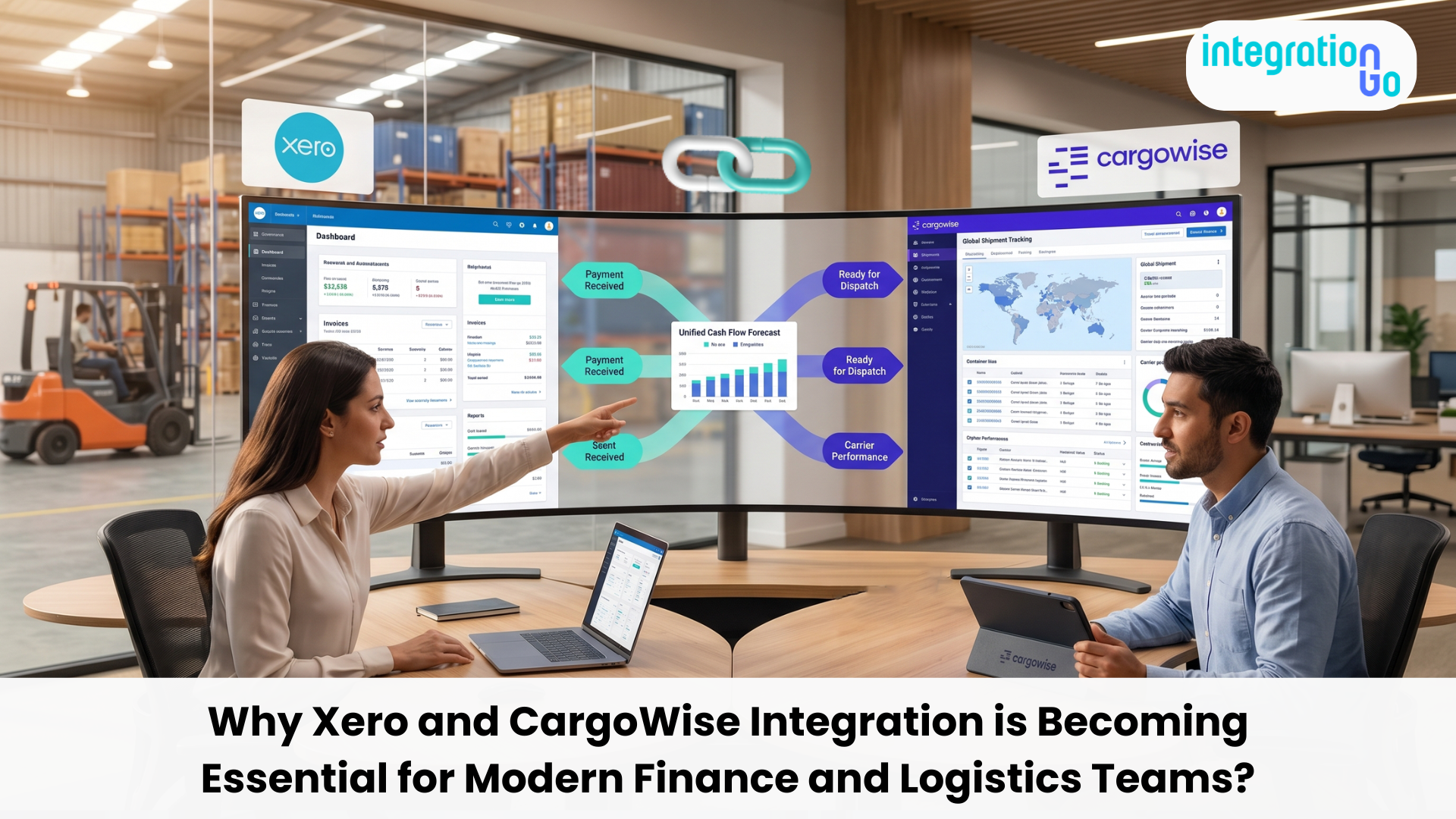

Think about a typical freight forwarding business. Your operations team is managing shipments and updates in CargoWise, while your finance team is processing invoices, payments, and reconciliations inside Xero.
Both teams are working toward the same goal, but often through separate systems.
That’s where things begin to slow down.
An invoice created in CargoWise gets downloaded, checked manually, uploaded into Xero, and reviewed again during reconciliation. It sounds like a routine process, but when this repeats across multiple transactions every day, businesses lose valuable time without even noticing it.
That is exactly why CargoWise and Xero integration is gaining attention in modern logistics and finance operations.
Because today, the challenge isn’t just moving freight. It’s moving information just as efficiently.
🔄 When Logistics and Finance Work Separately, Small Delays Become Bigger Problems?
At first, disconnected systems don't always seem like a major issue.
Everything appears manageable while shipment volumes remain low. But as operations expand, finance teams often spend more time finding information than actually using it.
The result usually looks something like this:
- The same invoice gets entered twice
- Payment updates arrive late
- Teams spend extra time verifying records
- Month-end closing takes longer than expected
- Reconciliation becomes more difficult
Over time, these small delays slowly turn into operational bottlenecks.
Instead of focusing on forecasting, analysis, or customer service, finance teams end up spending hours chasing information.
💰 Why Real-Time Financial Visibility Matters More than Ever?
Financial information in logistics changes constantly.
Invoices get created. Suppliers submit bills. Customers make payments. Credit notes appear. Adjustments happen. Costs change.
The challenge begins when those updates sit in different systems.
If operations teams are looking at one version of information while finance teams are working with another, visibility becomes difficult. When financial data moves automatically between systems, businesses gain a clearer picture of what is actually happening.
Teams can immediately see:
- What invoices are paid
- Which payments are pending
- Outstanding customer balances
- Updated financial positions
Instead of waiting for information, teams can work with live updates.
📄 Why Accounts Receivable and Accounts Payable Become Easier to Manage?
One of the first places businesses notice improvements is within Accounts Receivable and Accounts Payable workflows.
For Accounts Receivable, customer invoice information created in CargoWise can flow directly into Xero with important information staying intact, including payment terms, tax details, customer records, and invoice status updates.
On the Accounts Payable side, supplier invoices often include freight charges, taxes, shipment costs, and operational expenses that need accurate reconciliation. Through Xero integration, these financial details remain integrated across systems, reducing repeated data entry and helping teams manage payments and financial activities more efficiently. Instead of spending time manually moving information between platforms, businesses can focus more on financial decisions and less on administrative work.
📊 Keeping Invoices, Credit Notes, and Journal Entries Connected
Financial workflows involve much more than invoices alone.
Businesses also process refunds, adjustments, journal entries, corrections, internal transfers, and multi-currency transactions.
When this information sits separately, reporting can quickly become inconsistent.
Integrated workflows help maintain:
- Better reporting accuracy
- Cleaner audit visibility
- Improved financial consistency
- Stronger operational transparency
Instead of fixing financial discrepancies later, teams can maintain cleaner records from the beginning.
🌐 Modern Businesses are Moving Toward Connected Financial Ecosystems
Modern businesses rarely rely on just one platform anymore. A freight forwarding business may use CargoWise for logistics operations, Xero for accounting, CRM systems for customer management, and other tools for reporting and day-to-day workflows. While each system works well individually, the real challenge begins when they operate separately and information stops flowing smoothly between them.
What starts as a small delay can quickly become a bigger operational issue. Teams spend extra time manually updating records, checking invoices across systems, and following up on payment information. This often creates:
- Duplicate work across teams
- Delayed invoice and payment updates
- Longer reconciliation cycles
- Limited visibility between operations and finance
- Increased manual effort and higher risk of errors
Businesses today are realizing that success is no longer about adding more software. It is about creating smarter connections between the systems they already use. When logistics and finance platforms work together, information moves naturally across the business, giving teams faster reporting, better visibility, and more time to focus on strategic decisions instead of repetitive data entry.
🚀 Final Thoughts
As logistics operations become faster and financial processes become more complex, businesses are realizing that disconnected systems create unnecessary work, delays, and visibility challenges. Integrating platforms like CargoWise and Xero helps create smoother financial workflows, stronger reporting accuracy, and better operational control, and as businesses continue modernizing their environments in 2026, now is the right time to explore how End-to-End Logistics Integration can help create integrated workflows where finance and logistics move together smoothly.