

According to industry research, companies with disconnected financial and operational systems experience an annual revenue leakage of up to 5–8% due to billing errors, delayed reconciliations, and inaccurate reporting. Yet many businesses still rely on manual invoice uploads, spreadsheet-based tracking, and post-facto reconciliation between systems.
Xero is powerful. But without integration and automation, it becomes reactive instead of strategic.
Let’s break down what real Xero integration and invoice automation actually change and why they directly strengthen financial control, visibility, and scalability.
Understanding Xero Integration: How it Connects Your Financial Systems
Xero integration is not just about syncing invoices. It’s about creating structured, automated data flow between Xero software and your operational systems, whether that’s a logistics ERP, warehouse system, CRM, billing engine, or customs platform.
Without integration:
- Invoices are manually re-entered
- Vendor bills are uploaded via CSV
- Payment statuses are updated manually
- Reconciliations happen after the fact
- Reporting lags behind operations
With integration:
- Sales invoices generated in your operational system automatically post to Xero
- Accounts Payable bills sync in real time
- GL/IR accounts are mapped correctly from the source
- Customer and supplier records remain aligned
- Tax logic flows consistently across systems
- Multi-currency postings reflect accurate exchange rates
Instead of “moving data,” your systems speak to each other continuously.
That’s the foundation of financial visibility.
What Invoice Automation Actually Changes in Your Daily Workflow
Invoice automation transforms daily finance operations at the process level.
In manual environments, the workflow typically looks like this:
- Invoice created in operations
- Data re-entered into accounting
- Errors identified later
- Corrections made manually
- Reconciliation at month-end
This creates delays, duplication, and error chains.
With invoice automation:
- Invoices are generated directly from operational triggers
- Approval workflows are rule-based and automated
- Duplicate invoices are flagged instantly
- Payment reminders are system-driven
- Disputes are traceable via digital audit logs
- Matching of purchase orders and invoices becomes structured
Processing cycles shorten by 60–80%, but more importantly, the risk surface shrinks.
Instead of suffering from the problem, teams supervise. That shift improves both speed and governance.
Impact Across Finance and Operations Teams
Integration strengthens alignment across departments by creating a single financial source of truth.
Finance teams gain:
- Faster month-end close cycles
- Real-time cash flow tracking
- Clear AR and AP visibility
- Reduced reconciliation hours
- Stronger audit compliance
Operations teams gain:
- Live invoice status visibility
- Immediate cost feedback
- Margin tracking per transaction
- Fewer billing disputes
- Faster customer communication
Leadership benefits from reliable profit and loss visibility, improved working capital planning, predictable revenue flow, and stronger profitability analysis. When every department operates from synchronized financial data, control naturally strengthens across the organization.
Building Financial Accuracy and Governance through Smart Integration
Financial accuracy is not only about correct totals, but it is also about consistency across every system that touches a transaction. Disconnected environments create misaligned charge codes, incorrect tax calculations, duplicate vendor records, inconsistent cost allocations, and revenue recognized at the wrong time.
Smart integration ensures charge codes map automatically between operational systems and Xero, cost centers remain aligned, tax calculations follow regulatory rules, and revenue recognition aligns with operational milestones. Accounts payable and receivable aging reports reflect real-time data rather than historical corrections. When every invoice links back to validated operational records, audit exposure decreases, and reporting becomes dependable.
Automation also strengthens internal controls by enforcing structured approval hierarchies, timestamped audit trails, exception reporting, and role-based access. Reduced manual intervention directly lowers compliance risk and enhances governance transparency.
Impact Across Finance and Operations Teams
Integration is not just a finance upgrade, it’s an organizational alignment tool.
Finance Teams Gain:
- Faster month-end close cycles
- Real-time cash flow tracking
- Accurate GR/IR visibility
- Reduced reconciliation hours
- Stronger audit compliance
- Clear revenue recognition
Operations Teams Gain:
- Live invoice status visibility
- Immediate cost feedback
- Margin tracking per shipment or service
- Fewer billing disputes
- Faster customer communication
Leadership Gains:
- Reliable P&L visibility
- Better working capital planning
- Predictable revenue flow
- Stronger profitability analysis
Integration aligns departments around the same financial truth. That alignment is what strengthens control.
Why Manual Processes Become Risky as Your Business Scales?
Manual workflows may work at low transaction volume. They collapse under growth.
As your business scales:
- Transaction counts increase
- Invoice volumes multiply
- Multi-currency exposure grows
- Compliance complexity rises
- Audit scrutiny intensifies
Even a 2–3% invoice error rate can translate into serious profit erosion at scale. Manual controls don’t scale linearly. Risk grows exponentially. Integration and automation are not about convenience. They are about structural risk management.
How IntegrationGo Strengthens and Optimizes Your Xero Integration?
Integrating systems requires more than API access. It requires a clear understanding of how financial and operational data interact. IntegrationGo approaches Xero integration as structured financial system integration, ensuring accuracy, control, and long-term reliability.
IntegrationGo focuses on:
- Accurate data field mapping
- Secure middleware architecture
- Validation rules before posting
- Multi-branch, multi-entity, and multi-currency support
- Continuous monitoring and optimization
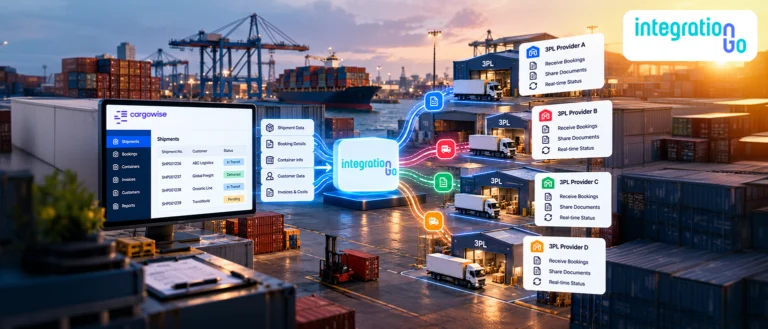
IntegrationGo acts as a middleware layer between your operational system and Xero, managing API calls, synchronizing data across systems, and consolidating everything into a unified dashboard. This ensures data moves smoothly, securely, and without manual effort.
Instead of a one-time connection, IntegrationGo ensures your integration remains stable as volumes grow, adapts to process changes, maintains data integrity, and supports compliance.
The goal is not just connection. The goal is financial resilience.
Conclusion:
Financial control is built on integration, not spreadsheets. When Xero integration and invoice automation are implemented strategically, billing accelerates, errors decrease, cash flow visibility improves, and reporting becomes reliable. Instead of reacting to financial gaps, your team operates with clarity and confidence. If your organization is ready to eliminate manual inefficiencies and gain real-time financial visibility, schedule a demo today and see how integrated Xero automation can transform your financial operations.