
Everything can be ready to move and still not move at all. One missing customs detail is enough to stop a shipment in its tracks. Suddenly, teams are double-checking data, customers are waiting for answers, and finance is stuck holding invoices that should’ve already gone out.
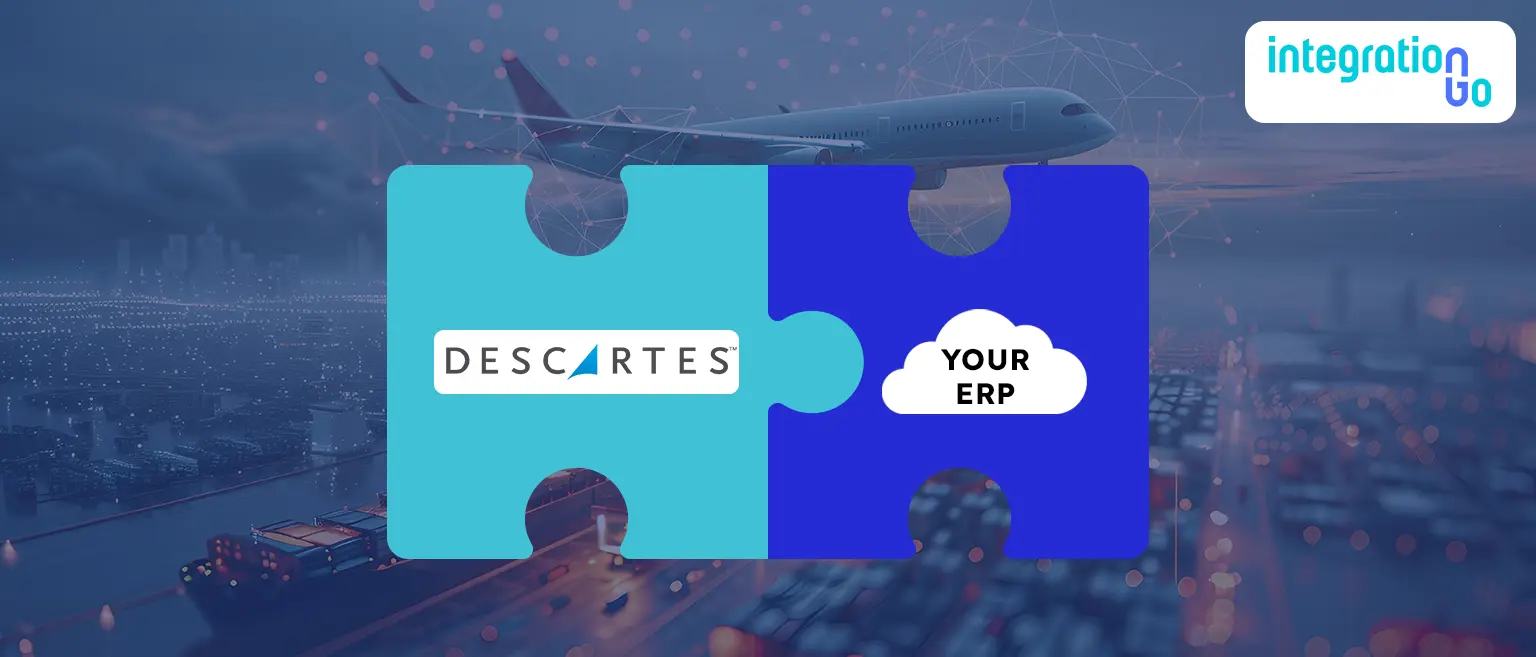
Disruptions are not caused by a lack of effort; rather, they occur when systems fail to integrate. That’s why custom integration is important in daily customs operations. With Descartes Thyme-IT ERP integration, customs data flows directly into business systems, reducing errors, improving compliance, and keeping shipments moving.
Understanding Descartes Thyme-IT and Its Role in Customs Operations
Descartes Thyme-IT Customs System provides specialized solutions designed to handle the most complex part of global trade: customs and compliance. These systems manage import, export, and transit declarations, validate regulatory data, and communicate directly with customs authorities.
For customs teams, this means faster filings, fewer errors, and better compliance control. But customs don’t operate in isolation. It relies heavily on accurate shipment data, invoices, product details, and party information, all of which usually live inside ERP or operational systems.
Without integration, customs platforms do their job well, but teams still spend time moving data manually between systems.
Why Customs Efficiency Matters More than Ever?
Customs is no longer a background process. It directly affects delivery timelines, customer satisfaction, and cash flow. A delay at customs can hold inventory, delay billing, and create uncertainty across the entire operation.
When customs systems are disconnected, teams often experience:
- Repeated data entry across platforms
- Delayed clearance due to missing or inconsistent information
- Higher rejection rates from authorities
- Slow invoicing and delayed cash flow
- Increased stress for operations and finance teams
Efficient customs processes depend on connected data, not just skilled teams
How Customs Efficiency Improves Daily Operations?
When customs processes run smoothly, the benefits are felt across the business, not just at the border.
Operations teams gain confidence because shipment details are accurate and consistent. Customer service teams can provide real-time updates instead of chasing answers. Finance teams receive duty and tax information on time, making invoicing and reconciliation easier.
Most importantly, teams spend less time fixing problems and more time moving shipments forward. Customs stops being a daily stress point and becomes a predictable, controlled process.
The Role of Descartes Thyme-IT Customs System in Removing Friction
Descartes Thyme-IT Customs System ERP integration connects customs systems directly with the operational and financial backbone of the business. Shipment data flows automatically into customs workflows, eliminating the need for manual entry. Clearance results, reference numbers, and duty values return to the ERP without delays.
This two-way flow ensures everyone is working with the same information at the same time. There’s no guessing, no waiting, and no duplicate work.
Integration turns customs into a natural step within the overall workflow instead of a separate task that slows everything down.
Improving Business Standards Through Customs Integration
Customs integration does more than speed things up, it raises the overall standard of how the business operates.
When customs systems are connected to ERP workflows, data is entered once and reused everywhere. Validations happen automatically, reducing errors before they reach customs authorities. Audit trails become clear and complete, making compliance reviews far less stressful.
This leads to fewer rejections, fewer penalties, and fewer last-minute escalations. Over time, the organization becomes more reliable, consistent, and trusted by both customers and regulators.
Customs stops being a risk point and becomes a controlled, well-managed process
How IntegrationGo Supports Customs-Focused ERP Integration?
IntegrationGo clearly prioritizes customs efficiency in their approach to Descartes Thyme-IT Customs System. The first step in the procedure is to comprehend how your company now handles shipments, customs declarations, and financial updates.
After that, secure connections are created to enable real-time data exchange, data fields are aligned, and information pertinent to customs is mapped. Customs systems automatically get shipment data, and ERP records receive duty levels and clearance results.
Before going live, extensive testing guarantees that real-world customs scenarios are handled without a hitch. Once operational, monitoring tools assist in tracking performance and promptly addressing any anomalies.
Making customs integration dependable, scalable, and simple for teams to use daily is the clear objective.
Customs Integration that Grows With Your Business
Customs is no longer a background process. It affects nearly every part of daily operations.
When customs systems are disconnected, teams often experience:
- Repeated data entry across platforms
- Delayed clearance due to missing or inconsistent information
- Higher rejection rates from authorities
- Slow invoicing and delayed cash flow
- Increased stress for operations and finance teams
Efficient customs processes depend on connected data, not just skilled teams.
Conclusion
Customs efficiency is no longer just a compliance concern, it’s a daily operational priority. When customs systems are disconnected, the entire business feels the impact. When they’re integrated, operations become smoother, faster, and more predictable.
By integrating Descartes Thyme-IT Customs System into your business environment, you create a connected workflow where customs supports growth instead of slowing it down.
If you’re ready to simplify customs operations, improve daily efficiency, and raise overall business standards, IntegrationGo is here to help. Schedule a demo today and see how customs-focused Descartes Thyme-IT Customs System ERP integration can transform the way your business operates.