
Your freight doesn’t slow down at the border, it slows down when systems stop talking.
Today’s freight operations run on speed, but customs clearance still slows down when systems don’t communicate properly. Studies show that over 60% of clearance issues are caused by data mismatches, manual entry, and disconnected workflows, not by cargo movement itself.
Many logistics teams rely on CargoWise to manage operations while UK customs processes happen elsewhere. The result? Slower approvals, higher compliance pressure, and teams spending more time fixing problems than moving freight.
The companies moving ahead are solving this through smart customs integration, creating faster data flow, better visibility, and smoother clearance from start to finish.
Why is Integration Between CargoWise and UK Customs Software Critical?
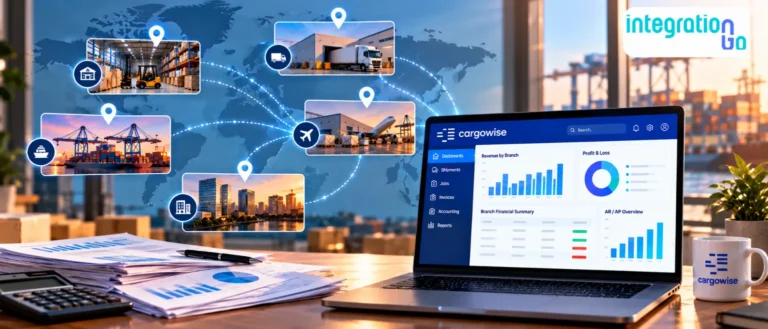
CargoWise is the operational backbone for freight forwarding, managing bookings, shipments, billing, and visibility. UK customs platforms, on the other hand, specialize in CDS declarations, compliance checks, and customs responses.
When both systems operate separately, logistics teams face:
- Manual data re-entry
- Mismatched shipment and declaration data
- Delayed duty calculations
- Limited customs visibility
- Increased operational stress
Integration connects these workflows, allowing shipment data to flow automatically, declarations to become accurate, and clearance status to be updated in real-time. In short: one source of truth across operations and customs.
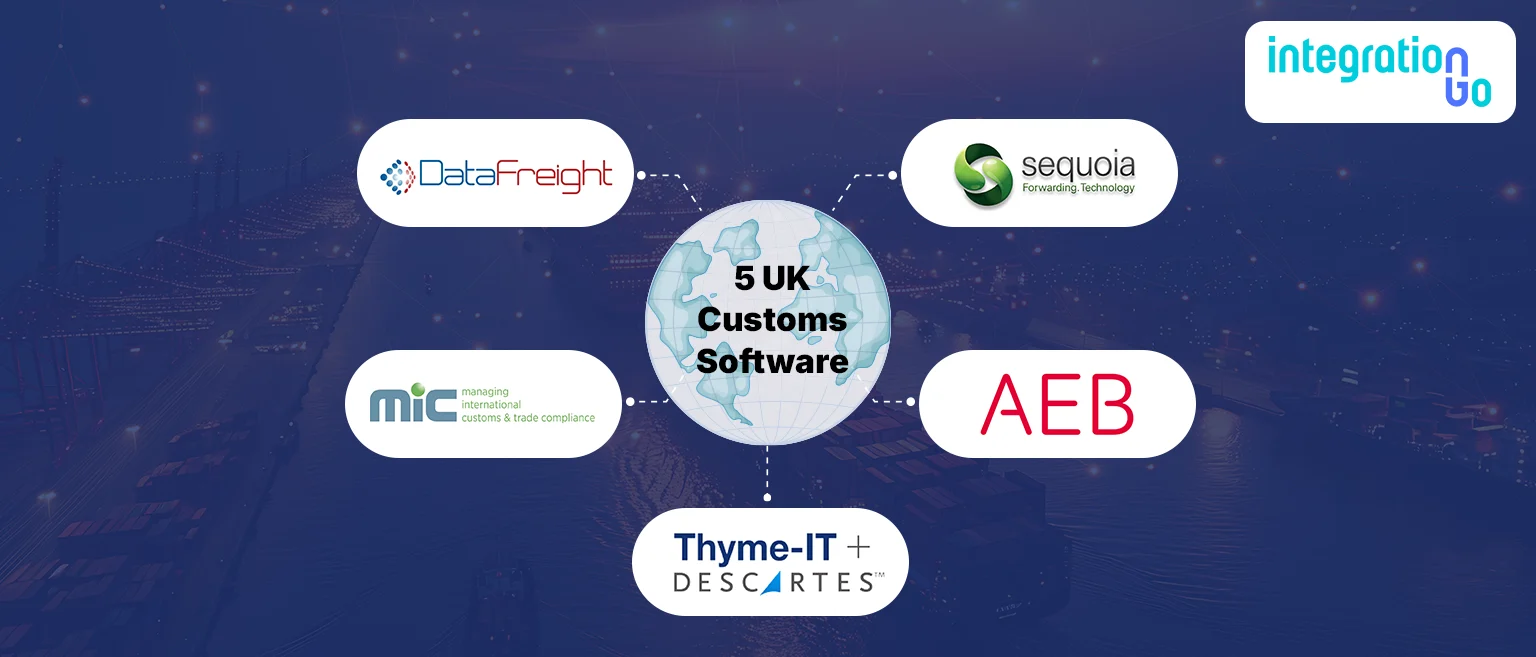
Top 5 UK Customs Software You can Integrate with CargoWise
Now let’s look at the five UK customs platforms that logistics companies commonly integrate with CargoWise, and why each one matters.
1. MIC Customs Clearance
MIC Customs Solutions is designed for enterprise-level customs management. MIC integration with CargoWise helps automate declaration workflows while ensuring strict compliance controls.
What this integration delivers:
- Automated customs filing workflows
- Centralized compliance tracking
- Reduced declaration errors
- Improved audit readiness
This combination works well for large freight forwarders handling complex customs requirements.
As a result, many large freight teams reduce manual customs processing by up to 50%, allowing them to handle higher shipment volumes while minimizing operational errors.
2. AEB Import & Export Filing CDS
AEB focuses on smart automation and simplified customs filing. AEB integration with CargoWise allows shipment data to move directly into CDS declarations without manual intervention.
Key advantages:
- Faster declaration creation
- Built-in compliance validation
- Reduced manual data handling
- Improved operational speed
Ideal for teams wanting efficient customs automation without heavy complexity.
Finally, logistics teams often experience 30–40% faster declaration preparation thanks to automated data validation and reduced manual entry.
3. Descartes Thyme-IT
Descartes Thyme-IT is widely trusted in UK customs operations and offers strong declaration processing capabilities. Descartes Thyme-IT integration with CargoWise creates a smooth flow between operations and customs.
Integration with CargoWise creates a smooth flow between operations and customs.
Benefits logistics teams experience:
- Automatic data transfer for declarations
- Real-time MRN and clearance updates
- Duty calculations fed back into CargoWise
- Improved coordination between customs and operations
This integration reduces communication gaps and speeds up decision-making.
The impact of this integration is often seen in faster communication and status updates, with many companies reporting up to 35% improvement in customs coordination and fewer clearance delays.
4. Data Freight
Data Freight is known for practical, operations-focused customs processing. Data Freight integration with CargoWise simplifies declaration workflows and reduces repetitive tasks.
Key outcomes:
- Faster data exchange
- Simplified customs processing
- Less manual entry for operations teams
- Better productivity during high shipment volumes
A strong option for mid-sized freight forwarders seeking efficiency.
As a result, businesses typically achieve 25–30% higher processing productivity during peak shipment periods, helping teams manage volume without increasing workload pressure.
5. ASM Sequoia
ASM Sequoia is a well-established UK customs solution trusted for reliable filing and compliance. ASM Sequoia integration with CargoWise ensures customs data stays aligned with operational workflows.
What you gain:
- CDS-ready declaration support
- Improved data consistency
- Real-time customs visibility
- Reliable clearance processing
This pairing works especially well for businesses managing diverse customs scenarios.
Ultimately, the impact of integration is improved declaration accuracy, often by up to 30%, helping reduce customs-related shipment delays and improving overall clearance reliability.
Advantages You Gain After Integrating CargoWise with UK Customs Software
More than a technical change, integration improves how teams manage operations day to day.
Operational Benefits
- Faster declaration preparation
- Reduced manual errors
- Real-time clearance visibility
- Faster response to customs queries
- Less dependency on spreadsheets and emails
Business-Level Benefits
- Improved compliance accuracy
- Better financial reconciliation
- Faster invoicing cycles
- Higher customer satisfaction
When customs and operations move together, the entire supply chain becomes more predictable.
IntegrationGo Process is Simple, but the Benefits are innumerable
Many companies assume integration projects are complicated. The truth? With the right approach, the process is structured, controlled, and designed to minimize risk while maximizing operational value.
Here’s how a professional integration approach typically works:
1. Process Mapping and Blueprinting
The first stage is understanding the real workflow, not just system data.
This includes:
- How tasks are created in CargoWise
- When invoices are issued
- Who validates customs data
- How are duty and landed costs posted to the finance
This operational map becomes the integration blueprint that guides the entire project.
2. Data Mapping and Conversion
Every critical field must align perfectly between systems.
Typical mapped data includes:
- HS codes
- Commodity descriptions
- Shipment IDs
- Invoice amounts
- GL accounts
- Party and consignee data
Normalization ensures both platforms interpret data the same way, reducing future errors.
3. Connectivity through API and EDI Layers
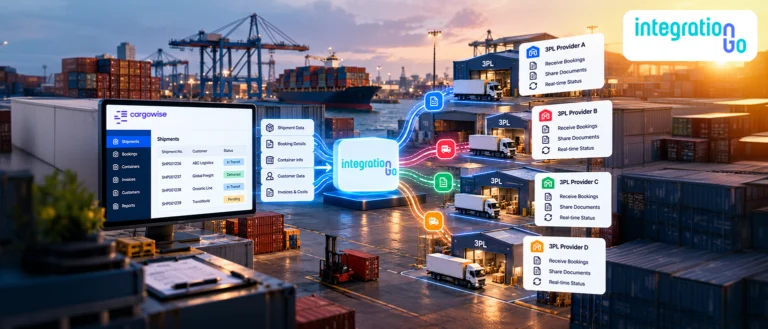
Modern integrations rely on APIs or middleware to enable two-way communication.
For example:
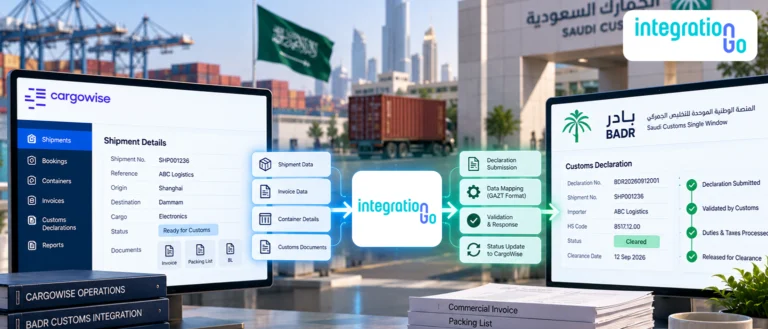
- CargoWise pushes shipment and invoice data to customs software for declaration preparation
- Customs software sends back MRNs, clearance updates, and duty calculations
- CargoWise jobs and financials update automatically in near real time
This eliminates manual updates and creates true operational visibility.
4. Security, Validation, and Testing
Integration must be secure and predictable.
Best practices include:
- Encrypted communication channels
- Role-based access controls
- Automated reconciliation checks
- End-to-end testing using real shipment scenarios (air, sea, and road)
Testing ensures go-live is stable and trouble-free.
5. Monitoring and Continuous Improvement
Integration doesn’t stop after deployment.
Post-go-live monitoring tracks:
- Message flows
- Errors and exceptions
- Data latency
- Operational performance
Continuous improvements allow integration to scale as the business grows.
Conclusion
Ready to Connect CargoWise with UK Customs Software? If your team is still managing customs manually or switching between systems, now is the time to make a change.
Build a smarter customs workflow with CargoWise integration, and turn clearance into a competitive advantage instead of an obstacle.
Schedule a demo today and see how connected customs operations can transform your logistics performance.