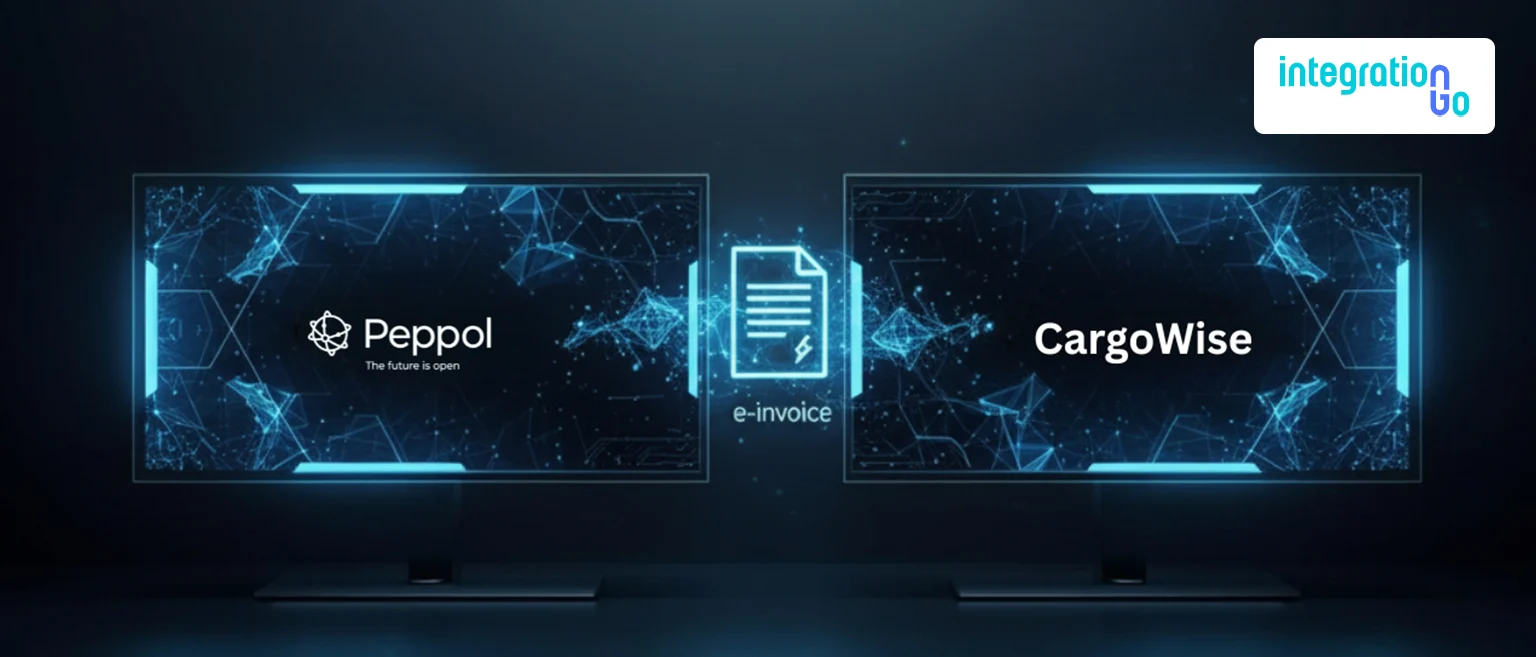

The European Union has implemented new e-invoicing regulations, which create challenges for logistics companies that operate across EU member states, including Belgium. The transition from basic email PDF invoice delivery to a regulated digital e-invoicing integration process has occurred. The authorities require both structured data and verifiable details, and they want automated validation systems. Organisations must generate e-invoices through a system that produces PEPPOL-standard invoices while maintaining operational speed.
CargoWise holds all necessary operational and financial data, which enables the creation of a compliant invoice. The missing link is delivering it in a way that aligns with Europe’s legal structure. That’s exactly where PEPPOL integration becomes indispensable. The integration of CargoWise with a PEPPOL-enabled system enables freight forwarders and logistics providers to transition from manual document processing to automated, compliant invoicing, which follows EU and Belgian regulations.
Understanding What PEPPOL Really Does for Logistics
The Pan-European Public Procurement Online (PEPPOL) network enables businesses to send digital documents through a standardised system that guarantees secure and compliant document delivery. The system of PEPPOL eliminates the need for businesses to handle different country-specific formatting requirements because it uses a single UBL standard that European Union governments and numerous private organizations accept.
The Belgian government requires PEPPOL for all public procurement transactions, and it plans to expand this requirement to cover business invoicing between companies. The Belgian authorities, along with their partners, receive invoices through the PEPPOL system, which functions as their single authorized payment processing method.
PEPPOL operates as a system that maintains its power through its regular operation pattern. All invoices need to follow identical requirements, which include legal standards and specific structural and tax-related requirements. The format removes ambiguity, eliminates manual validation, and ensures that the receiving system, whether government or corporate, can read and process the data instantly. Logistics businesses gain twofold benefits from this system because it leads to fewer disputes and faster operations, and creates improved financial records.
Why has PEPPOL become a Critical Requirement in Europe and Belgium?
European authorities are pushing for structured electronic invoicing because it improves tax transparency and reduces fraud. Belgium, in particular, is ahead of the curve. The country already requires PEPPOL e-invoices for government entities and is rolling out mandatory B2B e-invoicing starting January 1, 2025. Logistics companies dealing with Belgian customers, ports, or government agencies must be ready to submit invoices in the correct UBL structure.
Without PEPPOL integration, companies often end up converting invoices manually, which adds delays and increases the risk of rejection due to missing data fields. PEPPOL integration eliminates this problem by ensuring invoices meet the exact structure Belgium expects. The process becomes automated, predictable, and compliant, even at scale.
European authorities have established structured electronic invoicing systems to enhance tax transparency and fight against fraudulent activities. The nation of Belgium stands as a leader in this field. The government of this country requires PEPPOL e-invoices from all public agencies while implementing B2B e-invoicing as a compulsory requirement. Logistics companies dealing with Belgian customers, ports, or government agencies must be ready to submit invoices in the correct UBL structure.
How does this Integration Strengthens Speed, Accuracy, and Compliance?
When PEPPOL and CargoWise work together, the benefits spread across the entire organisation. Compliance becomes almost effortless because the integration ensures every invoice follows mandatory EU standards. Finance teams experience fewer rejected invoices and faster payment cycles because customers and government systems can process UBL invoices immediately.
Operational efficiency improves as well. Staff no longer waste time reformatting documents, retyping data, or manually correcting tax fields. Everything is pushed through a standardized pipeline, reducing the chance of human error. Audits also become significantly easier because every invoice submission includes a traceable path from validation to acceptance.
For high-volume logistics environments, this level of automation doesn’t just improve accuracy, it protects revenue by accelerating payment cycles and reducing disputes.
What CargoWise Users Need to Enable PEPPOL?
Setting up PEPPOL for CargoWise typically involves preparing the invoice export process, configuring the mapping to UBL format, applying country-specific validation rules, integrating with a certified PEPPOL Access Point, and establishing logging and exception monitoring. Once these components are in place, the system runs with minimal user involvement. Invoices flow automatically from CargoWise to the PEPPOL network, and the integration ensures ongoing compliance as regulations evolve.
How IntegrationGo Helps CargoWise Users Enable PEPPOL E-Invoicing?
PEPPOL compliance can be complex, but IntegrationGo makes the process simple by connecting CargoWise to a certified PEPPOL Access Point and ensuring every invoice meets EU and Belgian standards.
1. Correct UBL Mapping for CargoWise Invoices
We convert CargoWise invoice data into the required PEPPOL UBL structure, tax fields, VAT IDs, surcharges, shipment references, and GL details, without manual formatting.
2. Automatic EU/Belgium Compliance Checks
Every invoice is validated before sending, reducing rejection risks and ensuring it passes Belgian and EU rules on the first try.
3. Secure, Direct PEPPOL Connectivity
IntegrationGo sets up a compliant, automated channel so invoices flow from CargoWise to PEPPOL and then to your customers' or government systems.
4. Built-In Monitoring & Error Handling
Submission status, rejections, and exceptions are tracked in real time. Alerts help finance teams act quickly and avoid payment delays.
5. Scalable Setup for Multi-Country Operations
Whether invoicing in Belgium, the Netherlands, Germany, or France, the integration supports each country’s requirements from a single CargoWise workflow.
6. Always Up-to-Date With EU Regulatory Changes
As PEPPOL rules evolve, IntegrationGo automatically updates mappings and validations to keep your compliance intact.
IntegrationGo turns PEPPOL e-invoicing into a fully automated, compliant extension of your CargoWise finance workflow, with no manual work, no formatting issues, and faster payments across Europe.
Conclusion
As Europe moves toward full digital invoicing, staying compliant isn’t just about avoiding penalties, it’s about running a more efficient, reliable, and transparent operation. By integrating with PEPPOL and CargoWise, logistics providers benefit from automated compliance, accurate invoice transmission, faster payments, and complete visibility into financial workflows.
If your business operates in Belgium or anywhere across the EU, now is the time to modernize. PEPPOL integration ensures your CargoWise system stays aligned with evolving regulations and delivers the structured invoicing framework that customers and authorities expect. If you’d like to see how end-to-end e-invoicing integration fits into your CargoWise workflow, schedule a demo and explore the difference firsthand.