
Since Brexit, the UK trade has become less accepting. Export and import declarations now demand precision, speed, and constant alignment with CDS rules. One missing value, one outdated commodity code, or one late submission can put an entire shipment on hold.
For many logistics teams, the challenge isn’t knowing what to file, it’s managing customs data across disconnected systems. Operations are managed within CargoWise, while declarations are handled separately on customs platforms. That disconnect is exactly where delays, rework, and compliance risks creep in.
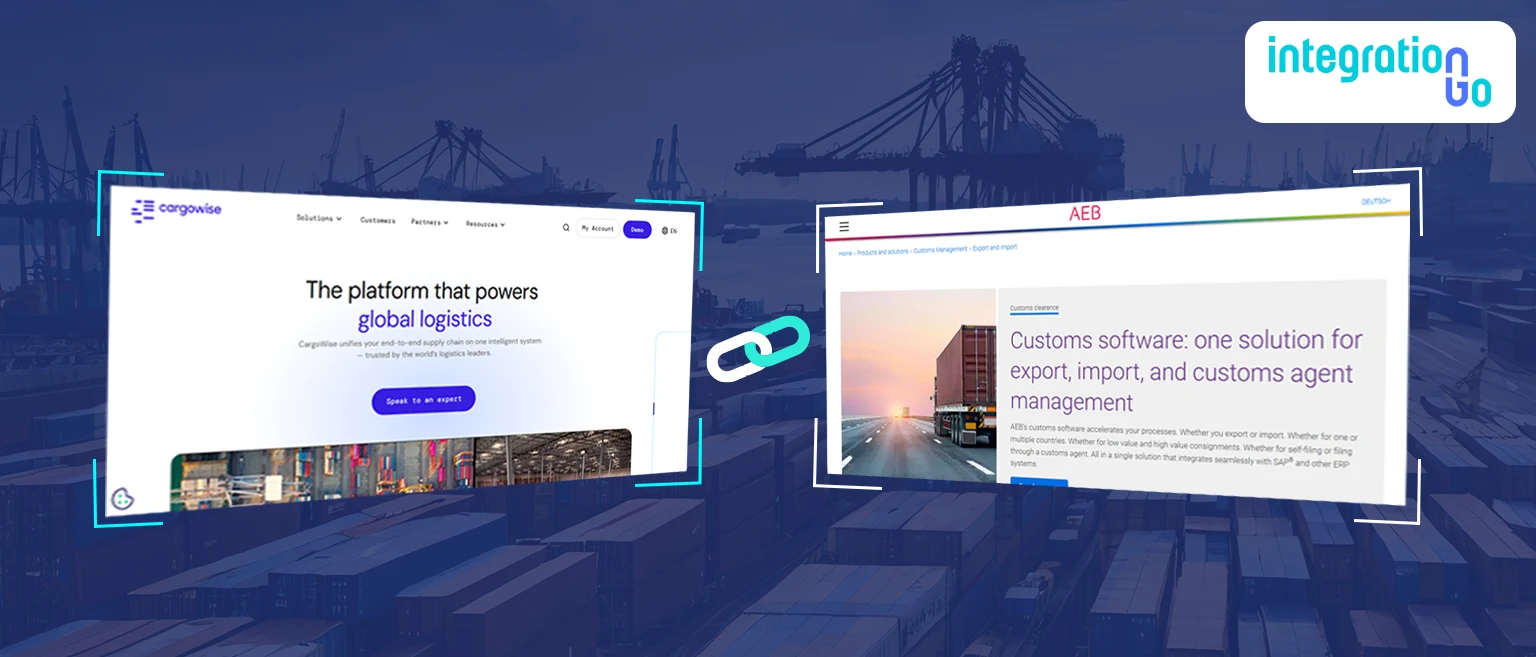
This is why integrating CargoWise with AEB Import and Export Filing CDS has become essential for UK exporters and importers seeking predictable and efficient customs clearance.
Understanding AEB Import and Export Filing CDS
AEB Import and Export Filing CDS is designed specifically for the UK’s post-Brexit customs landscape. It enables businesses to create and submit declarations directly to the UK Customs Declaration Service, replacing legacy processes with structured, automated filing.
For exports, AEB automates UK export declarations for goods leaving the UK to the EU and other destinations. It supports CSP badges from Pentant, MCP, CNS, and CCS, making it compatible with the connectivity models widely used across the UK.
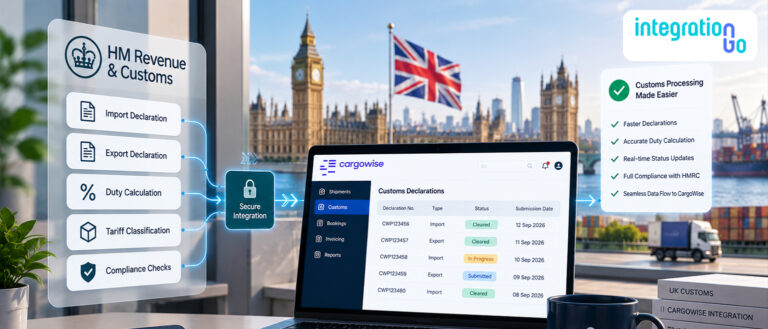
On the import side, AEB supports standard, simplified, and supplementary declarations for both arrived and pre-lodged goods. It communicates directly with HMRC, receiving Customs Response Messages, Single Administrative Documents, and safety and security filings. For businesses managing volume or complexity, AEB becomes the customs execution engine that ensures compliance without slowing trade.
Understanding CargoWise in the UK Customs Workflow
CargoWise is where logistics operations take shape. It holds shipment details, commercial invoices, commodity data, routing, parties, costs, and billing information. Long before customs filing begins, CargoWise already contains almost everything required for an accurate declaration.
The issue occurs when this information needs to be retyped into a customs system. Changes to shipment details made late in the process can result in mismatches, declaration rejections, or last-minute delays. Teams end up testing many systems rather than focusing on execution, which is why end-to-end integration is necessary.
When CargoWise is integrated with AEB Import and Export Filing CDS, that friction disappears. CargoWise becomes the single source of truth, feeding live shipment data directly into customs filing and receiving clearance updates back into the job file automatically.
Why Integrating CargoWise with AEB Matters More than Ever?
UK customs processes rely on timing and accuracy. When CargoWise and AEB operate separately, teams are forced to manually bridge the gap, copying data, checking values, and tracking statuses across platforms.
Integration replaces that manual effort with a continuous data flow. Shipment details, invoice values, and commodity codes move straight from CargoWise into AEB. Customs responses return instantly, keeping operations, customer service, and finance aligned without extra effort.
How the Integrated Cargowise and AEB Workflow Looks Like?
Once integrated, the workflow becomes simple and predictable:
- CargoWise sends shipment and invoice data to AEB
- AEB validates and submits declarations to CDS
- HMRC responses are received automatically
- MRNs, release messages, and statuses flow back into CargoWise
- Teams see real-time clearance updates inside the job file
For imports, the same thing applies. Declarations are created, submitted, and tracked without manual follow-up.
Customs stops being a last-minute task and becomes part of the shipment lifecycle.
Immediate Benefits Logistics Teams See
Integration delivers immediate, measurable improvements:
- Export and import declarations are created faster
- Manual data entry drops significantly
- Customs statuses are visible inside CargoWise
- Customer updates become proactive instead of reactive
- Finance receives accurate customs data without chasing operations
Customs stops being a last-minute hurdle and becomes a controlled step in the shipment lifecycle.
How IntegrationGo Makes CargoWise–AEB Integration Smoothly?
Integrating CargoWise with AEB Import and Export Filing CDS requires both technical expertise and real-world logistics understanding. That’s where IntegrationGo plays a critical role.
IntegrationGo begins by mapping the full export and import workflow, from job creation in CargoWise to declaration submission and response handling in AEB. Data fields are aligned carefully so both systems interpret information consistently. Secure data exchange ensures declarations are accurate, compliant, and audit-ready.
Once live, the integration runs quietly in the background CargoWise feeds AEB. AEB communicates with HMRC. Status updates flow back automatically. Teams don’t change how they work, they just work faster and with fewer errors.
Conclusion
UK import and export compliance isn’t getting simpler, but managing it doesn’t have to be painful.
Integrating CargoWise with AEB Import and Export Filing CDS removes duplication, reduces risk, and gives logistics teams real-time visibility across customs and operations. For CargoWise users, the added benefit of NCTS integration creates flexibility, speed, and resilience in a post-Brexit trade environment.If you’re ready to smooth UK customs workflows and connect your operational ERP directly to CDS, schedule a demo with IntegrationGo and see how end-to-end integration turns customs from a daily challenge into a predictable, scalable process.