

Your customer asks whether the vessel is arriving on schedule. Your operations team checks the shipping line's portal, but the latest ETA hasn't been updated in CargoWise. Meanwhile, the terminal has shared a revised schedule.
Now your team has to verify which information is current before responding.
This is a common challenge when shipping lines, terminals, and freight forwarders manage operational information in separate systems. The problem isn't just getting updates. It's making sure the right information reaches your operations team and the correct shipment record.
Let's look at how you can improve this process with CargoWise Shipping Line Integration.
What Information should You Receive from Shipping Lines and Terminals?
When you're managing ocean shipments, knowing that a container is in transit isn't enough. You need updates that help you decide what to do next.
For example, your operations team may need to know:
- Vessel schedules: When is the vessel expected to arrive or depart?
- Booking confirmations: Has the shipping line confirmed the booking?
- Container loading: Has the container been loaded onto the vessel?
- Discharge confirmation: Has the container been discharged at the destination port?
- Transshipment updates: Has the container moved to the connecting vessel?
- Gate movements: Has the container entered or left the terminal?
- Bill of lading information: Are the relevant shipping document details available?
Your team uses vessel schedules to plan ahead, loading and discharge events to track cargo movement, and booking information to coordinate shipments.
CargoWise supports electronic exchange of several ocean carrier information types, including schedules, bookings, tracking, verified gross mass, shipping instructions, and bill of lading data. The information available depends on the carrier connection and its supported services.
How can a Small Schedule Change Affect Your Entire Shipment?
Let's say you've arranged an import shipment from Shanghai to Los Angeles.
The shipping line initially provides an ETA of November 18. Your team uses that date to plan the next steps and update the customer.
A few days later, the shipping line revises the ETA to November 20.
If your team doesn't receive that update promptly, several things can happen:
- Your customer may still be expecting the cargo on November 18.
- Your delivery team may plan transportation around the wrong arrival date.
- Your operations staff may need to contact the shipping line to confirm the revised schedule.
- Someone may need to update the shipment record in CargoWise manually.
Now imagine handling 50 or 100 shipments with similar changes. Keeping every record current becomes a lot of work.
The same situation can happen with container loading, discharge, and transshipment updates. When information arrives through different channels, your team has to spend time collecting and verifying it before taking action.
How does a Shipping Line Update Reach the Correct CargoWise Shipment?
This is where integration becomes useful. Let's walk through a practical example so you can see how the information moves.
Imagine the shipping line changes the ETA of your booked vessel.
Example: Processing a revised vessel ETA
- The shipping line publishes a schedule change
The carrier makes the revised ETA available through an API/EDI message, or another supported data exchange method. - The integration receives the information
The integration retrieves the update, including available details such as the vessel name, voyage number, port, and revised arrival time. - The shipment is identified
The system uses relevant references, such as the carrier booking number, shipment reference, or container number, to find the correct CargoWise record. - The information is checked and mapped
The integration checks that the required references and date information are present, then maps the revised ETA to the appropriate CargoWise field. - CargoWise receives the update
Through the supported integration method, the revised information is processed against the matching shipment record. - Your team reviews the change
Your operations team can use the updated schedule to review delivery arrangements and communicate with the customer.
The same principle can apply to other supported events, such as loading and discharge confirmations. The system must identify the correct container or shipment before processing the event.
One important point: the integration should not blindly overwrite existing information. If an update cannot be matched or contains incomplete details, it should be flagged for review instead.
This helps your team avoid assigning an update to the wrong shipment.
Which Shipping Activities can You Improve through Automated Data Exchange?
You don't have to automate every shipping activity at once. Start with the updates that create the most follow-up work for your operations team.
| Your operational challenge | How integration can help? |
| Revised vessel schedules | Transfer supported ETA and ETD changes into CargoWise. |
| Missing booking confirmations | Exchange booking requests and confirmation details electronically. |
| Unconfirmed container loading | Process available loading events against the correct shipment. |
| Delayed discharge information | Bring supported discharge events into CargoWise. |
| Missing transshipment details | Share available connecting-vessel and movement information. |
| Manual shipping document updates | Exchange supported shipping instructions and bill of lading information. |
For instance, when a carrier confirms that a container has been loaded, your team can receive that event through the integration instead of relying on a separate email or portal check.
This doesn't mean every terminal or carrier provides the same information. It means you can design the integration around the operational events that your partners actually make available.
What should You Confirm Before Integrating Shipping Line Systems with CargoWise?
Before starting, check how your shipping partners currently exchange information. This is important because the integration depends on what each partner can provide.
Focus on four things:
- Available data: Which updates can the shipping line or terminal share?
- Communication method: Does the partner support API, EDI, or another exchange method?
- Shipment references: Which booking, container, vessel, or voyage references can identify the correct CargoWise record?
- Update handling: What should happen when information is missing, duplicated, or doesn't match?
Also, check whether your existing CargoWise carrier connections already support the information you need. This helps identify what is available and where a separate integration may be required.
How can IntegrationGo Help You Exchange Shipping Updates with CargoWise?
If your shipping partners use different systems and your team still handles updates manually, IntegrationGo can help you plan a suitable integration approach.
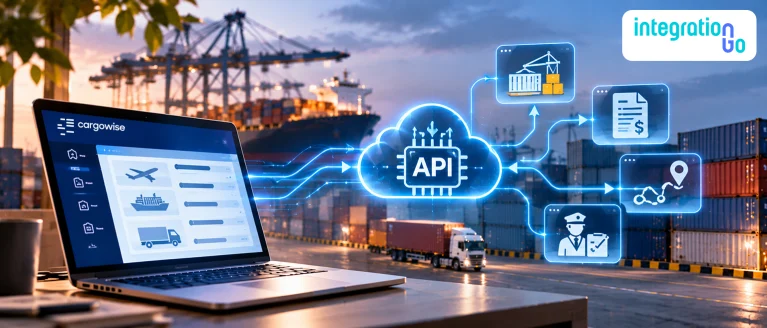
We assess the available interfaces, understand which operational updates your team needs, and integrationGo acts as middleware for data flow between the external systems and CargoWise.
This can include receiving carrier or terminal information, mapping booking and container references, validating incoming events, and processing supported updates against the correct CargoWise records.
We also consider how failed or unmatched updates should be handled, so your team has a way to identify issues instead of allowing incorrect information to pass through unnoticed.
The approach is based on your CargoWise environment and the technical capabilities of the shipping lines and terminals you work with.
Keep Your Shipping Operations Moving with Better Data Exchange
Your team needs accurate shipment information to make timely decisions. When updates are scattered across different systems, even a small schedule change can create unnecessary follow-ups.
CargoWise Shipping Line Integration can help bring supported operational updates into your existing workflow, reducing manual checks and making shipment information easier to manage.
Want to spend less time chasing shipping updates and more time managing your shipments? Contact us about your requirements and explore an end-to-end CargoWise integration approach made around your shipping operations.