
Customs delays don’t usually start with a warning. A shipment is booked, documents look fine, and everything seems on track, until one declaration takes longer than expected or a value doesn’t match. That’s when trucks wait, containers sit, and customers start asking questions no one wants to answer.
What separates logistics teams that stay in control from those constantly firefighting isn’t effort or experience. It’s how well their systems are connected. When operations and customs live on separate platforms, delays and errors are almost guaranteed. That’s why CargoWise and MIC customs integration has become essential for UK logistics businesses that want faster clearance, fewer errors, and predictable operations.
CargoWise: The Operational Backbone of UK Logistics
CargoWise is far more than a freight system. It is a cloud-based ERP built specifically for global logistics providers that need control, visibility, and scalability across complex supply chains. In the UK market, CargoWise plays a central role in managing everything that happens before and after customs clearance.
It brings shipment execution, documentation, compliance, warehousing, transport, and finance into one unified platform. From the moment a quote is created to the point an invoice is issued, every operational step is connected through structured workflows and real-time data.
For UK operators, CargoWise typically manages:
- Import and export shipments across air, ocean, and road
- Commercial invoices, packing lists, and transport documents
- Commodity details, values, weights, and routing
- Job costing, accruals, billing, and margin visibility
- Customer updates and milestone tracking
- Operational compliance and audit readiness
By the time a shipment reaches customs, CargoWise already contains almost all the information required to file an accurate declaration. The challenge arises when that data has to be manually re-entered or reconciled in a separate customs system. That’s where integration becomes critical.
MIC Customs Clearance: Built for Compliance, Not Operations
MIC Customs Clearance is a specialist customs platform designed to handle regulatory complexity at scale. It supports import, export, transit, and special customs procedures across multiple jurisdictions, ensuring declarations comply with local and international regulations.
MIC focuses entirely on the compliance layer of trade. It automates declarations, applies tariff logic, calculates duties and taxes, manages licenses and permits, and ensures filings meet the exact standards required by customs authorities.
Its core strengths include:
- Automated customs declarations across multiple regimes
- Country-specific rule handling and regulatory updates
- Tariff classification, valuation, and duty calculation
- Permit and license management
- Direct communication with customs authorities
- Audit-ready records and full traceability
Unlike CargoWise, MIC is not designed to manage shipment execution, billing, or customer workflows. Instead, it performs best when it receives clean, structured operational data from an upstream system and applies compliance logic without manual intervention. This makes MIC a strong fit when paired with CargoWise rather than used in isolation.
Why UK Businesses Need CargoWise–MIC Customs Integration?
When CargoWise and MIC operate separately, teams are forced to act as the integration layer. Shipment data is copied between systems, values are manually checked, and customs responses are chased through portals or emails. This slows clearance, increases error rates, and puts compliance at risk.
Integration removes that friction.
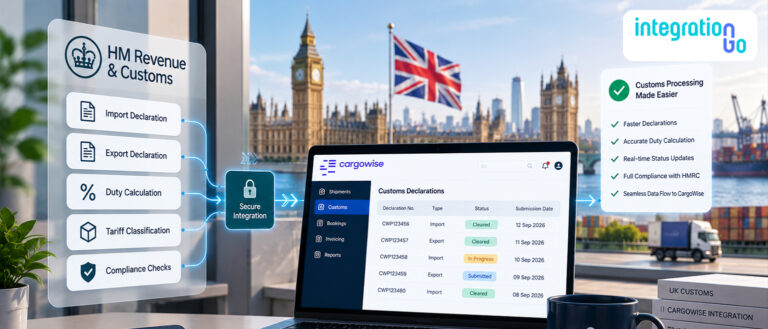
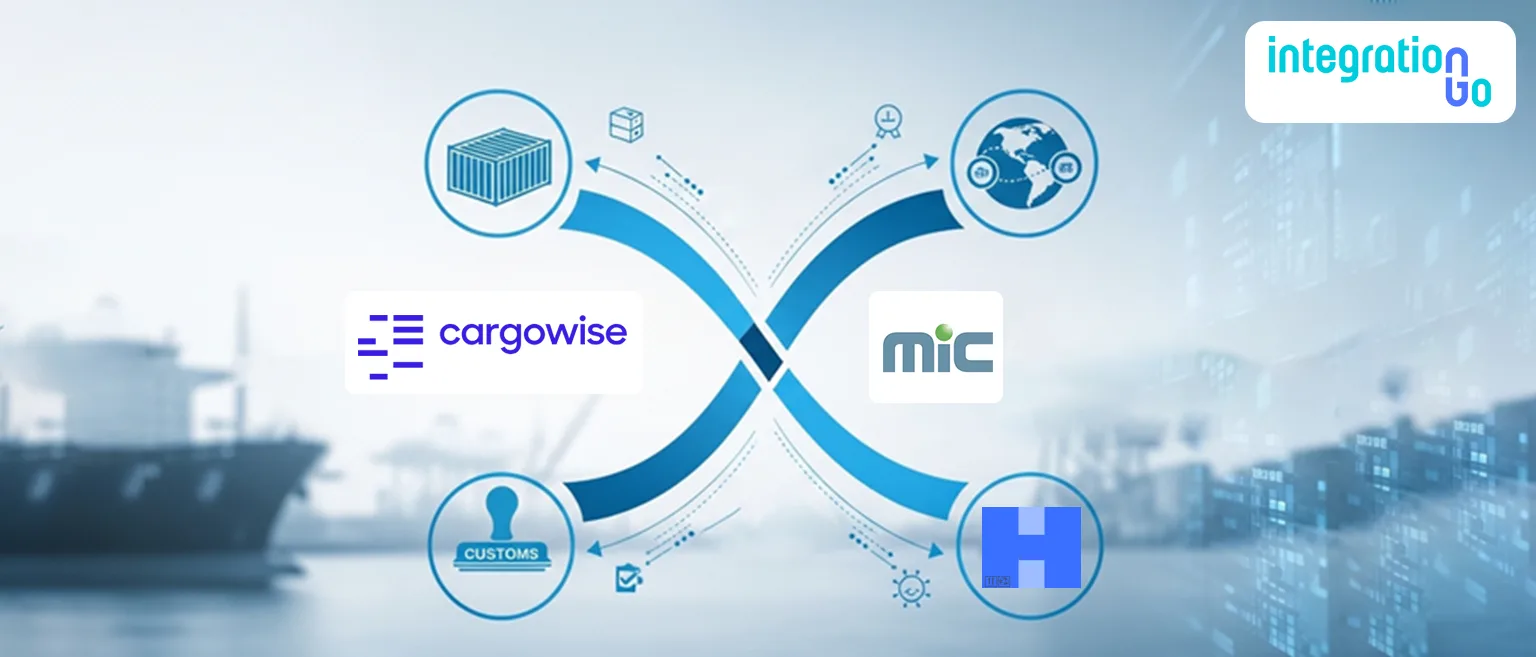
With a proper customs integration in place, CargoWise remains the single source of operational truth. Shipment and invoice data flows automatically into MIC for declaration processing. Customs responses, MRNs, releases, inspections, or queries flow back into CargoWise without rekeying or delay.
This creates a continuous, end-to-end integration between operations and customs.
For UK-based businesses, the impact is immediate. Export and import declarations are created faster. Errors caused by mismatched data drop significantly. Customer service teams gain real-time visibility into clearance status. Finance receives accurate duty and tax values without waiting for manual confirmation.
Customs stops being an obstacle and becomes a predictable part of the shipment lifecycle.
How CargoWise–MIC Integration Works in Practice?
With integration in place, CargoWise acts as the operational system of record. Shipment, invoice, and commodity data flow directly into MIC in structured formats, eliminating duplicate entry.
MIC applies compliance logic, validates the declaration, and submits it to the relevant customs authority. Responses are returned automatically and reflected in the CargoWise job file.
Customs milestones sit alongside transport, warehousing, and financial events. Teams no longer guess where a shipment stands, they know.
Operational Impact Across the Business
Once CargoWise and MIC are fully integrated, the benefits extend beyond the customs team:
- Faster and more consistent customs declarations
- Dramatically reduced manual data entry
- Fewer declaration rejections and corrections
- Real-time customs visibility within CargoWise job files
- Faster invoicing and improved cash flow
Customs integration improves operations, finance, and customer service at the same time.
Why does End-to-End Customs Integration Matter?
Partial automation still leaves gaps, true end-to-end customs integration ensures data flows smoothly from booking to clearance to billing without interruption.
Shipment changes propagate automatically. Customs responses update operational records instantly. Financial postings reflect actual clearance outcomes. This is what allows logistics businesses to grow volumes without increasing risk or headcount.
How IntegrationGo Enables Reliable CargoWise–MIC Integration?
Integrating CargoWise with MIC requires more than technical connectors. It requires real-world logistics and customs understanding. That’s where IntegrationGo adds value.
IntegrationGo begins by mapping actual workflows, from job creation and invoice finalization to declaration submission and response handling. Every data element is aligned so both systems interpret information consistently.
Secure integration layers manage data exchange, validation logic catches issues early, and audit trails support compliance reviews. Once live, the integration runs quietly in the background.
CargoWise feeds MIC. MIC manages customs clearance. Status updates flow back in real time. Teams don’t change how they work, they simply stop compensating for disconnected systems.
Conclusion: Customs Integration Defines Modern Trade Efficiency
UK customs isn’t getting simpler. Regulations are tightening, data accuracy expectations are rising, and customers expect transparency.
Businesses that treat customs as a disconnected function will always be reacting. Those that integrate customs into their operational core stay in control.
Integrating CargoWise with MIC Customs Clearance eliminates duplication, improves accuracy, and gives logistics teams real-time control across shipments, declarations, and financial outcomes.
If faster clearance, stronger compliance, and smoother operations are your priorities, customs integration is the leverage point. Schedule a demo with IntegrationGo and see how end-to-end CargoWise and MIC integration transforms customs from a daily challenge into a strategic advantage.