
If your team handles customs and shipment information across different systems, you know how quickly manual work can pile up. Someone has to enter shipment details, check customs updates, match information, and follow up when something needs attention.
Now imagine those customs activities staying connected to the shipment information your team already manages in CargoWise.
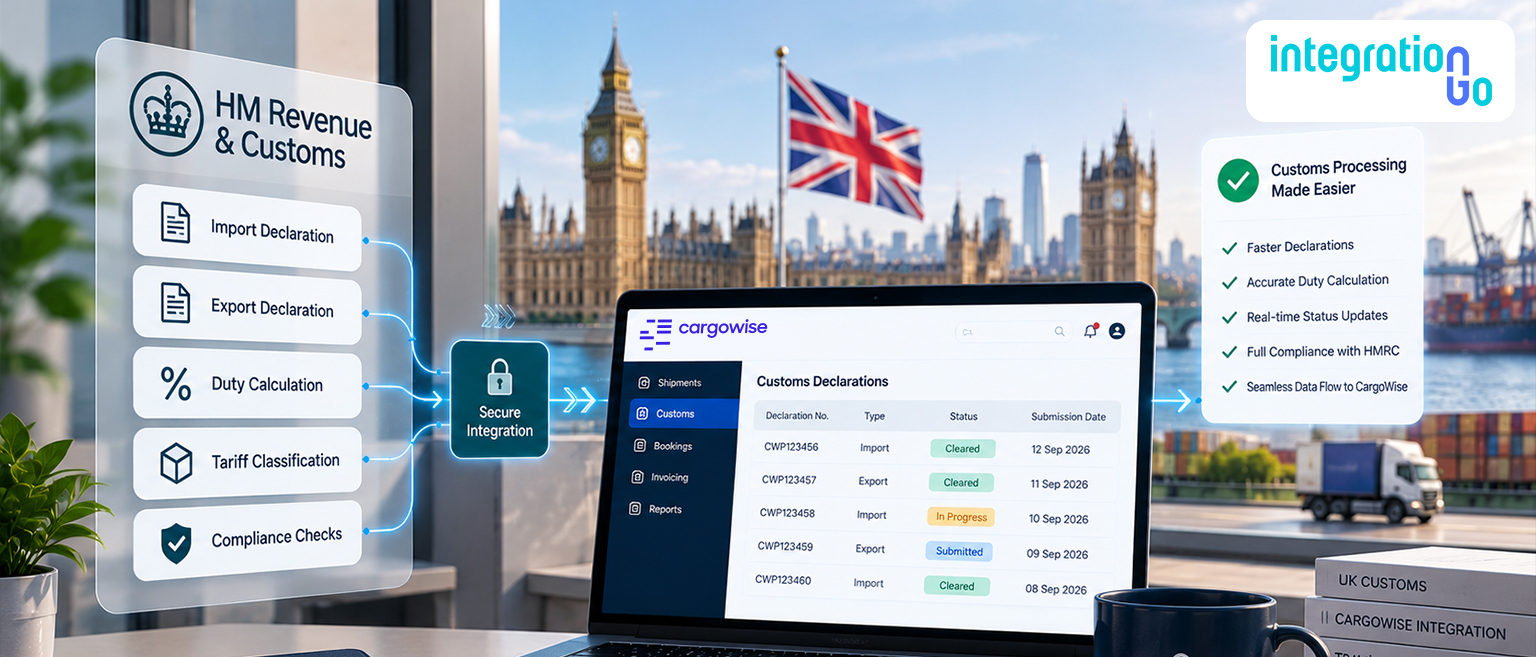
By integrating HMRC Customs with CargoWise, you can create a connected workflow that reduces repetitive data handling and makes it easier for your team to keep track of customs activity alongside everyday shipment operations.
What is CargoWise and How does it Support Logistics Operations?
Before looking at the CargoWise integration, it helps to understand where CargoWise fits into your operations.
CargoWise is a comprehensive, cloud-based enterprise resource planning (ERP) and logistics execution platform made by WiseTech Global for global freight forwarders, customs brokers, and supply chain operators.
It provides a connected environment for managing freight forwarding, customs, shipments, documentation, and other logistics activities.
When HMRC Customs is connected with CargoWise, customs processing can become part of the shipment workflow your team is already working with instead of being handled as a separate process.
How can HMRC Customs Connect With CargoWise?
Think of the integration as a bridge between your customs process and your CargoWise workflow.
Rather than having your team manually move relevant information between systems, the integration can allow data to flow between HMRC Customs and CargoWise based on your business requirements.
A simplified workflow can look like this:
Shipment Information → Customs Data → HMRC Customs Processing → Customs Response → CargoWise Update
This helps keep customs information connected to the shipment throughout the process.
How can this Integration Make Customs Processing Easier?
The main benefit is reducing the amount of repetitive work your team has to handle manually.
Instead of repeatedly entering shipment information, transferring updates, or switching between systems to check the latest status, a connected workflow can handle much of the information movement.
This can help your team:
- Reduce repetitive data entry
- Minimize manual handoffs
- Keep shipment and customs information connected
- Reduce unnecessary system switching
- Make customs updates easier to follow
- Spend more time handling exceptions
The goal isn't to take people out of the process. It's to reduce the repetitive work around the process so your team can focus on tasks that actually require their attention.
What Information can Move Between CargoWise and HMRC Customs?
The exact information exchanged will depend on your customs workflow and integration requirements.
However, relevant information can include:
- Shipment and consignment details
- Import and export declaration data
- Trader and reference information
- Goods and location details
- Customs responses and updates
- Declaration status information
- Supporting documentation
When this information stays connected, your team can get a clearer picture of what is happening with a shipment and its customs process.
How can Better Customs Visibility Help Your Logistics Team?
Consider a common situation.
You need to know whether a declaration has been processed, whether something needs attention, or whether a shipment can move forward. If the information sits in different systems, your team may need to check each one and manually match the details.
That extra checking takes time.
With an integrated workflow, relevant customs information can be connected to the shipment information in CargoWise. This makes it easier to identify updates, follow up on exceptions, and understand what needs to happen next.
For busy UK logistics teams, that can make day-to-day customs management much easier to handle.
What Problems can Manual Customs Processing Create?
When customs and shipment processes operate separately, your team may repeatedly have to:
- Enter the same information
- Check multiple systems
- Match customs updates with shipments
- Follow up on declaration statuses
Each task may seem small. But when your team handles a high volume of shipments, those small tasks can quickly become a significant part of the daily workload.
Manual processing can also increase the risk of data entry mistakes and make it harder for teams to maintain a clear view of customs activity.
How can IntegrationGo Connect HMRC Customs With CargoWise?
This is where IntegrationGo acts as the middleware layer connecting HMRC Customs with CargoWise.
Instead of your team manually moving information between the two systems, IntegrationGo connects them and manages the exchange of relevant data. It works between CargoWise and HMRC Customs to map information, route data, handle responses, and keep the workflow connected.
The integration process can include:
Data Mapping:
Identify and map the shipment and customs information required for your workflow.
System Connectivity:
Connect CargoWise with HMRC Customs.
Data Exchange:
Enable relevant information to move between the systems.
Response Handling:
Bring customs responses and updates back into the CargoWise workflow.
Exception Handling:
Identify information or processing issues that require attention.
Testing & Validation:
Test the complete workflow to make sure the integration works as expected before going live.
The goal is to build an integration that fits your existing logistics workflow rather than adding another process for your team to manage.
Conclusion
Customs processing becomes easier when customs information and shipment operations work together instead of being handled separately.
By integrating HMRC Customs with CargoWise, UK logistics teams can reduce repetitive data entry, minimize manual handoffs, and improve visibility into customs activity.
Looking to simplify your customs workflow? Contact us about building an End to End CargoWise Integration for your operations.