
Freight forwarding and shipping operations are moving faster than ever, yet nearly 60% of logistics businesses still struggle with disconnected systems and limited operational visibility.
Transportation platforms often operate separately from warehouse systems, customs tools, ERP platforms, and customer-facing applications, creating delays, duplicate data entry, and slower decision-making.
That’s why modern Transportation Management Systems (TMS) have evolved beyond shipment planning tools. Today’s TMS platforms are designed to integrate operations, improve visibility, and support end-to-end supply chain efficiency.
What is CargoWise and Why is it Widely Used by Freight Forwarder?
CargoWise is a cloud-based logistics ERP and freight management platform designed specifically for freight forwarders, customs brokers, and logistics providers. It acts as a centralized operational system where transportation, customs, warehousing, accounting, and shipment visibility workflows come together.
Unlike traditional freight software that only manages transportation, CargoWise handles the full operational lifecycle of a shipment.
It supports:
- Freight forwarding across air, ocean, and road
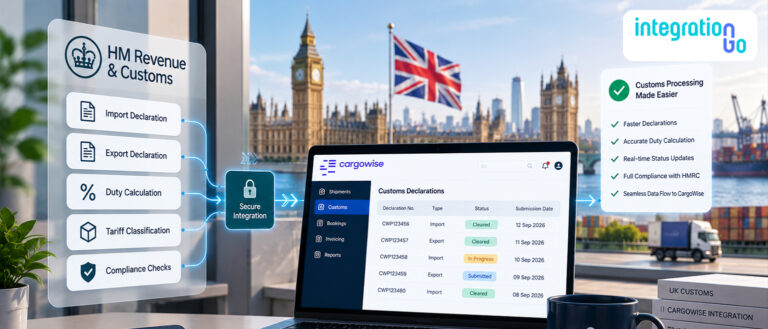
- Customs and compliance workflows
- Warehouse and inventory operations
- Shipment tracking and milestone visibility
- Financial management and invoicing
One of the biggest reasons freight forwarders rely on CargoWise is its ability to manage global logistics operations within one environment. Large logistics providers use it to maintain visibility across multiple offices, transportation modes, and international trade lanes.
Because CargoWise operates as both a logistics ERP and transportation platform, it becomes the operational backbone of many freight forwarding businesses.
What is a TMS and Why does it Matter in Modern Supply Chains?
A Transportation Management System (TMS) is designed to help businesses plan, execute, track, and optimize freight movement across supply chains. But modern TMS platforms do much more than transportation planning.
Today’s supply chains require systems that connect transportation with:
- Warehouse operations
- Customs and compliance workflows
- Financial systems
- Customer communication platforms
- ERP and inventory environments
Without integration, businesses often rely on spreadsheets, emails, and manual updates to move information between systems. This creates operational friction.
A connected TMS environment improves:
- Real-time shipment visibility
- Inventory synchronization
- Faster operational coordination
- Financial accuracy and reporting
- Customer responsiveness
This is why integrated TMS ecosystems have become essential for freight forwarders and shippers looking to improve supply chain efficiency.
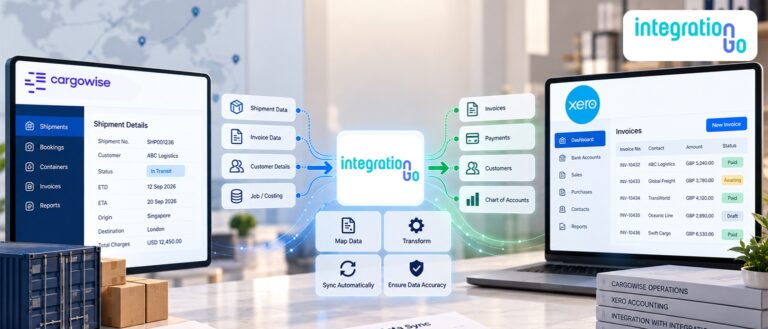
CargoWise with TMS integration helps connect logistics operations, automate data flow, and improve real-time visibility across the supply chain.
What are the Top 4 TMS Platforms Freight Forwarders and Shippers Integrate Most Often?
Modern freight operations require transportation systems that can support visibility, warehouse coordination, customs workflows, and financial processes at the same time.
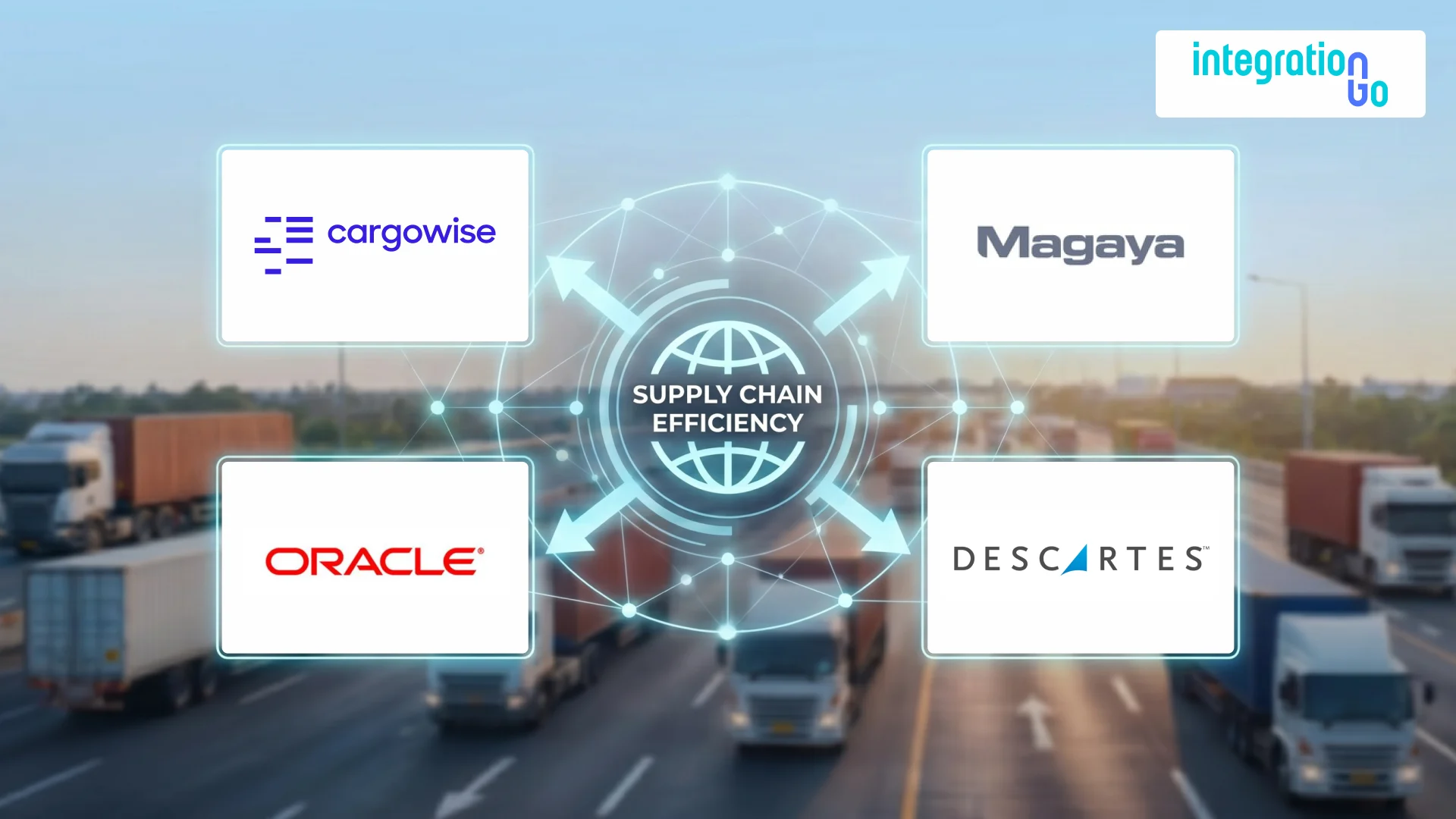
CargoWise, Magaya, Descartes, and Oracle TM each support supply chain efficiency differently, depending on operational complexity and business requirements.
CargoWise
CargoWise is heavily focused on freight forwarding and international logistics operations. Its biggest strength lies in connecting transportation, customs, warehousing, shipment visibility, and financial workflows within one operational environment.
Instead of managing freight execution and accounting separately, CargoWise creates a centralized logistics ecosystem where operational and financial data remain connected in real time.
This enables businesses to enhance:
- Shipment visibility across global operations
- Customs and compliance coordination
- Financial workflow accuracy
- Multi-country operational management
For enterprise freight forwarders handling high shipment volumes, CargoWise creates stronger synchronization between transportation, customs, warehouse, and accounting workflows.
Although CargoWise implementations can be complex and often require longer onboarding timelines, it remains one of the strongest operational platforms for global freight forwarding environments.
Magaya
Magaya is especially popular among freight forwarders operating warehouse facilities alongside transportation services.
Its biggest strength lies in connecting warehouse inventory visibility with freight execution workflows. Instead of treating warehousing and transportation separately, Magaya combines them into one operational environment.
This helps businesses improve:
- Inventory tracking accuracy
- Shipment coordination
- Warehouse utilization
- Fulfillment speed
For mid-sized freight forwarders, Magaya creates smoother synchronization between warehouse operations and transportation execution.
Although some businesses report that the interface feels older compared to newer cloud-native systems, Magaya remains highly effective for warehouse-driven freight environments.
Descartes
Descartes is widely recognized for its strong customs compliance and global trade intelligence capabilities.
The platform focuses heavily on:
- Customs declaration workflows
- Trade compliance visibility
- Denied party screening
- Cross-border shipment management
- Regulatory reporting and audit support
For freight forwarders handling international trade, this level of customs integration significantly reduces compliance-related shipment delays.
Instead of treating customs as a separate process, Descartes integrates compliance directly into transportation workflows, helping businesses improve operational consistency across global trade lanes.
Oracle TM
Oracle Transportation Management (Oracle TM) is designed primarily for large enterprise shippers requiring advanced transportation planning and operational analytics.
Oracle TM supports:
- Transportation planning and optimization
- Carrier management and freight visibility
- Transportation cost analysis
- Enterprise-level logistics reporting
Its biggest strength comes from deep integration with Oracle ERP systems, allowing transportation workflows to align directly with enterprise financial planning and reporting.
For organizations managing large transportation networks across multiple regions, Oracle TM provides strong visibility and scalability.
However, Oracle TM implementations are often resource-intensive and require dedicated IT and Oracle expertise.
Why CargoWise Integrations with Your TMS Improve Supply Chain Efficiency?
CargoWise already acts as a powerful operational backbone for freight forwarders. But when CargoWise integrates with other TMS, warehouse systems, customs tools, and ERP platforms, the operational value becomes much larger.
Instead of operating independently, systems begin working together in real time.
This improves:
- Shipment visibility across departments
- Warehouse and inventory synchronization
- Customs and compliance coordination
- Financial reporting and billing accuracy
- Customer communication and tracking visibility
For enterprise freight forwarders managing large shipment volumes, this creates a highly connected operational environment where transportation, customs, warehouse, and financial workflows remain aligned throughout the shipment lifecycle.
How IntegrationGo Connects TMS Platforms Across Supply Chain Systems?
Even the strongest TMS platform cannot deliver its full operational value without proper integration across surrounding systems.
IntegrationGo acts as the intermediary layer that integrates CargoWise, Magaya, Descartes, Oracle TM, ERP platforms, warehouse systems, customs applications, and customer-facing tools into one connected ecosystem.
To ensure smooth and scalable integration, the process follows a structured workflow.
Steps We Follow for Our Integration Service
Project Management
Every integration begins with structured project management to ensure timelines, operational requirements, and technical workflows stay aligned throughout the implementation.
Requirements Analysis
The next step focuses on understanding and gathering the required business and technical requirements.
This includes analyzing:
- Operational workflows
- Shipment and inventory data flow
- ERP and customs requirements
- Warehouse and financial system integration
This stage ensures the integration reflects how the business actually operates.
Environment Setup
Once requirements are finalized, the integration environment is configured.
This includes:
- Setting up the web server
- Configuring AS2 communication servers
- Preparing CargoWise and surrounding systems for integration
This creates the technical foundation required for stable system communication.
Development
At this stage, the actual integration workflows are implemented.
This includes:
- Building EDI connections
- Configuring system mappings
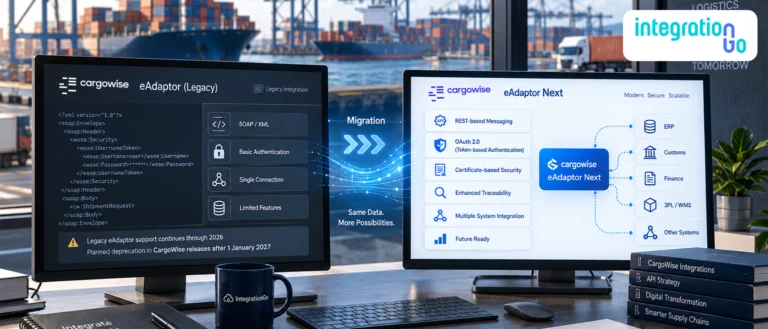
- Integrating operational workflows with eAdaptor
- Connecting transportation, warehouse, customs, and ERP data flows
The focus is on creating a seamless operational environment where systems communicate automatically
Integration Testing
Before deployment, the entire workflow is tested thoroughly to ensure proper data flow and functionality.
Testing validates:
- Shipment synchronization
- Inventory updates
- Customs and financial visibility
- Data mapping accuracy
- Workflow reliability
This step ensures the integration operates correctly before going live.
Deployment
Once testing is completed successfully, the solution is deployed into both testing and production environments.
This ensures that businesses can transition smoothly into live operational workflows without disrupting ongoing supply chain activities.
Documentation
Detailed documentation is then provided, including:
- Architecture diagrams
- EDI-to-CargoWise mapping structures
- User guides for CargoWise setup
- EDI configuration documentation
This ensures businesses maintain visibility into how the integration environment operates and supports future scalability.
Conclusion
Modern supply chains depend on connected systems that allow information to move as efficiently as freight itself. CargoWise, Magaya, Descartes, and Oracle TM each improve supply chain efficiency in different ways, but their real value comes through integration.
When transportation, warehouse, customs, and financial systems work together in real time, businesses gain stronger visibility and operational control across the supply chain. Schedule a demo today to see how integrated TMS ecosystems can simplify operations and create true end-to-end supply chain connectivity.