
A shipment can be ready to move, but customs processing can still hold things up. Your team may already have the shipment details in CargoWise, yet the same information may need to be prepared, submitted, checked, and followed through the customs process.
That is where a connected workflow can make a real difference.
BADR is Morocco’s electronic customs clearance system for imported and exported goods and covers customs formalities. When CargoWise is connected with BADR, relevant customs information can move between the logistics workflow and the customs process instead of leaving your team to manage every handoff manually.
Here’s what that connection can look like in practice.
What are CargoWise and BADR, and Why does their Connection Matter?
CargoWise is a cloud-based logistics ERP platform used to manage freight forwarding, shipment information, documentation, customs, and other logistics activities. It gives logistics teams a central place to manage the information connected to their shipments.
BADR, or Base Automatisée des Douanes en Réseau, is Morocco’s electronic customs-clearance system. It supports customs operations for imported and exported goods and covers customs formalities through an online environment.
The two systems serve different parts of the process. CargoWise manages the logistics and shipment workflow, while BADR handles the customs-clearance process.
Connecting them helps bring those two workflows together.
How can CargoWise and BADR Work Together for Customs Processing?
Think of the integration as a bridge between the shipment workflow and the customs process.
A typical flow can look like:
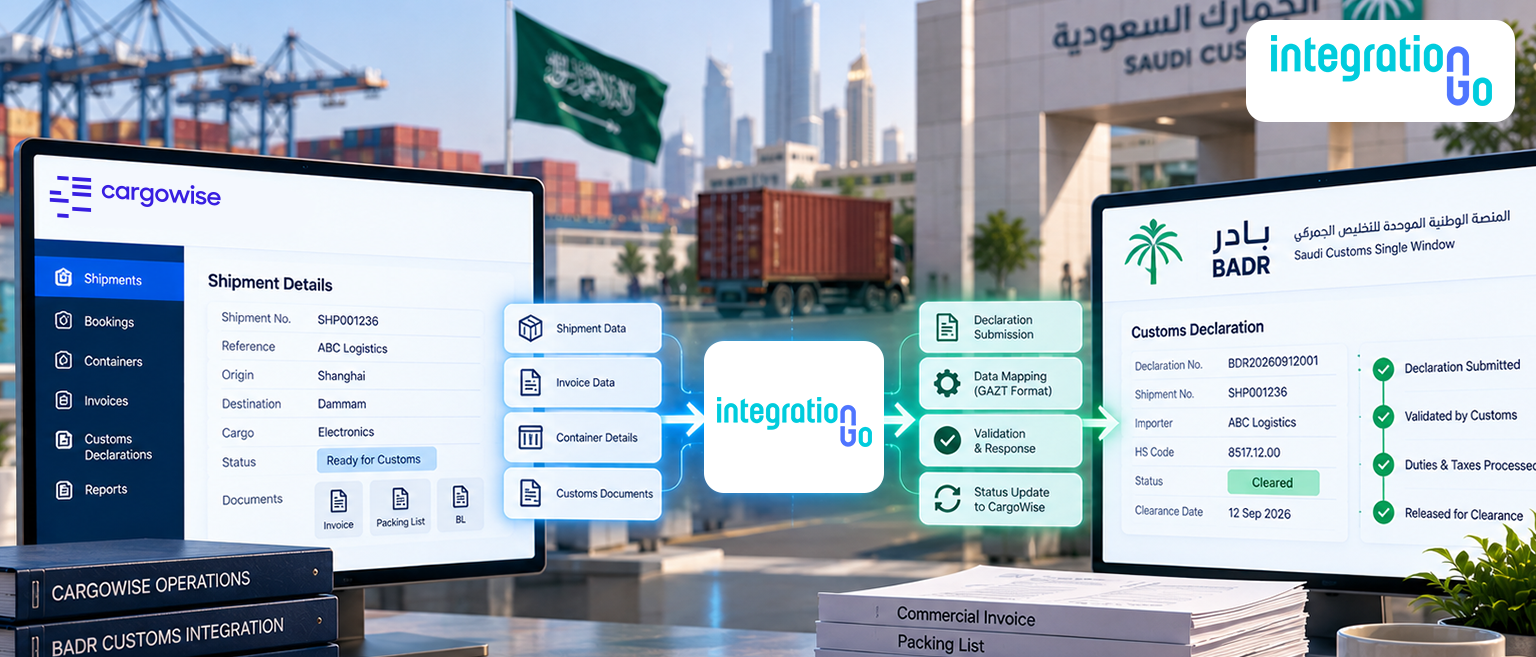
CargoWise → Customs Data → Validation → BADR Submission → Customs Response → Status Update
This is where CargoWise customs integration can connect the shipment workflow with the BADR customs process, allowing relevant information to move between the two environments in a structured way.
The integration can take the required information from CargoWise, prepare it for the customs workflow, validate the data, and submit it to BADR. Once BADR returns a response, that information can be handled within the connected workflow.
Instead of treating customs as a completely separate task, your team can keep it connected to the shipment process they are already managing.
What Customs Information can Move From CargoWise to BADR?
The exact information depends on the customs process and integration requirements, but the workflow can support the movement of relevant declaration and shipment information.
This may include:
- Shipment and consignment details
- Import or export declaration data
- Shipper and consignee information
- Goods and commodity details
- Transport information and references
- Supporting customs documents
- Customs responses and status information
Morocco’s customs guidance also identifies declaration information and supporting documents such as commercial invoices, transport documents, packing lists, and certificates as part of customs-clearance processes.
The key idea is simple: use the information already available in CargoWise instead of repeatedly entering the same data into another system.
How can Data Validation Help Avoid Customs Processing Issues?
A customs declaration can run into trouble because of missing, incomplete, or incorrectly structured information that is why validation should happen before the data reaches BADR.
The integration can check the required information and structure before submission, helping identify potential issues earlier in the workflow.
For your team, that means fewer surprises after submission and a better chance of catching data problems before they turn into avoidable delays.
What if a BADR Declaration Needs to be Corrected or Resubmitted?
Not every declaration will go through perfectly the first time. A customs submission may need correction because of an error or because additional information is required.
In that situation, the integration can help capture the response from BADR and identify the transaction that needs attention.
Your team can then review the issue, make the required correction, and resubmit the declaration through the connected workflow.
A practical process could look like:
BADR Response → Identify Issue → Correct Data → Resubmit → Track Status
This gives your team a clearer path for dealing with exceptions instead of manually figuring out where a failed submission stands.
How can Better Customs Visibility Help Logistics Teams?
Once declarations are being submitted through an integration, your team still needs to know what is happening afterward.
Monitoring can provide visibility into the status of customs transactions and help identify which declarations have been processed and which ones need attention.
That can make it easier to answer everyday questions:
- Has the declaration been submitted?
- Did the customs system accept it?
- Does anything need to be corrected?
- Has the status changed?
- Which shipments are waiting for customs action?
BADR itself is part of Morocco’s broader electronic customs environment, while customs services also provide online status-tracking capabilities for economic operators and freight forwarders.
Connecting that customs activity with your CargoWise workflow can give your operations team a more complete view of the shipment.
How does IntegrationGo Connect CargoWise With BADR to Support the Full Customs Workflow?
IntegrationGo acts as the middleware between CargoWise and BADR, managing the movement of customs information between the two systems. It serves as the processing layer that receives data from CargoWise, applies the required validation and transformation, and passes the information to BADR.
Depending on the required connectivity and customs-system specifications, IntegrationGo can support EDI or API integration to exchange the required data between CargoWise and BADR.
The integration can support key stages such as:
- Customs data preparation and transfer
- Data and schema validation
- Declaration submission
- Response handling
- Error identification
- Correction and resubmission
- Customs status monitoring
- Supporting document exchange
- OCR-based declaration data extraction where required
With IntegrationGo working as the middleware layer, the customs process can stay connected to the shipment information already being managed in CargoWise, reducing the need for your team to handle every data handoff manually.
How can CargoWise–BADR Integration Support Smoother Customs Operations?
When shipment and customs information are connected, your team can spend less time moving the same data between systems and more time managing the exceptions that actually need attention.
A CargoWise–BADR integration can create a more connected path from shipment information and declaration preparation to validation, submission, customs responses, corrections, and status tracking.
For logistics teams handling customs operations in Morocco, that means a workflow that is easier to follow, easier to monitor, and less dependent on repetitive manual handoffs.
Ready to connect your CargoWise workflow with BADR? Contact us about building an End to End CargoWise integration that connects your customs data, declaration processing, response handling, and monitoring into one connected workflow.