
You don’t lose control in logistics because of delays, you lose it when you can’t see what’s happening.
Everything looks right. Your shipment sits in CargoWise. Your invoice is in your financial system. Then customs flags it, and suddenly everything slows down.
The issue isn’t your data, it’s the disconnect.
When systems operate independently, teams spend time resolving mismatches instead of moving shipments. Integration changes that. When systems are connected, data flows once, remains consistent, and provides your team with real-time visibility and control.
That’s where custom integration comes in, not just integrating systems but aligning how your business actually works.
Why ERP and CargoWise Customs Must Work as One System?
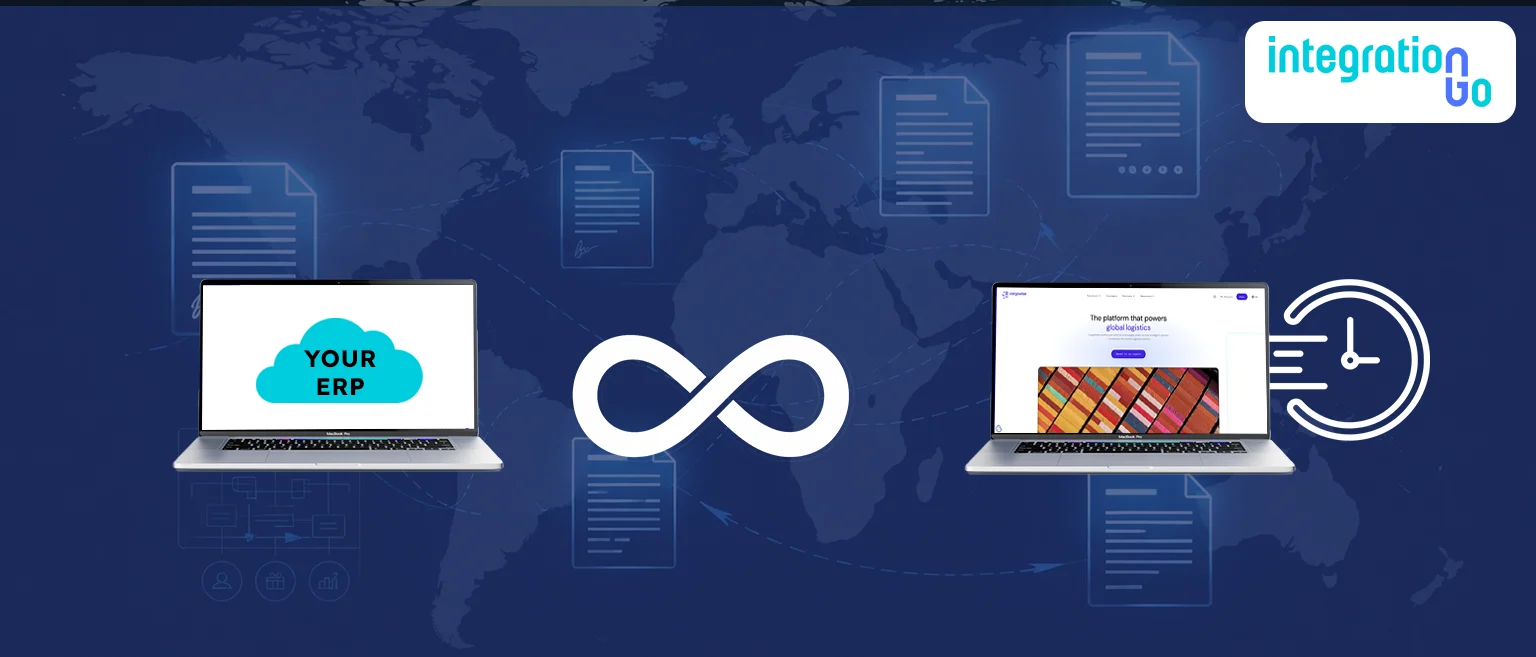
Your ERP, whether it’s SAP, Oracle NetSuite, Microsoft Dynamics 365, Infor, or QuickBooks, is where your financial and operational data lives. CargoWise is where logistics execution and customs processing happen.
When these systems are disconnected, inconsistencies are unavoidable. But when they are integrated, everything aligns into a single, reliable workflow.
Integration connects the following:
- Financial data with shipment execution
- Invoice values with customs declarations
- Commodity and HS codes across systems
- Tax and duty calculations with compliance rules
This alignment ensures that data remains accurate from creation to customs submission, reducing friction across your operations
The Hidden Cost of Disconnected Systems
Most teams don’t realize how much inefficiency they’ve normalized. Manual workarounds become routine, and over time, they slow everything down.
Teams often end up copying data, rechecking values, and reconciling systems just to keep operations moving.
This leads to:
- Delayed customs submissions
- Increased data errors
- Slower billing cycles
- Higher compliance risks
- Increased pressure on operations teams
As shipment volumes grow, these challenges multiply, making it harder to scale efficiently.
How Integration Transforms Customs, Compliance, and Visibility?
Now imagine a workflow where everything is already aligned. A sales order is created in your ERP, and the data flows automatically into CargoWise. Invoice values, commodity details, tax information, and shipment data are already structured and consistent before customs processing even begins.
There is no duplication or last-minute correction. Declarations are created faster, compliance checks happen earlier, and financial data stays aligned across systems.
With integration, you gain:
- Faster customs processing
- Reduced manual data entry
- Early compliance validation
- Consistent financial and operational data
- Real-time visibility across teams
Operations teams can track shipments instantly. Finance teams see duties and taxes in real time. Customer service teams respond confidently without chasing updates.
Why Integration Becomes a Competitive Advantage as You Scale?
Growth in logistics brings more complexity, more shipments, more declarations, and more compliance requirements. Without integration, businesses try to keep up by adding more manual work, but that approach doesn’t scale.
Integration creates a system that grows with your business.
The advantage becomes clear:
- Faster shipment processing
- Reduced compliance risks
- Improved financial accuracy
- Better customer responsiveness
While others struggle with increasing complexity, your operations remain streamlined, controlled, and scalable.
How IntegrationGo Delivers a Structured, End-to-End Integration Approach?
Successful integration isn’t just about integrating systems, it’s about connecting workflows in a way that reflects real logistics operations. IntegrationGo follows a structured, process-driven approach to ensure ERP and CargoWise work smoothly together.
It starts with understanding how your business actually operates. Every workflow, from shipment creation in CargoWise to invoice generation in ERP and customs validation, is mapped clearly. This creates a blueprint that defines how data should flow, when actions should occur, and how financial impacts, such as duties and landed costs, are recorded.
Once the process is defined, data mapping ensures consistency. Critical fields such as HS codes, commodity descriptions, invoice values, shipment IDs, GL accounts, and party details are standardized to ensure ERP systems such as SAP, Oracle NetSuite, Microsoft Dynamics, Infor, and CargoWise interpret the data consistently.
The next step is enabling real-time connectivity. Through APIs or middleware, IntegrationGo establishes a two-way data flow. Shipment and invoice data are moved into CargoWise for execution and customs processing, while updates such as clearance status, duty calculations, and financial postings flow back into the ERP, ensuring both systems remain aligned in real time.
Security and accuracy are built into the process. With encrypted connections, role-based access controls, and automated validation checks, the integration ensures that data remains secure and compliant. End-to-end testing replicates real-world scenarios across air, sea, and road shipments, including exceptions, ensuring a smooth, predictable go-live.
Even after deployment, the integration continues to evolve. Monitoring dashboards track data flows, errors, and performance in real time. This enables continuous improvement, ensuring the integration scales with your business.
This structured approach reduces risk, eliminates guesswork, and ensures your ERP–CargoWise integration delivers real operational value, not just technical connectivity.
Conclusion: Control Comes from Connection
Control in logistics is gained by working with connected systems rather than working harder. When your ERP and CargoWise customs integrate, data flows smoothly, compliance becomes proactive, and your team has real-time visibility into every shipment.
Ready for End-to-End Integration?
If you’re still dealing with manual work and disconnected systems, it’s time to simplify. Schedule a demo with IntegrationGo and experience true end-to-end integration with CargoWise.