
Your freight team may prepare invoices in CargoWise, but sending them electronically can involve more than creating an invoice. The data must be accurate, follow the required format, and reach the right destination through a compatible e-invoicing solution.
Singapore’s InvoiceNow network helps businesses exchange structured electronic invoices through Peppol. For freight forwarders using CargoWise, the key question is how to connect their invoicing workflow while meeting the requirements that apply to their business.
What is Singapore InvoiceNow, and How does it Affect Freight Forwarders?
InvoiceNow is Singapore’s nationwide e-invoicing network built on Peppol. It allows businesses to send and receive structured invoice data electronically rather than relying entirely on PDFs, emails, or manual data entry.
For freight forwarders, invoicing can involve customer charges, supplier bills, freight costs, and other shipment-related transactions. When invoice information moves between systems manually, teams may need to re-enter details, check discrepancies, and correct data before processing.
InvoiceNow can help businesses exchange structured invoice data, reduce repetitive data entry, improve consistency, and prepare for applicable GST InvoiceNow requirements.
However, using electronic invoices alone does not necessarily mean your business is ready for InvoiceNow. Your invoicing solution and data exchange process must support the applicable requirements.
How does Peppol Help Businesses Exchange E-Invoices?
Peppol provides a standardized way for connected businesses to exchange electronic documents. Its network uses Access Point providers to route documents between participating organizations.
A typical invoice exchange follows this process:
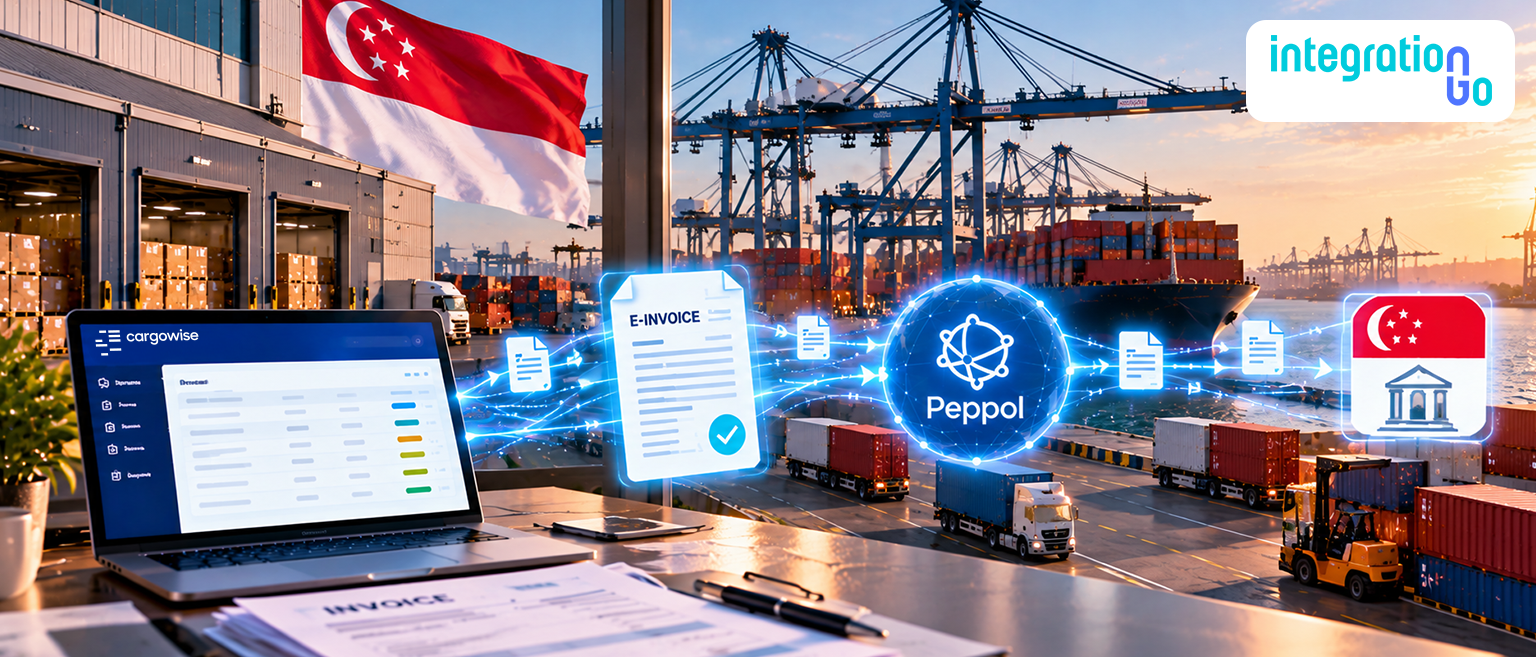
Seller’s system → Sender’s Access Point → Peppol network → Receiver’s Access Point → Buyer’s system
For example, a freight forwarder generates an invoice in its business system. The invoice data is prepared in the required format and sent through a connected Access Point. The receiving business can then receive the structured invoice through its compatible solution.
For CargoWise users, the important step is preparing invoice data correctly before it reaches the InvoiceNow-connected solution. Data mapping, required fields, validation, and transfer methods must align with the systems involved.
When does Your Business Need to Comply With Singapore’s InvoiceNow Requirements?
Singapore is introducing the GST InvoiceNow requirement in phases. The applicable date depends on your business’s GST registration circumstances and the criteria published by the Inland Revenue Authority of Singapore (IRAS).
The published rollout includes these milestones:
- 1 November 2025: Companies voluntarily registering for GST within six months of incorporation.
- 1 April 2026: Businesses applying for voluntary GST registration on or after this date, regardless of incorporation date or business structure.
- 1 April 2028: Businesses applying for compulsory GST registration on or after this date, and existing GST-registered businesses with annual supplies of S$200,000 or less.
- 1 April 2029: Existing GST-registered businesses with annual supplies of S$1 million or less.
- 1 April 2030: Existing GST-registered businesses with annual supplies of S$4 million or less.
- 1 April 2031: Existing GST-registered businesses with annual supplies above S$4 million.
These milestones are subject to the detailed conditions published by IRAS. Check the official guidance to confirm which requirements and deadlines apply to your business.
Meeting the requirement involves more than sending invoices electronically. You need to confirm that your solution supports the required InvoiceNow workflow and the applicable invoice data submission to IRAS.
How can You Connect CargoWise to Singapore’s InvoiceNow Network?
Integrating CargoWise with InvoiceNow involves preparing invoice data for exchange through a compatible InvoiceNow-ready solution or Access Point provider. The exact setup depends on your CargoWise configuration, the connected solution, and the required data flow.
A typical integration workflow includes six steps:
- Generate invoice data: Identify the relevant invoice information available in CargoWise.
- Map the data: Match CargoWise fields to the format and fields required by the connected solution.
- Validate information: Check required fields, invoice details, and data consistency before transfer.
- Transfer the data: Send the mapped information through the agreed interface, such as a supported API or another integration method.
- Process the e-invoice: The connected InvoiceNow solution handles the relevant network exchange and applicable reporting workflow.
- Handle responses: Capture available acknowledgments, errors, or status updates and route exceptions to the appropriate team.
This approach can reduce unnecessary manual handling and give your team a clearer process for managing invoice data. The level of automation and the availability of status updates depend on the capabilities of the systems involved.
How can IntegrationGo Help Connect CargoWise with Singapore’s InvoiceNow Network?
IntegrationGo acts as middleware between CargoWise and a connected financial or e-invoicing solution. It can help manage the agreed data exchange workflow, including field mapping, data transformation, validation, transfer monitoring, and error handling where supported.
The process starts with understanding your invoicing workflow, identifying the data required by the receiving solution, and confirming how that solution connects to the Peppol network and supports applicable IRAS reporting requirements.
From there, the integration can be planned around your system interfaces, data requirements, testing needs, and exception-handling process. This helps establish a clear flow for moving invoice information from CargoWise to the connected solution.
One important distinction: connecting CargoWise to an e-invoicing solution is not the same as providing Peppol network access or guaranteeing regulatory compliance. The appropriate InvoiceNow-ready solution or Access Point provider must support the required network functions, and your overall setup must meet the requirements applicable to your business.
How can You Prepare Your CargoWise Workflow for InvoiceNow?
InvoiceNow introduces a more structured way to exchange invoices, but the connection needs to fit your existing freight forwarding operations.
Start by reviewing the invoice data available in CargoWise, confirming your applicable GST InvoiceNow requirements, and checking whether your chosen e-invoicing solution supports the necessary workflow. Then identify the data mapping, validation, transfer, and exception-handling steps needed to connect the systems.
Ready to connect your invoicing workflow with CargoWise? Contact us about an End to End CargoWise Integration tailored to your data exchange needs and Singapore e-invoicing workflow.