
By 2030, real-time E-invoicing will be the global standard, not the exception. More than 90 countries have already introduced or announced e-invoicing mandates, and many are moving fast toward continuous transaction controls (CTC). For logistics businesses operating across borders, this shift changes everything.
Sending PDF invoices by email is no longer enough. Governments now expect structured, validated, real-time invoice data delivered through approved networks like PEPPOL, national clearance platforms, or tax authority gateways. And here’s the real challenge: compliance success no longer depends on accounting software alone, it depends on integration strategy.
By directly integrating ERP and TMS systems to compliant networks, IntegrationGo offers smooth e-invoicing integration, ensuring accurate data flow, fewer rejections, and smooth cross-regional compliance.
What Global E-Invoicing Really Means for Logistics Businesses?
Global e-invoicing is not just a digital version of an invoice. It is a regulated data exchange process where invoices must follow strict formats, validation rules, and submission timelines defined by each country.
For logistics providers, this is especially complex. A single invoice typically includes freight charges, customs duties, fuel surcharges, accessorial fees, VAT or GST, and cross-border tax. When those invoices are rejected, payments stop, cash flow stalls, and compliance risk grows.
That’s why e-invoicing is no longer a finance-only topic. It now sits at the intersection of operations, compliance, IT, and revenue.
What Happens When E-Invoicing Systems are Not Integrated?
When ERP systems, freight platforms, and e-invoicing networks operate separately, problems appear quickly. Finance teams spend hours reformatting invoices to meet local requirements. Operations teams get pulled into billing corrections. Invoices are rejected due to missing fields, incorrect tax IDs, or schema mismatches.
The impact is measurable, delaying invoices and payments. Manual corrections increase error rates. Compliance teams struggle to track what was submitted, accepted, or rejected. Instead of real-time visibility, leadership gets fragmented reporting and outdated financial insight.
Disconnected systems turn e-invoicing into a dynamic problem, exactly the opposite of what regulators intend.
Why E-Invoicing Integration Strategy Matters?
Many businesses believe that selecting the correct e-invoicing platform is the key to compliance. In actuality, strategy is more important than software.
The ERP, which generates, validates, and approves invoices, is the first step in a successful e-invoicing setup. Data must then flow smoothly into the appropriate e-invoicing framework, be it a hybrid model, PEPPOL, or a national clearance system.
Even the best tools don't work without integration. Businesses can adjust to new requirements without having to rebuild their systems each time a regulation changes if they have the proper integration strategy.
This is where integration becomes a long-term compliance asset, not a short-term fix.
How ERP-Integrated E-Invoicing Improves Speed, Accuracy, and Control?
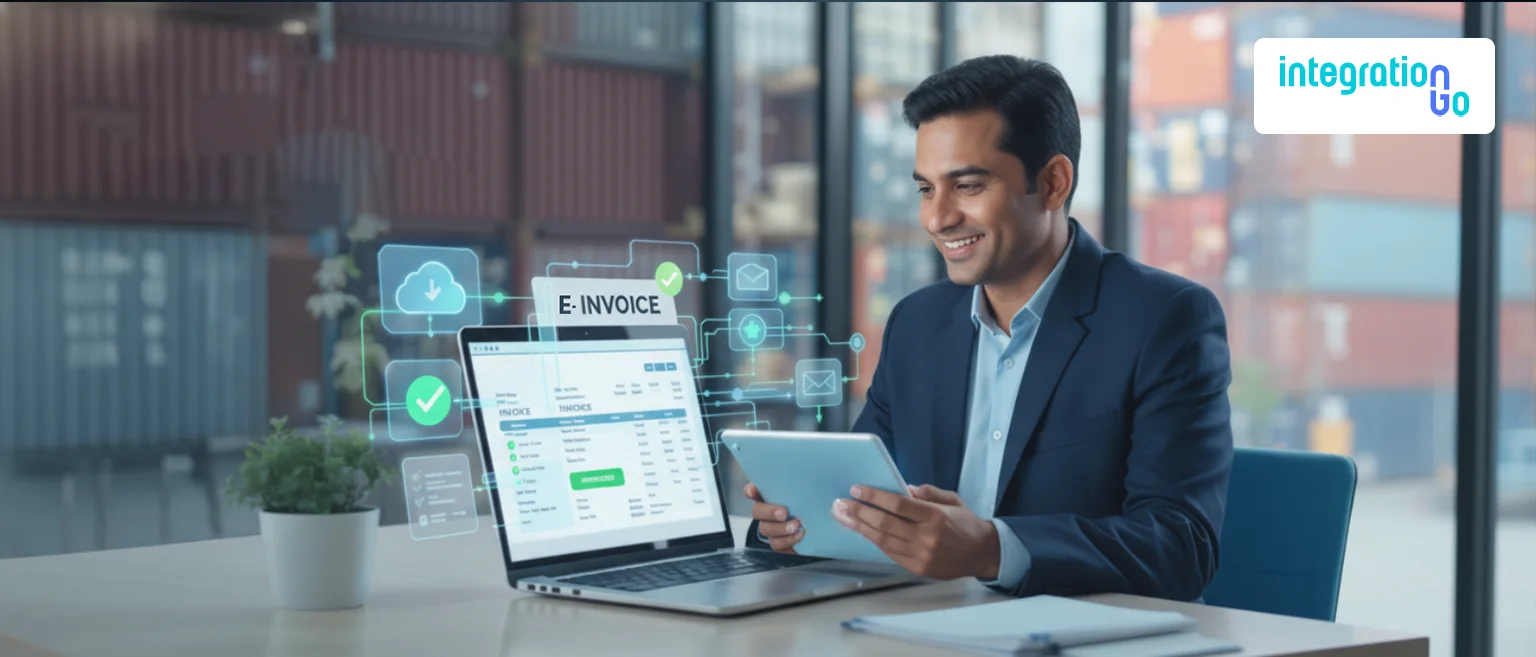
When e-invoicing is embedded into ERP workflows, invoices move faster and cleaner. Data is validated before submission, reducing rejection rates. Authorities process invoices instantly, accelerating approval and payment cycles.
Finance teams gain real-time visibility into invoice status and tax exposure. Operations teams stay focused on execution instead of billing corrections. Audits become easier because every invoice has a complete digital trail from creation to acceptance.
How ERP-E-Invoicing Integration Enables Global Compliance?
When e-invoicing is integrated directly with your ERP, compliance becomes part of the workflow instead of a separate task.
Invoices are generated once, validated automatically, transformed into the required structured format, and submitted through the correct network. Responses from tax authorities, such as acceptance, rejection, or clearance references, flow back into the ERP in real time.
This approach supports:
- Multi-country mandates with different schemas and validation rules
- Real-time reporting and clearance models
- Consistent audit trails and regulatory visibility
- Scalable compliance as transaction volumes grow
Instead of managing compliance country by country, businesses operate from one integrated architecture with local connectors.
Global E-Invoicing Mandates: Why the Integration Approach Matters Across Regions
Global e-invoicing mandates are accelerating, but they are not aligned. Each country is enforcing its own platforms, formats, validation rules, and clearance models. For logistics businesses operating across borders, this is exactly where fragmented systems fail and where IntegrationGo delivers value.
Poland – KSeF Mandatory XML Invoicing (2026)
Poland’s KSeF mandate requires invoices to be issued and validated through a national platform using structured XML formats. For large taxpayers from February 2026, and all businesses shortly after, manual uploads and ERP exports will not scale.
When directly integrating ERP platforms such as CargoWise, SAP, and Oracle with the KSeF framework, ensuring invoice data is created, validated, transmitted, and acknowledged automatically, without disrupting billing cycles or cash flow.
France – Structured E-Invoicing and E-Reporting (from 2026)
France’s phased rollout introduces both structured invoicing and transaction reporting, impacting how logistics companies report freight charges, VAT, and cross-border transactions.
The integration enables ERP-driven e-invoicing integration that supports France’s dual requirements, invoice exchange and regulatory reporting, while keeping operational and financial data synchronized across systems.
Germany – EN 16931, X-Rechnung & UBL (2025–2028)
Germany’s mandate begins with the requirement to receive e-invoices, followed by compulsory issuance in structured formats. This transition exposes businesses relying on PDFs or semi-manual workflows.
When it is helped by enabling structured invoice generation, validation, and exchange directly from ERP systems, removing manual corrections and ensuring format compliance from day one.
UAE – PEPPOL-Based E-Invoicing (from 2027)
The UAE’s adoption of OpenPeppol for B2B and B2G invoicing introduces real-time clearance expectations for high-revenue businesses.
When it is helped by integrating ERP and TMS platforms directly to PEPPOL-certified networks, supporting real-time submissions, responses, and audit-ready traceability.
Malaysia – Phased Mandatory E-Invoicing (Live, expanding through 2026)
Malaysia’s e-invoicing mandate already requires structured digital invoices and direct tax authority integration. As thresholds expand, logistics providers must handle higher volumes with zero tolerance for errors.
When it is helped by delivering end-to-end e-invoicing integration that scales with transaction growth and adapts seamlessly as new validation rules are introduced.
South Africa – Preparing for Mandatory E-Invoicing (Target 2028)
South Africa’s roadmap signals a shift toward real-time tax reporting and structured invoicing. Waiting until mandates are finalized increases compliance risk.
When it helps businesses prepare early with a flexible integration architecture that can support new requirements without system rebuilds.
Benefits of an Integrated E-Invoicing
An integrated approach delivers more than compliance. It improves the way logistics businesses operate and scale.
Companies see faster invoice acceptance, fewer rejections, and shorter order-to-cash cycles. Manual effort drops as invoice validation and submission become automated. Finance teams gain real-time visibility into receivables and tax exposure. Audits become simpler because every invoice has a clear digital trail from creation to acceptance.
Above all, leadership gains self-assurance and confirmation that the invoices comply. assurance regarding the predictability of cash flow. assurance that entering new markets won't lead to a problem with compliance.
How IntegrationGo Helps Businesses Succeed with E-Invoicing Integration?
IntegrationGo approaches e-invoicing as a business-critical end-to-end integration challenge, not just a technical connection.
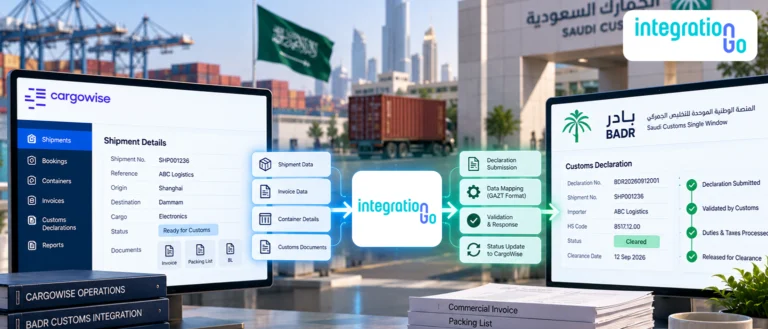
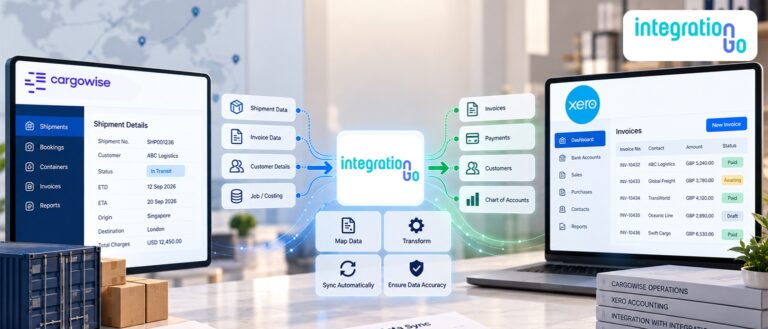
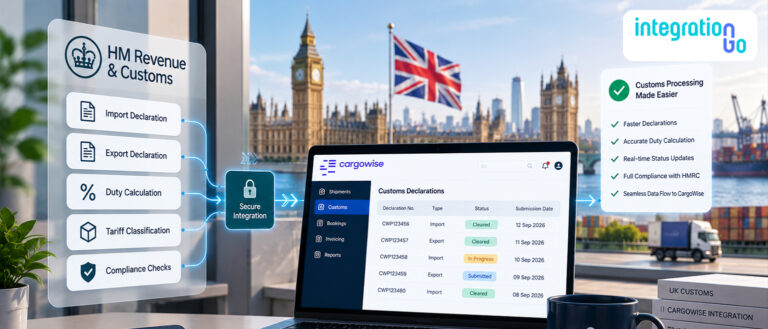
We integrate ERP platforms like CargoWise, SAP, Sage, Oracle, etc, and others into integration architectures that support structured invoicing, country-specific validation rules, and certified e-invoicing networks. Our role is to ensure invoice data flows accurately from ERP to the required compliance framework and back, without manual intervention.
From requirements analysis and data mapping to API setup, testing, and ongoing monitoring, IntegrationGo manages the entire integration lifecycle. As regulations evolve, the integration adapts without disrupting operations.
The result is a compliant, scalable, and future-ready e-invoicing foundation built around your ERP.
Conclusion
Global e-invoicing is mandated, and it’s not slowing down. The real differentiator will not be who adopts e-invoicing first, but who integrates it best.
With the right e-invoicing integration strategy, compliance becomes automated, scalable, and reliable, invoices move faster, cash flows sooner, risk drops, and finance teams shift from manual corrections to strategic control.
If you’re preparing for global e-invoicing mandates or struggling with fragmented compliance today, it’s time to rethink integration.Let’s book a call today and explore how IntegrationGo can help you build an ERP-led e-invoicing integration strategy that delivers compliance confidence, operational efficiency, and long-term scalability.