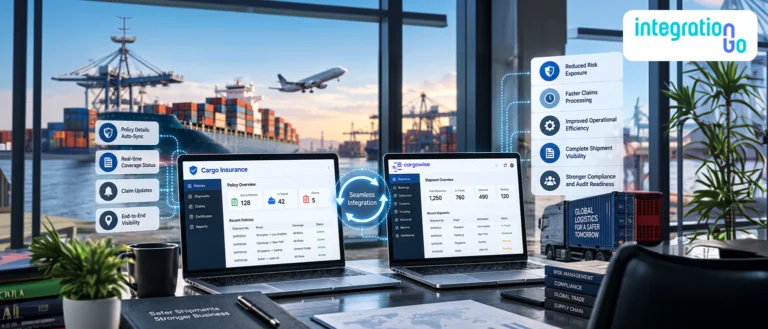
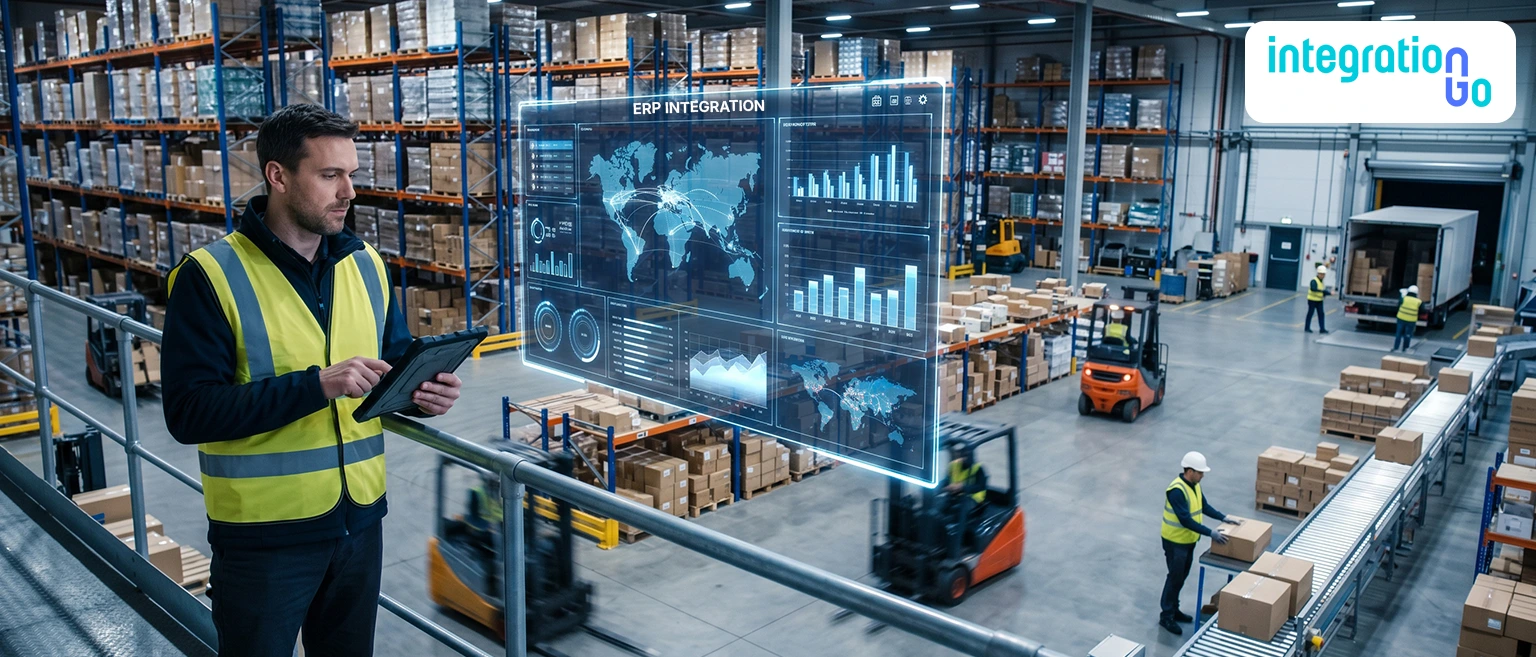

Every successful delivery depends on more than carriers, warehouses, and transportation networks. Behind every shipment is a chain of information moving between operations teams, finance departments, customs brokers, customers, and supply chain partners.
A single shipment can generate booking details, cargo updates, documents, invoices, inventory changes, and tracking events. When this information stays connected, logistics operations move smoothly. When it becomes fragmented, teams spend more time finding answers than managing freight.
This is why businesses are moving toward integrated logistics ERP ecosystems where shipment information, financial data, warehouse updates, and customer communication work together through integrated digital workflows.
What is an Integrated Logistics ERP System?
Logistics businesses operate differently from traditional organizations because every transaction is connected to physical movement.
A regular ERP system is built to manage general business activities such as accounting, purchasing, sales, and reporting.
A logistics ERP system goes deeper by supporting the operational lifecycle of freight and supply chain management.
It helps manage:
- Shipment planning and execution
- Carrier and transportation activities
- Customer and partner communication
- Warehouse coordination
- Customs documentation
- Freight billing and financial processes
Solutions such as CargoWise, Magaya, NetSuite, SAP, Infor, and other logistics platforms help businesses manage these complex workflows.
However, the word “integrated” is what creates the real difference.
An integrated logistics ERP system does not allow important data to remain in one department. It connects logistics applications with financial platforms, warehouse systems, transportation tools, and customer applications.
The result is a connected environment where shipment information follows the complete journey.
Why Using Multiple Logistics Systems Creates Data Visibility Challenges?
Using multiple systems is normal in modern logistics.
A freight forwarder might use:
CargoWise for shipment management
- A finance system for accounting
- A warehouse platform for inventory
- A visibility tool for tracking updates
- A customer portal for communication
Each system solves a specific business need.
The challenge starts when these systems do not share information properly.
Imagine this situation:
A shipment delivery date changes.
Operations teams update their system, but:
- Finance still works with old shipment details.
- The customer portal shows outdated information.
- Warehouse teams wait for confirmation.
- Reports show incomplete data.
The shipment keeps moving, but the information falls behind.
This creates operational challenges like:
- Data differences between departments
- More time spent verifying information
- Slower customer responses
- Delayed financial processing
- Limited supply chain visibility
Integrated logistics ERP workflows solve this by making information available across connected systems when teams need it.
Integrated Shipment Data Across the Entire Logistics Workflow
Every shipment creates a digital journey before reaching the final destination.
The workflow usually follows:
Customer Request → Booking → Shipment → Warehouse → Customs → Delivery → Invoice
Each stage depends on information from the previous step.
For example:
A booking creates shipment references and carrier details.
Those details support warehouse preparation.
Warehouse updates support transportation planning.
Shipment completion supports invoicing.
When systems are not connected, teams recreate the same information multiple times.
With an integrated logistics ERP environment, the original shipment data continues through every stage.
This creates:
- Better information consistency
- Faster operational workflows
- Improved team collaboration
- Stronger customer communication
The goal is simple, enter information once and allow connected systems to use it wherever required.
Improving Shipment Visibility through Integrated Logistics Information
Shipment visibility is no longer only about knowing where freight is located.
Modern visibility means understanding:
- What happened?
- When did it happen?
- Who needs the information next?
Integrated logistics ERP systems create visibility by connecting operational events across different platforms.
For example:
When a carrier updates a shipment milestone, that information can become available for:
- Operations teams are monitoring movement
- Customer teams providing updates
- Finance teams are preparing billing activities
- Management teams reviewing performance
This creates a proactive logistics environment. Instead of searching for updates, teams receive information when they need it.
Better visibility supports:
- Faster issue resolution
- Improved customer communication
- Better resource planning
- More accurate reporting
Creating an Accurate Data Flow from Shipment Creation to Final Invoice
Shipment data accuracy directly impacts operational and financial performance. A small mistake in shipment information can create larger problems later.
Example:
Wrong shipment weight → Incorrect freight calculation
Incorrect customer details → Invoice corrections
Missing charges → Revenue leakage
Integrated ERP workflows help maintain accuracy because information flows from the original source.
Instead of entering the same details repeatedly into different systems, integrated platforms share verified data.
This improves:
- Shipment record accuracy
- Invoice reliability
- Financial reporting
- Audit tracking
- Customer communication
For logistics businesses processing thousands of shipments, reducing small errors can create significant operational improvements.
Role of IntegrationGo in Creating Integrated Logistics ERP Connectivity
An integrated logistics ecosystem depends on how smoothly information moves between different systems. Freight operations, warehouse activities, customs documentation, customer communication, and financial processes all generate important data that needs to stay aligned.
However, most logistics businesses do not depend on just one platform. They use multiple applications designed for specific workflows, and each system manages its own data.
This is where IntegrationGo acts as the connection layer between logistics ERP platforms and business applications, helping systems communicate and exchange information securely.
A connected ecosystem works like:
Logistics ERP Platforms
(CargoWise, Magaya, Custom Systems)
↕
IntegrationGo
↕
Finance Systems | WMS | TMS | Customs Platforms | Customer Applications
IntegrationGo helps manage the communication between these platforms by handling:
- API integrations for real-time system connectivity
- EDI workflows for structured business data exchange
- CargoWise eAdaptor integrations for logistics automation
- Data mapping between different applications
- Data transformation into the required system formats
- Automated synchronization between connected platforms
For example, when shipment information is updated in a logistics ERP system, that data can automatically flow into finance, warehouse, or customer-facing platforms without teams manually copying the same information again.
Instead of replacing existing technology investments, IntegrationGo helps businesses connect the systems they already use and create a more efficient digital workflow.
The result is an integrated environment where logistics teams can spend less time managing data movement and more time focusing on improving operations and customer service.
Key Logistics Workflows Improved through ERP Integration
Integrated logistics ERP systems improve the workflows that impact daily operations the most.
Shipment-to-Invoice Automation
Freight and finance teams work from integrated information. Shipment charges, customer details, and billing data can move between systems to support faster invoice processing.
Warehouse-to-Freight Connection
Inventory and transportation workflows stay aligned. Warehouse updates can support shipment planning, fulfillment, and delivery activities.
Customs and Compliance Data Exchange
International logistics requires accurate documentation. Integrated systems help maintain consistency across customs-related workflows and shipment records.
Customer Experience Management
Customers expect quick answers. Integrated systems help provide better shipment updates and improve communication throughout the delivery lifecycle.
Conclusion:
The future of logistics depends on how efficiently information moves across systems. An integrated logistics ERP system helps businesses connect shipment visibility, financial accuracy, warehouse coordination, and customer communication into one digital ecosystem.
By integrating existing logistics applications through IntegrationGo, businesses can reduce disconnected workflows and create smarter, more reliable supply chain operations.
Schedule a demo today to explore how IntegrationGo helps connect your logistics ERP ecosystem and improve visibility across every stage of your operations.