
A customer places an order, the purchasing team creates a purchase order, the supplier ships the goods, and the logistics team manages transportation, customs, and warehouse operations. While each step is connected, the systems managing them often aren't. This means teams spend time updating records manually instead of focusing on moving shipments efficiently.
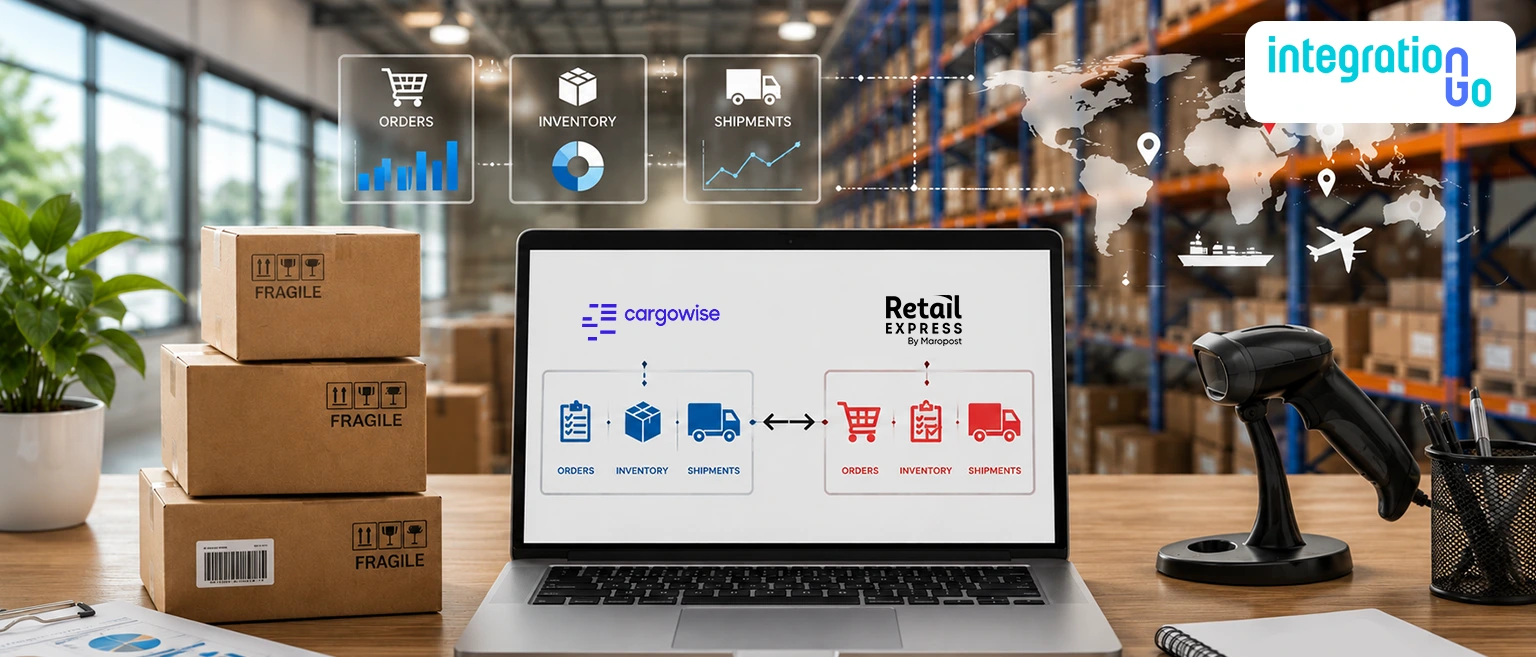
By integrating Retail Express with CargoWise, businesses create a seamless flow of information between retail and logistics operations. With synchronized order, inventory, and shipment data, logistics teams can improve coordination, reduce manual data entry, and maintain accurate visibility throughout the fulfillment journey.
What is CargoWise Integration with Retail Express?
Retail Express and CargoWise perform different roles within the supply chain, but together they create a connected fulfillment process.
Retail Express helps businesses manage purchasing, inventory, suppliers, and retail operations, while CargoWise manages freight forwarding, customs clearance, warehousing, transportation, and shipment visibility. Although both systems handle critical business information, they often operate independently.
Integrating CargoWise with Retail Express allows information to move seamlessly between retail and logistics operations. Purchase orders created in Retail Express can support logistics activities in CargoWise, while shipment milestones, warehouse receipts, and inventory updates recorded in CargoWise automatically synchronize with Retail Express.
Instead of manually updating two separate systems, businesses benefit from a single connected workflow that improves visibility, reduces administrative work, and helps both retail and logistics teams operate with the same accurate information.
Why do Logistics Businesses Integrate Retail Express with CargoWise?
Retail operations may begin with a purchase order, but the journey of those products is managed through logistics. Once suppliers dispatch the goods, logistics teams use CargoWise to coordinate freight bookings, customs documentation, warehouse activities, shipment tracking, and final delivery.
Without integration, shipment progress and warehouse receipts often need to be manually entered into Retail Express. As shipment volumes increase, this repetitive process consumes valuable time and increases the likelihood of inventory discrepancies, duplicate data entry, and communication gaps between departments.
By integrating Retail Express with CargoWise, logistics information automatically flows back to Retail Express as shipments move through the supply chain. Warehouse teams receive accurate inventory updates, purchasing teams gain visibility into incoming stock, and logistics teams spend less time maintaining multiple systems. This allows every department to make decisions using the same up-to-date information.
How does the Integration Connect Purchase Orders with Shipment Execution?
The integration creates a continuous flow of information from procurement through fulfillment.
It begins when a purchase order is created in Retail Express with supplier details, product information, quantities, and purchasing requirements. Once the supplier ships the goods, CargoWise manages the logistics process by creating shipment records, coordinating freight bookings, generating logistics documents, managing customs clearance, tracking transportation, and recording warehouse receipts.
As the shipment progresses, CargoWise captures important milestones such as shipment departures, estimated arrival dates, customs clearance, warehouse deliveries, and goods received. Rather than manually updating Retail Express after every milestone, the integration automatically synchronizes this information between both platforms.
As a result, purchasing teams know when products are arriving, warehouse teams prepare for incoming inventory, and logistics teams maintain full visibility throughout the shipment lifecycle without relying on manual updates.
Keeping Inventory, Warehousing, and Freight Operations Connected
Inventory accuracy depends on timely logistics information. When goods arrive at the warehouse, CargoWise records received quantities, warehouse locations, delivery confirmations, and goods receipts. Through the integration, this information automatically updates Retail Express, ensuring inventory records accurately reflect the products that have been received.
This connected workflow helps businesses:
- Maintain accurate inventory levels.
- Reduce duplicate data entry.
- Improve warehouse planning.
- Prepare freight operations more efficiently.
- Make products available for sale sooner after receipt.
By connecting inventory with warehouse and freight activities, businesses can improve operational efficiency while reducing delays across the fulfillment process.
How do Logistics Documents Improve Inventory Accuracy?
Logistics documents contain the information needed to keep inventory records accurate. Instead of manually reviewing each document and updating Retail Express, the integration automatically transfers relevant data captured in CargoWise.
Some of the key logistics documents include:
- Commercial Invoice – Provides supplier information, purchase order references, product descriptions, quantities, and costs that support purchasing and inventory records.
- Packing List – Confirms the number of products, cartons, and packages received, allowing warehouse teams to verify incoming inventory.
- Bill of Lading (BoL) – Contains shipment references, container details, carrier information, and delivery instructions that improve shipment visibility.
- Goods Receipt – Records the actual quantities received at the warehouse, ensuring inventory is updated accurately once goods arrive.
- Delivery Confirmation – Verifies successful delivery and supports inventory reconciliation between warehouse and retail systems.
By automatically sharing this information between CargoWise and Retail Express, businesses reduce manual data entry, improve inventory accuracy, and maintain consistent information across retail and logistics operations.
How does the Integration Improve Shipment Coordination Across the Supply Chain?
When order, inventory, and shipment information remain synchronized, logistics teams can coordinate operations more effectively. Warehouse staff know what inventory is arriving, transport planners work with accurate shipment information, and purchasing teams gain visibility into incoming stock without waiting for manual updates.
This connected approach improves communication between departments, reduces operational delays, supports better shipment planning, and helps businesses deliver products more efficiently while providing customers with more reliable delivery expectations.
Why is IntegrationGo the Right Middleware for CargoWise and Retail Express?
IntegrationGo acts as the middleware between Retail Express and CargoWise, enabling secure data exchange through APIs, EDI, and customized integration solutions. Whether synchronizing purchase orders, inventory records, warehouse receipts, or shipment updates, IntegrationGo ensures information flows accurately between both platforms.
Its structured implementation process includes requirements analysis, environmental
Conclusion
Integrating Retail Express with CargoWise helps businesses connect retail and logistics operations through a single, synchronized workflow. By automating the flow of order, inventory, and shipment information, businesses can reduce manual work, improve inventory accuracy, and coordinate fulfillment more efficiently.
Ready to connect Retail Express with CargoWise? Contact us today to build a tailored integration that simplifies your logistics operations and keeps your supply chain moving efficiently.