
In logistics, moving cargo is only one side of the operation. Behind every shipment, there is a continuous flow of financial information that determines cost accuracy, revenue visibility, and overall business performance.
Freight teams manage shipment execution, carrier coordination, and operational updates, while finance teams handle billing, payments, cost control, and reporting. Even though their responsibilities are different, both teams depend on the same shipment information.
When financial data does not move smoothly between freight and financial systems, teams spend valuable time checking details, correcting invoices, and matching information manually.
Financial system integration helps logistics businesses create a connected environment where shipment activities and financial workflows stay aligned from the first booking to the final financial report.
Understanding the Role of Financial System Integration in Logistics Operations
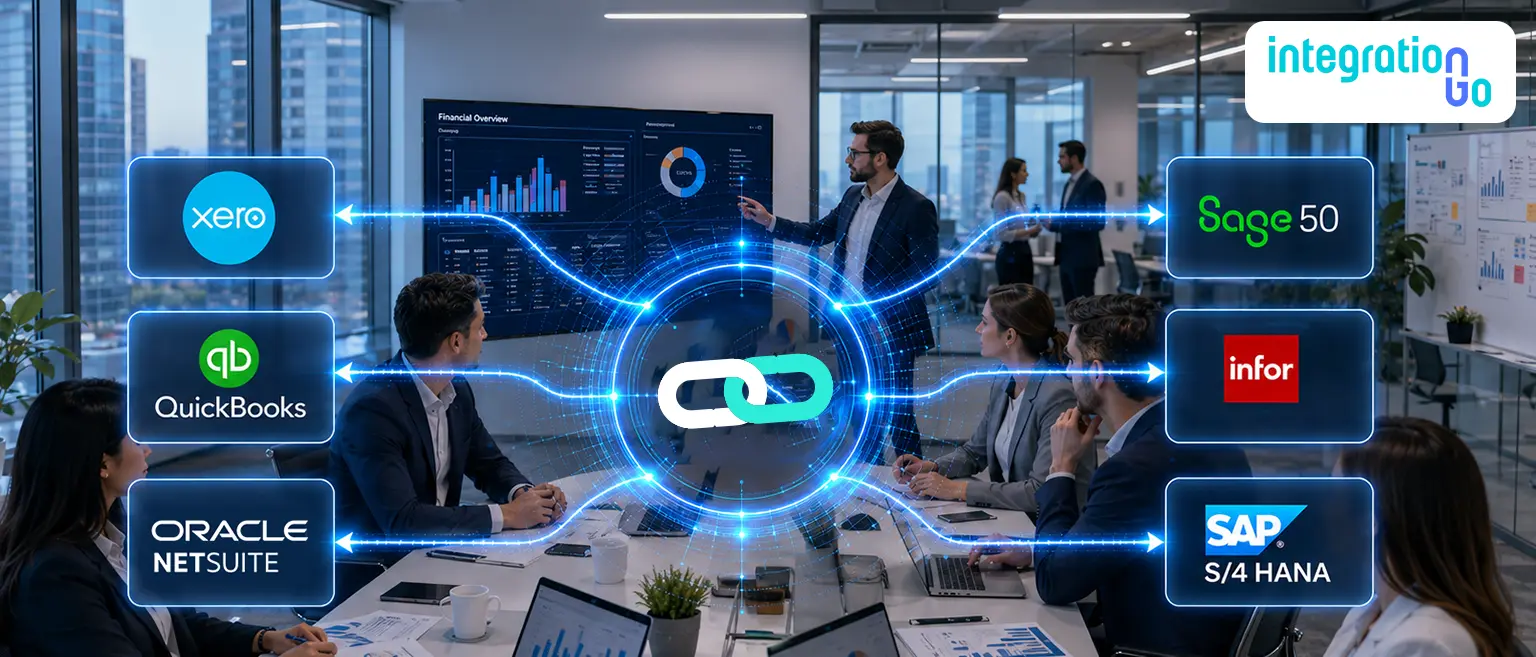
Financial system integration connects logistics platforms with accounting and finance systems like Xero, QuickBooks, NetSuite Cloud Accounting, and Sage50, which can be integrated with your ERP, allowing operational and financial information to move accurately between them.
Unlike traditional businesses, logistics financial management depends heavily on shipment-level information.
Every shipment contains important financial details, such as:
- Freight rates
- Carrier charges
- Additional service costs
- Customer billing details
- Taxes and fees
- Payment information
Operations teams usually manage these details inside freight management systems, while finance teams use them for accounting, reporting, and financial control.
Without integration, information often needs to be transferred manually between different applications. This increases processing time and creates opportunities for mistakes.
A connected financial environment ensures shipment information is available where it is needed, helping both teams work with accurate and updated data.
Why Financial Gaps Happen Between Freight and Accounting Processes?
Logistics is constantly changing. A shipment rarely follows a perfectly fixed financial plan from beginning to end.
Costs can change because of:
- Carrier adjustments
- Route modifications
- Additional handling requirements
- Storage charges
- Customs-related expenses
These changes usually happen during freight operations, but finance teams need the updated information to complete accurate billing and reporting.
When freight and finance systems are disconnected, teams may work with different information.
For example:
A freight team updates an additional shipment charge, but the finance team prepares an invoice before receiving that update.
The result?
Invoice corrections, delayed payments, and extra communication between departments. Financial system integration reduces these gaps by allowing important shipment and cost information to stay synchronized.
Building a Reliable Shipment-to-Finance Data Flow
Every shipment follows a financial lifecycle.
The journey usually looks like:
Quote Creation → Shipment Processing → Cost Updates → Billing Preparation → Payment Tracking → Financial Reporting
Each stage depends on the accuracy of the previous step. If shipment data is incomplete, financial workflows become slower.
With financial system integration, information captured during freight operations can support finance activities automatically.
For example:
When shipment costs are finalized, finance teams can access accurate details for invoicing without searching through emails, spreadsheets, or separate platforms. This creates a smoother connection between operational activities and financial outcomes.
Improving Freight Cost Accuracy and Revenue Control
For logistics businesses, small financial mistakes can create a major impact when multiplied across hundreds or thousands of shipments. A missing charge or incorrect cost entry can affect shipment profitability.
Common challenges include:
- Uncaptured additional charges
- Incorrect customer billing
- Delayed carrier cost updates
- Manual calculation errors
Financial system integration helps maintain better financial accuracy by ensuring shipment-related updates are reflected across integrated systems.
This gives businesses better control over:
- Freight costs
- Revenue tracking
- Profit margins
- Billing accuracy
Instead of reviewing information after problems happen, teams can manage financial data with greater confidence throughout the shipment lifecycle.
Improving Collaboration Between Freight Operations and Finance Teams
Freight and finance teams often depend on each other more than they realize.
- Operations teams create the information finance teams need.
- Finance teams convert that information into invoices, reports, and business insights.
- When information does not move smoothly, both teams experience delays.
- Operations teams answer repeated finance questions.
- Finance teams spend time validating shipment details.
- Customers wait longer for invoices or updates.
Financial integration creates a shared information flow between departments.
This helps:
- Reduce unnecessary communication delays
- Improve internal coordination
- Speed up financial processes
- Create better operational transparency
Connected teams can focus on improving business performance instead of searching for missing information.
How can IntegrationGo Simplify Financial Data Exchange Across Logistics Systems?
Financial information in logistics starts from the moment a shipment is created. Every booking, carrier update, freight charge, and customer invoice generates data that needs to move between operational and financial platforms.
However, logistics companies often use different systems for different purposes. A freight team may manage shipments inside a logistics ERP, while finance teams depend on accounting or enterprise finance platforms to manage billing and reporting.
IntegrationGo works as a middleware layer between logistics and financial systems, helping these different applications communicate without changing the tools businesses already use.
Instead of directly connecting every system individually, middleware creates a structured path where data can be received, transformed, validated, and delivered to the right application.
For example:
When shipment costs are updated in a logistics ERP, IntegrationGo helps transfer the required financial information into accounting platforms in the correct format. Finance teams can access updated shipment costs, billing details, and transaction information without waiting for manual updates.
This connected approach helps businesses:
- Maintain consistent financial data between systems
- Reduce repeated data entry across applications
- Improve shipment-to-finance information flow
- Support faster billing and reporting activities
By acting as the connection point between freight operations and financial applications, IntegrationGo helps logistics businesses create a more reliable financial ecosystem where information moves along with every shipment.
Moving from Manual Financial Tracking to Connected Freight Finance Visibility
Many logistics businesses still depend on spreadsheets, emails, and manual reports to track financial information between operations and accounting teams.
While these methods may work with smaller shipment volumes, they become difficult to manage as the business grows.
Manual financial tracking often creates challenges such as:
- Spending hours matching shipment and invoice details
- Waiting for updated cost information
- Managing multiple versions of financial records
- Limited visibility into shipment profitability
Connected freight finance visibility changes the way teams access and manage financial information.
Instead of looking backward to find mistakes, businesses can monitor financial activities more effectively as shipments progress.
Integrated systems help logistics companies understand:
- Which shipments are performing well?
- Where do unexpected costs occur?
- How are billing processes moving?
- What financial information needs attention?
This gives logistics leaders better visibility into both operational performance and financial outcomes.
Conclusion: Creating Stronger Financial Visibility Across Logistics Operations
Freight movement and financial management are two connected parts of every logistics operation. When shipment and finance data remain separate, businesses face unnecessary delays, manual work, and reduced financial visibility.
Financial system integration helps create a connected environment where operational updates, cost information, billing details, and financial insights work together.
With IntegrationGo, logistics businesses can connect their freight and finance systems to improve accuracy, simplify data exchange, and create stronger visibility across financial operations.
Schedule a demo today to discover how IntegrationGo helps connect your logistics and financial systems for more accurate, efficient, and connected freight finance workflows.