
Walk into any finance department during month-end, and you’ll feel it instantly, the pressure, the urgency, the constant back-and-forth. Someone’s chasing missing data, someone else is fixing an invoice error, and spreadsheets are flying around like lifelines.
Now here’s the real question:
Why does something as fundamental as invoicing still feel this complicated?
The answer is simple. Most businesses aren’t struggling with invoicing, they’re struggling with disconnected systems and that’s exactly where integrating your ERP with NetSuite Cloud Accounting changes everything.
What is NetSuite Cloud Accounting Software?
NetSuite Cloud Accounting is a cloud-based financial management platform designed to simplify how businesses handle accounting from end to end. Instead of relying on disconnected tools, it brings transactions, receivables, payables, and reporting into one unified system.
What makes it powerful is not just automation but real-time intelligence. Your finance team doesn’t have to wait for reports or manually validate numbers anymore. Everything is available instantly.
With NetSuite, businesses gain visibility into:
- Profitability and margin performance
- Cash flow and financial position
- Inventory and operational costs
- Liabilities, taxes, and fixed assets
At the same time, compliance becomes easier, with built-in support for standards like ASC 606, GAAP, and SOX.
In simple terms, NetSuite doesn’t just manage your finances, it helps you understand and control them.
Why Traditional Financial Invoicing Processes Fall Short?
To really appreciate the impact of integration, we need to look at what’s going wrong today. Most businesses operate with disconnected systems, where ERP handles operations, and accounting tools handle finance. This gap creates inefficiencies that slowly build into major problems.
You’ll often see situations where:
- Data is entered multiple times across systems
- Teams rely heavily on spreadsheets for validation
- Invoice generation gets delayed due to missing data
- Errors creep in during manual reconciliation
These issues don’t just slow things down, they affect cash flow, reporting accuracy, and decision-making.
Over time, finance teams end up spending more time correcting mistakes than preventing them.
How ERP Integration Enhances NetSuite Cloud Accounting?
Imagine your ERP fully connected with NetSuite Cloud Accounting. Whether it’s SAP, Microsoft Dynamics, or any other system, everything starts working together as one unified environment.
The moment a transaction happens, it flows straight into your financial system, no manual entry, no delays, no back-and-forth.
This creates a smoother way of working where:
- Invoices are automatically generated from operations
- Financial data updates in real time
- Everyone works with the same, consistent data
What used to take hours now happens almost instantly.
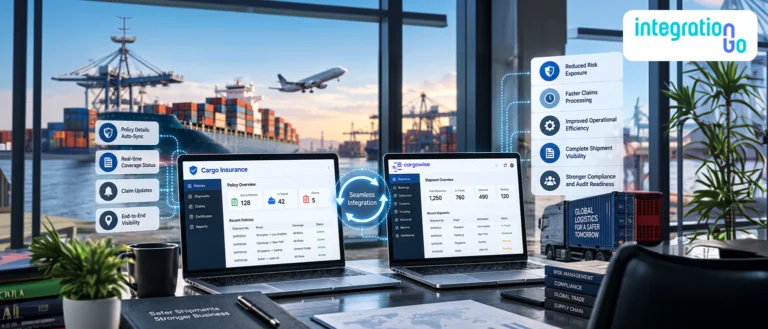
When systems like CargoWise are connected with NetSuite, operational data moves directly into finance without extra effort. That means faster invoicing, fewer errors, and way less chasing between teams.
Core Benefits of NetSuite Cloud Accounting for Businesses
Once NetSuite is integrated with your ERP, the benefits become immediately visible across your operations.
First, accuracy improves significantly because manual data entry is reduced and systems ensure consistency. This minimizes errors and improves trust in financial data.
Second, businesses gain real-time access to financial insights, which allows teams to make faster and more informed decisions.
Third, financial close becomes more efficient and predictable, reducing stress and improving reporting timelines.
Some of the most noticeable benefits include:
- Elimination of duplicate data entry
- Real-time dashboards for better visibility
- Faster and more accurate financial reporting
- Improved collaboration between teams
These advantages collectively create a finance function that is not just efficient but strategic.
Common Financial Challenges NetSuite Solves
Every finance team faces challenges, but many of them stem from outdated processes and disconnected systems.
Manual workflows, for example, consume time and increase the risk of errors. NetSuite automates these processes, allowing teams to focus on higher-value activities.
Data fragmentation is another major issue. When information is scattered across systems, it becomes difficult to get a clear picture of financial performance. NetSuite solves this by centralizing data into a single platform.
Accuracy issues caused by spreadsheets are also significantly reduced. Automated calculations and real-time updates ensure consistency across all records.
NetSuite effectively addresses challenges such as:
- Time-consuming manual processes
- Lack of data accessibility
- Errors caused by spreadsheets
- Complexity in maintaining compliance
Solving these problems creates a more stable and reliable financial environment.
Why Real-Time Financial Visibility Matters Today?
You can’t afford to slow down when making decisions, and you definitely can’t afford to get them wrong. Real-time financial visibility allows businesses to stay ahead by providing instant access to critical data.
With this visibility, organizations can:
- Monitor cash flow as it happens
- Identify risks before they escalate
- Adjust strategies based on live insights
Without it, teams are forced to rely on outdated information, which leads to delayed decisions and missed opportunities.
Real-time visibility turns finance into a proactive function rather than a reactive one.
Turning Financial Invoicing into a Strategic Advantage
When systems and data are fully connected, invoicing moves beyond a routine task and becomes a strategic advantage.
Integrating ERP with NetSuite Cloud Accounting eliminates gaps between operations and finance, making invoicing faster, more accurate, and aligned with real-time business activity.
This allows businesses to:
- Automate invoicing workflows
- Improve data accuracy
- Accelerate billing cycles
- Gain real-time financial visibility
In logistics, platforms like CargoWise handle high-volume operational data. When integrated with NetSuite, this data flows directly into finance, enabling instant and accurate invoice generation without manual effort.
As a result, finance teams shift from fixing errors to driving insights and growth, turning invoicing into a true business advantage.
Conclusion: Ready to Transform Your Financial Invoicing?
At the end of the day, invoicing should be simple, accurate, and fast.
If your current process feels slow or error-prone, it’s time to rethink how your systems work together. Integrating your ERP with NetSuite Cloud Accounting gives you the clarity, control, and efficiency to scale with confidence.
Stop fixing invoicing issues, start preventing them with end-to-end integration.
Ready to simplify your financial workflows? Connect your ERP with NetSuite and unlock a fully automated, end-to-end invoicing process today.