
Managing freight isn't just about moving cargo from one place to another, it's about keeping every shipment, update, and milestone connected throughout the journey. As freight forwarders work with multiple carriers across different regions, switching between carrier portals, checking shipment updates, and manually updating records can quickly become part of the daily routine.
CargoWise Carrier Integration simplifies the way freight forwarders work by connecting CargoWise directly with carrier systems. As shipment information is exchanged automatically, your team can spend less time manually updating records and more time managing shipments from a single CargoWise environment.
What is CargoWise Carrier Integration?
CargoWise Carrier Integration is the process of connecting CargoWise with carrier systems so shipment information can be exchanged automatically throughout the transportation process. Rather than relying on emails, spreadsheets, or manually updating different platforms, freight forwarders can synchronize operational information directly in CargoWise.
Depending on the carrier and the integration method, information exchanged may include booking requests, booking confirmations, shipment milestones, container numbers, vessel schedules, ETA, ETD, delivery updates, and shipping documents.
By bringing this information into CargoWise, logistics teams can manage shipments from a centralized platform while reducing the need to work across multiple carrier websites.
Why do Freight Forwarders Integrate CargoWise with Carrier Systems?
Modern freight forwarding rarely depends on a single carrier. A business may work with different shipping lines, airlines, or logistics providers depending on the shipment, destination, or customer requirements. While this offers flexibility, it also means teams often manage information across multiple systems.
Without integration, operations staff may need to log in to several carrier portals, copy shipment updates into CargoWise, and manually communicate changes to internal teams or customers. As shipment volumes increase, these repetitive tasks can become time-consuming and make it harder to maintain accurate operational information.
Integrating CargoWise with carrier systems allows freight forwarders to simplify these daily activities by keeping operational information synchronized, helping teams respond faster while reducing unnecessary manual work.
What Shipment Information can be Shared Between CargoWise and Carrier Systems?
Carrier integration supports the automatic exchange of shipment information that logistics teams use every day. Instead of manually updating records throughout the shipment journey, important operational data can move directly between CargoWise and the carrier's platform.
Common information exchanged includes:
- Booking requests and confirmations
- Shipment references
- Container numbers
- Bill of Lading details
- Vessel and voyage information
- Estimated Time of Departure (ETD)
- Estimated Time of Arrival (ETA)
- Shipment milestone updates
- Delivery confirmations
- Shipping documents and operational references
Having this information synchronized helps operations teams work with more consistent data while improving communication across the shipment lifecycle.
Which Leading Global Carriers can you Integrate with CargoWise?
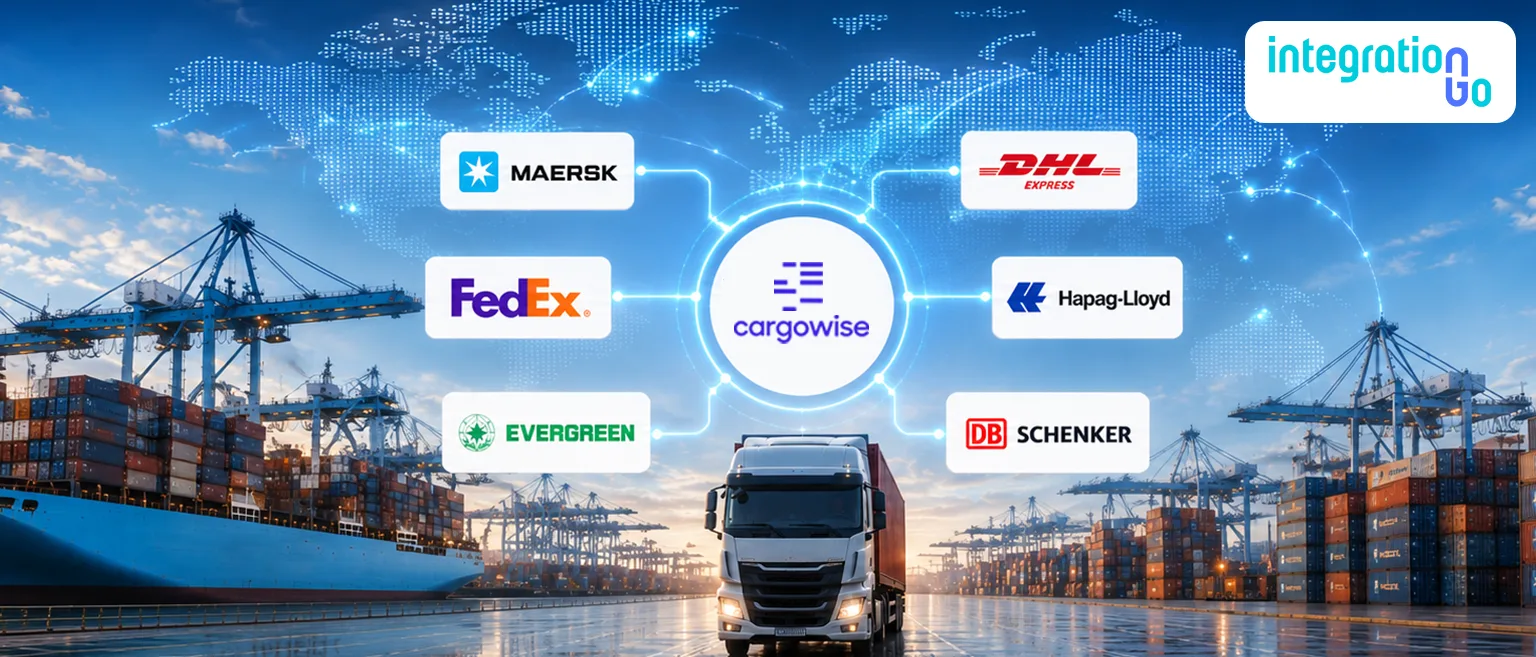
CargoWise supports integration with many of the world's leading ocean carriers and global logistics providers. While the available information depends on each carrier's API and EDI capabilities, these integrations help freight forwarders automate the exchange of operational data and reduce the need for manual updates.
Some commonly integrated carriers include:
Maersk Line
Integrating CargoWise with Maersk helps synchronize booking confirmations, container details, vessel schedules, ETA and ETD updates, and shipment milestones, giving operations teams better visibility throughout the shipment journey.
Mediterranean Shipping Company (MSC)
CargoWise integration with MSC supports the exchange of booking information, container references, shipment events, and transport updates, helping businesses manage international ocean freight more efficiently.
CMA CGM
Freight forwarders can integrate CargoWise with CMA CGM to automate booking updates, sailing schedules, shipment milestones, and operational information, reducing manual communication between systems.
Hapag-Lloyd
Connecting Hapag-Lloyd with CargoWise helps synchronize shipment milestones, container tracking information, and booking updates, allowing logistics teams to monitor ocean shipments more effectively.
COSCO Shipping
CargoWise integration with COSCO Shipping improves the exchange of booking activities, transport information, and shipment updates, helping maintain accurate operational records.
ONE (Ocean Network Express)
Integration with ONE allows freight forwarders to receive vessel schedules, booking confirmations, shipment milestones, and operational updates directly within CargoWise.
Evergreen Marine
By integrating Evergreen Marine with CargoWise, businesses can keep booking information, shipment events, and transport updates synchronized throughout the shipment lifecycle.
DHL Global Forwarding
CargoWise can also integrate with DHL Global Forwarding to exchange shipment information, transport updates, and operational milestones, helping improve visibility across international freight operations.
Kuehne + Nagel
Integrating Kuehne + Nagel with CargoWise allows shipment bookings, operational updates, and transport milestones to move automatically between both platforms, reducing manual administration and improving coordination.
DB Schenker
CargoWise integration with DB Schenker supports the exchange of shipment information, booking confirmations, and transport updates, helping freight forwarders improve operational efficiency while maintaining more accurate shipment records.
How does CargoWise Help Teams Track Shipments Across Multiple Carrier Platforms?
Managing shipments across multiple carriers doesn't have to mean switching between multiple tracking portals. For freight forwarders working with carriers such as Maersk, MSC, CMA CGM, Hapag-Lloyd, COSCO Shipping, ONE, Evergreen Marine, DHL Global Forwarding, Kuehne+Nagel, and DB Schenker, keeping track of shipment updates can quickly become time-consuming if every carrier is managed separately.
By integrating these carrier systems with CargoWise, shipment information can be synchronized directly into your CargoWise environment. Instead of logging in to different carrier websites throughout the day, your operations team can monitor shipment progress from the system they already use to manage their freight operations.
Depending on the carrier's supported API or EDI capabilities, CargoWise can receive information such as:
- Booking confirmations
- Container numbers
- Vessel and voyage details
- Estimated Time of Departure (ETD)
- Estimated Time of Arrival (ETA)
- Shipment milestones
- Arrival and departure events
- Delivery confirmations
- Operational status updates
Having this information available within CargoWise helps teams respond faster to customer inquiries, monitor shipment progress more efficiently, and make informed operational decisions without constantly moving between different carrier portals.
Why does Carrier Integration Reduce Manual Work Across Daily Operations?
Freight forwarding involves a constant exchange of information between CargoWise and multiple carrier systems. Without integration, teams often spend hours checking carrier portals, updating shipment records, sharing milestone updates, and responding to customer inquiries manually.
As shipment volumes increase, these repetitive activities not only consume valuable time but also increase the likelihood of inconsistent information and manual errors.
Carrier integration automates the exchange of operational data between CargoWise and supported carriers, allowing shipment information to stay updated without repeated manual intervention.
As a result, businesses can reduce:
- Duplicate data entry
- Manual shipment tracking
- Frequent carrier portal logins
- Spreadsheet-based shipment monitoring
- Administrative follow-ups
- Communication delays between teams
With routine updates handled automatically, operations teams can spend more time managing shipments, resolving exceptions, and delivering better customer service.
How does IntegrationGo Connect CargoWise with Global Carrier Systems?
Every freight forwarder has unique operational requirements, so every carrier integration should be designed to support the way the business operates. Some organizations need booking confirmations and shipment milestones, while others require ETA and ETD updates, container information, delivery confirmations, or operational documents from their carrier network.
IntegrationGo acts as the middleware between CargoWise and leading global carrier systems, enabling secure and reliable information exchange without disrupting your existing workflows. Whether you're integrating with Maersk, MSC, FedEx, Hapag-Lloyd, COSCO Shipping, ONE, Evergreen Marine, DHL Global Forwarding, Kuehne+Nagel, or DB Schenker, IntegrationGo follows a structured implementation approach to deliver reliable and scalable CargoWise carrier integrations.
Project Management
Every integration project starts with careful planning. Business objectives, project scope, timelines, and implementation requirements are reviewed to ensure the integration aligns with your operational processes while minimizing disruption to daily freight activities.
Requirements Analysis
Business and technical requirements are gathered to identify exactly what information should move between CargoWise and each carrier. This includes booking information, shipment milestones, container details, ETA and ETD updates, operational documents, and other workflow requirements.
Environment Setup
The required infrastructure is configured by preparing the web server, AS2 server, CargoWise environment, and communication settings necessary to establish secure connections with carrier systems.
Development
Our integration specialists configure APIs, EDI connections, data mapping, and transformation rules to ensure shipment information is exchanged accurately between CargoWise and carrier platforms.
Integration Testing
Before deployment, every workflow is thoroughly tested to validate data accuracy, communication reliability, and overall system performance under real operational conditions.
Deployment
Once testing is successfully completed, the integration is deployed into both testing and production environments, allowing businesses to transition smoothly with minimal disruption to ongoing operations.
Documentation
Complete documentation is provided, including architecture diagrams, CargoWise mapping documents, configuration details, integration workflows, and user guides that support future maintenance and enhancements.
By following this structured implementation approach, IntegrationGo helps freight forwarders build reliable CargoWise carrier integrations that improve operational efficiency while supporting long-term business growth.
How does CargoWise Carrier Integration Support Long-Term Business Growth?
As logistics businesses continue to expand, they often work with more carriers, manage higher shipment volumes, and serve customers across multiple regions. Managing these relationships through separate carrier portals can make daily operations increasingly difficult.
CargoWise Carrier Integration helps centralize shipment information by bringing carrier updates directly into CargoWise. Instead of manually collecting shipment updates from multiple sources, operations teams can work from a single platform while maintaining better visibility across bookings, shipment milestones, transport events, and delivery updates.
This not only improves operational efficiency but also creates a stronger foundation for future growth as your carrier network continues to expand.
Conclusion
Working with multiple carriers doesn't have to mean managing multiple disconnected systems. CargoWise Carrier Integration helps freight forwarders centralize shipment information, improve operational visibility, and reduce the manual effort involved in managing daily freight operations.
With IntegrationGo, you can securely integrate CargoWise with leading global carrier systems, automate the exchange of shipment information, and build more efficient freight workflows that support both today's operations and tomorrow's growth.
Schedule a demo today to discover how IntegrationGo can help you connect CargoWise with your carrier network and simplify freight operations.