
Every freight forwarder has their own way of doing business. Most run their day-to-day operations on CargoWise, but then they have customs software that supports customer service, warehouse operations, finance, customs, reporting, and internal workflows.
These softwares are often aimed at solving specific operational problems. But running them independently poses another problem. Shipment information, financial records, customs updates, and customer data are scattered across different systems, making it harder for teams to work efficiently.
The software integration with Customs helps to bring these systems together so that information flows automatically between your CargoWise and the software your business relies on every day.
What does Customs Software Integration Mean?
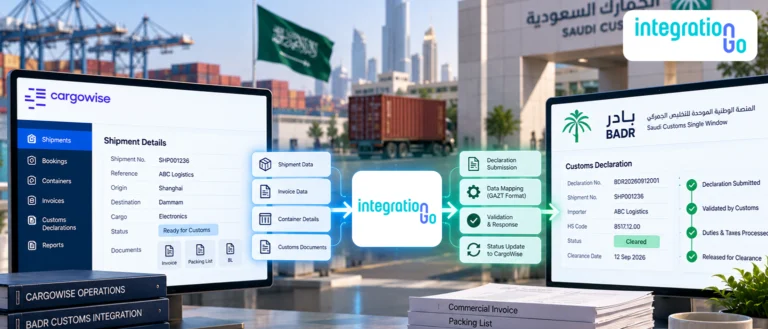
Customs software integration is the process of connecting customs declaration platforms, such as ASYCUDA, Descartes, AEB, MIC-CUST, or other country-specific customs systems, with CargoWise and business applications.
For freight forwarders, customs software manages declarations, compliance, duties, and regulatory requirements, with logistics ERP platforms like CargoWise handling shipments, customers, and operational workflows. Without integration, teams often have to enter the same shipment and customs information into multiple systems, increasing the risk of delays and manual errors.
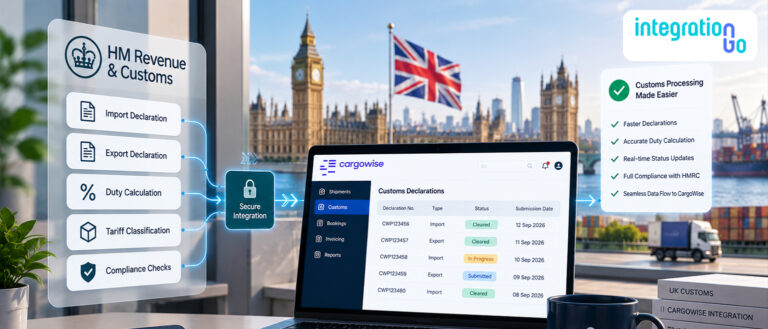
By integrating customs software with your CargoWise shipment details, declaration data, and customs updates are synchronized automatically, helping improve data accuracy, reduce manual work, and streamline customs clearance across your logistics operations.
Why Standard ERP Software Doesn't Always Meet Your Business Requirements?
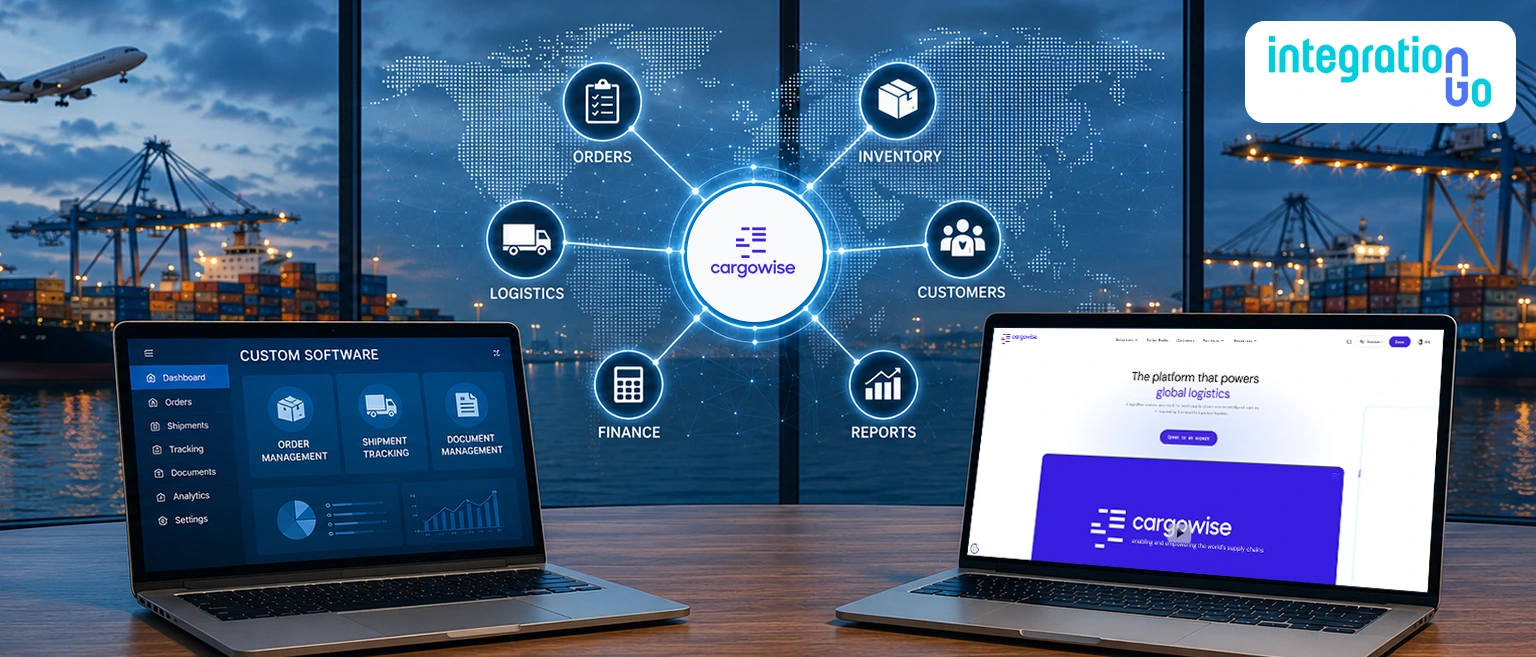
Logistics ERP software such as CargoWise is made to support end-to-end freight forwarding operations. They provide powerful capabilities for shipment management, customs processing, warehousing, transportation, customer management, and finance.
However, every freight forwarder operates differently.
Some businesses require customer portals with their own branding.
Others develop quotation systems that match their pricing model.
Some build warehouse software to support unique fulfillment processes.
Others create management dashboards that provide operational insights specific to their business.
These customs software are made to improve efficiency, but without integration, they often create isolated workflows where information must be manually transferred between systems.
Rather than changing the way your business operates, integration allows CargoWise and customs software to work together while each continues performing the role it was built for.
Where Freight Forwarders Commonly Use Customs Logistics Software?
As logistics businesses expand, customs software becomes part of everyday operations. Many freight forwarders use software that supports specific operational requirements while continuing to rely on CargoWise.
Common examples include:
- Online booking platforms
- Rate and quotation systems
- Warehouse software
- Internal approval workflows
- Sales and CRM solutions
- Shipment visibility portals
- Document management systems
Alongside these customs software, businesses also depend on enterprise software such as finance systems, customs platforms, transportation management systems, and warehouse management solutions.
The challenge is making sure all of these systems communicate efficiently without creating duplicate work.
How Integrated Software Improves Everyday Freight Operations?
Freight forwarding depends on information moving as efficiently as shipments themselves.
When customs software, financial systems, warehouse software, and customs software are integrated, operational workflows become significantly smoother.
For example, a customer booking submitted through a customs portal can automatically create shipment information in CargoWise. Warehouse updates can synchronize inventory and shipment milestones. Customs declarations can exchange data with operational records, while completed shipments can trigger financial processes without requiring repeated manual updates.
This creates faster collaboration between departments while reducing administrative effort.
Integrated workflows help improve:
- Booking management
- Shipment processing
- Warehouse coordination
- Customs documentation
- Customer communication
- Billing and invoicing
- Operational reporting
Instead of moving information manually, employees can focus on serving customers and managing freight.
What Challenges can Integration Help Solve?
As more software becomes part of daily operations, businesses often begin experiencing operational challenges that are caused by disconnected systems rather than inefficient processes.
Integration helps eliminate many of these issues, including:
- Re-entering shipment information into multiple systems
- Delays between operations and finance
- Customs information that must be updated manually
- Duplicate customer and shipment records
- Spreadsheet-based reporting
- Manual approval workflows
- Limited visibility across departments
- Delayed customer communication
- Inconsistent business data
Removing these obstacles creates a more efficient logistics operation while improving data accuracy across every department.
How does IntegrationGo Help Integrate Customs Software with CargoWise System?
Every logistics business has to rely on CargoWise, while others use additional finance systems, customs platforms, warehouse management software, transportation systems, or internally developed software.
IntegrationGo acts as the middleware that allows these systems to communicate without replacing the software businesses already trust.
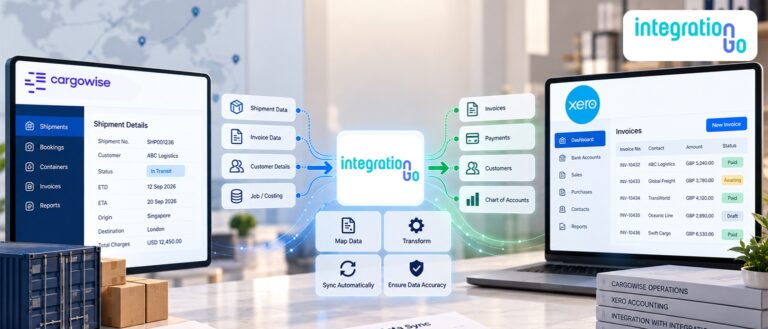
Whether your organization needs to connect a customs booking portal with CargoWise, synchronize financial information with accounting software like Xero, QuickBooks, Sage 50, etc., exchange customs data with platforms like ASYCUDA, or integrate warehouse operations with shipment management, IntegrationGo creates a secure and scalable integration layer.
Using API & EDI, intelligent data mapping, and workflow automation, IntegrationGo ensures that information flows accurately between software, reducing manual effort while helping every department work with the same operational data.
Rather than creating another system to manage, IntegrationGo helps bring your existing CargoWise finance, customs, and warehouse software together into one integrated logistics ecosystem.
Building a More Connected Technology Ecosystem for Future Growth
As freight forwarders continue investing in digital technologies, the number of business software solutions will only increase. The businesses that benefit most from these investments are not necessarily those using the most software, they are the ones whose systems work together.
By integrating customs software with finance software, customs systems, warehouse management solutions, and customer-facing portals, freight forwarders can create a technology ecosystem that supports operational efficiency, scalability, and better decision-making.
Instead of adding complexity, integration helps every application contribute to a single, reliable source of operational information.
Conclusion
As the number of works increases, so will the demand for integrated systems. While customs software can help solve specific operational challenges, its true value comes from its integration with CargoWise
IntegrationGo enables you to integrate with your CargoWise system, eliminate manual workflows, and create a more efficient logistics operation without replacing the software you already use.
Ready to simplify your logistics workflows? Schedule a demo today and discover how IntegrationGo can help you get your system fully integrated.